Bathroom Accessories UK: The Finish That Survives London
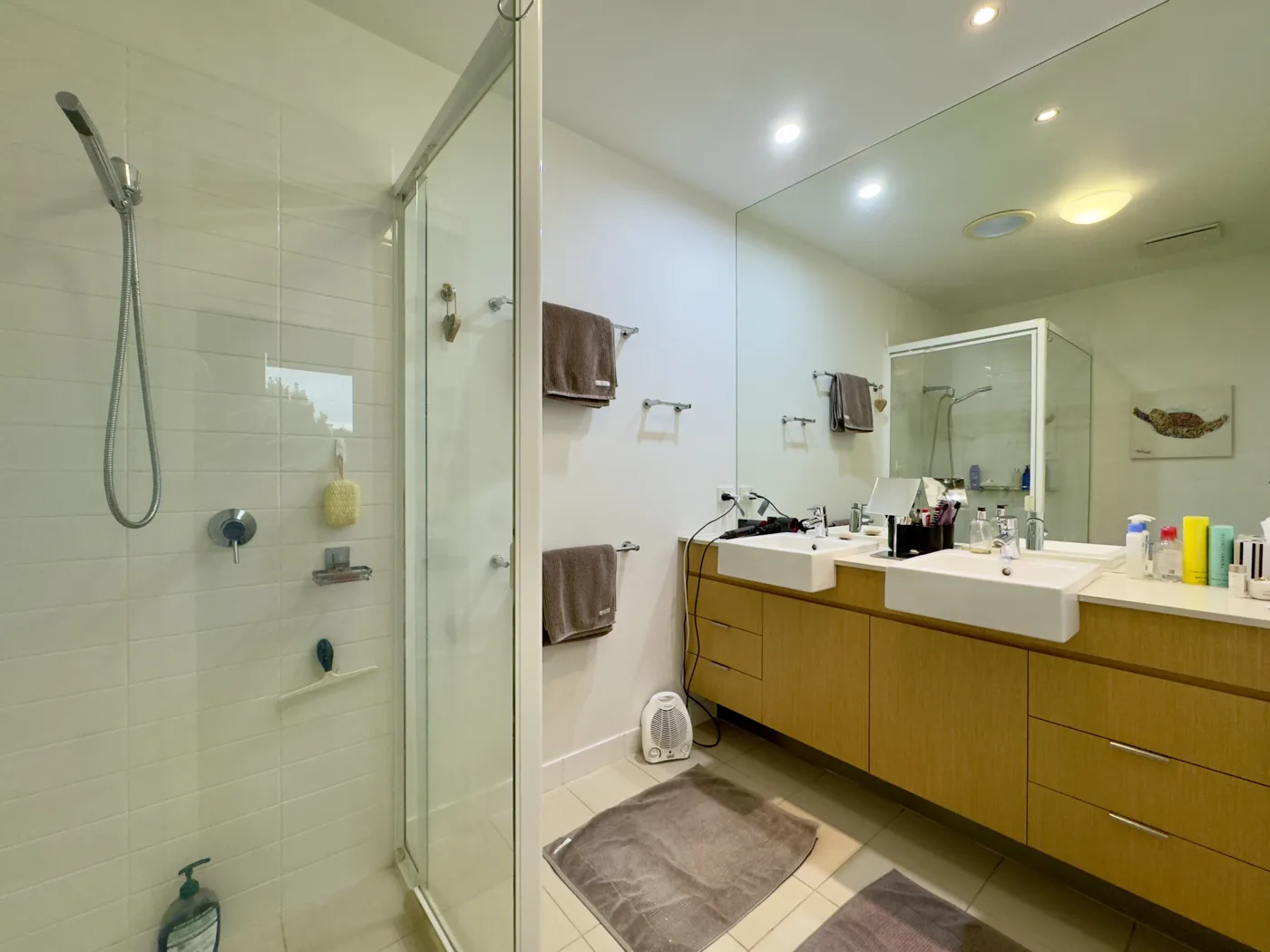
Bathroom accessories in the UK are usually the last thing specified and the first thing regretted. The towel rail, robe hook, toilet roll holder and soap dish get chosen in ten minutes at the end of a long project, from a photograph, on colour alone. Eighteen months later the brushed gold has gone patchy round the fixings, the matt black is grey with limescale, and nothing quite matches the taps.
Almost all of that comes down to one decision that is never presented as a decision: how the colour was put on the metal. Get that right and the colour barely matters. Get it wrong and no amount of cleaning saves it.
Colour is a coating, not a material
Black, gold, brass, gunmetal and brushed nickel accessories are, underneath, the same brass or stainless steel as chrome ones. The colour is a surface treatment, and manufacturers use four different technologies to apply it. Hansgrohe names them plainly in its own explanation of the process: PVD, lacquer, powder coat and polished chrome.
PVD stands for physical vapour deposition. The item goes into a vacuum chamber and the colour is deposited molecule by molecule, bonding into the surface rather than sitting on it. Hansgrohe puts the coating at 0.3 microns and calls it the most durable of the four, exceptionally resistant to scratching, cleaning agents and salt air. Their published scratch test runs a 3M Scotch-Brite sponge across the surface at 300 grams of pressure for 500 cycles, and the PVD finish comes through intact where polished chrome and polished brass do not.
Lacquer, powder coat and paint sit on top of the metal. They can look identical in a showroom and photograph better than anything. They wear from the edges, the fixing points and anywhere a cloth passes daily.
Trade guidance across the bathroom industry puts PVD at roughly 15 to 30 per cent more on the ticket and five to ten times the life. That is the whole argument, and it is worth knowing that matt black is very often not PVD, whatever the marketing implies, because a true matt appearance is difficult to achieve by deposition. If a black finish matters to you, ask specifically whether it is brushed black PVD or a lacquer.
So the question to ask a showroom is not “is this brushed brass?” It is “is this brushed brass PVD or electroplated?” A supplier who cannot answer is telling you something.
What London water does to a finish
This matters more here than almost anywhere in the country. Thames Water’s own hardness scale runs soft up to 100mg/l of calcium carbonate, slightly hard to 150, moderately hard to 200, hard to 300, and very hard above 300. Thames Water states flatly that all the water in its region is hard, because it passes repeatedly through soft chalky limestone. Most of London sits in the upper part of that range.
Every splash that dries on a surface leaves calcium behind. What differs is how visible it is and what you are allowed to do about it.
| Finish | How it is usually made | Limescale visibility | Practical verdict in London |
|---|---|---|---|
| Polished chrome | Electroplated, sometimes PVD | Lowest. Wipes off cleanly | The most forgiving finish there is |
| Brushed nickel | Electroplated or PVD | Low to moderate | Chrome’s warmth-without-coldness alternative. Specify PVD |
| Brushed brass / gold | Electroplated or PVD | Moderate, and obvious on warm tones | PVD only. Electroplated gold spots fast and cannot be descaled |
| Matt black | Lacquer, powder coat or paint | Highest. White on black | Beautiful, and it needs wiping dry every few days |
| Gunmetal / brushed bronze | Usually PVD | Moderate | Hides marks better than black, costs more |
The cruel part of the hard-water problem is that the two finishes that show limescale most are also the two you must not use limescale remover on. Descalers are acidic, and manufacturer care instructions for coloured and matt finishes are unanimous: no abrasive pads, no descaler, no bleach, no acidic cleaner. Warm soapy water, a soft cloth, rinse, dry. Use a proprietary descaler on a lacquered black tap and you will strip it, and the warranty goes with it.
Which leaves one genuinely effective habit: dry the surface. A microfibre cloth kept in the bathroom, used on the accessories twice a week, does more for a coloured finish over five years than any product.
The four finishes, honestly
Chrome. Unfashionable, and the correct answer far more often than anyone wants to hear. It disappears into a room rather than decorating it, it is the cheapest to replace when a piece breaks, every manufacturer makes everything in it so you will never be stuck for a matching part, and in hard water it is close to maintenance-free. If a bathroom is being done to a budget or to let, this is the finish.
Matt black. The strongest visual statement of the four and the most work. It reads beautifully against white tile, warm timber and terrazzo, and it is unambiguously contemporary. Two warnings. It shows limescale and dust more than anything else, and because it is usually a coating rather than a deposition it wears at edges and fixings. Choose it for a bathroom you use and wipe, not a guest cloakroom nobody maintains.
Brushed brass and gold. The finish with the widest quality gap on the market. PVD brushed brass is a genuinely durable, softly warm finish that flatters both period and modern rooms. Electroplated gold at a fraction of the price will show water spotting within weeks in London water and can shift colour within a year or two. The two look identical online. We go further into tone matching and where brass works in our piece on gold and brass bathroom accessories.
Brushed nickel and gunmetal. The quiet middle. Warmer than chrome, calmer than brass, far more forgiving than black. Brushed nickel in particular hides water marks well because the brushed grain breaks up reflections. It is the finish specified most often by designers who have to live with the maintenance complaints.
Mixing metals without it looking like an accident
Mixing finishes works, but only under a rule. The version that holds up:
- One finish for everything you turn on. Taps, shower valve, shower head, waste and overflow. This is the water-facing family and it should be a single finish from a single manufacturer, because the same nominal colour differs between brands.
- A second finish, at most, for everything you touch or hang things on. Hooks, towel rails, roll holder, mirror frame, cabinet handles.
- Never split within a group. A brass tap and a chrome waste in the same basin looks like a mistake, because it is.
- Black is the reliable second metal. It reads as a neutral rather than a competing metal, which is why black hooks and rails against chrome or brass brassware works where brass against nickel usually does not.
One thing that catches people out: the radiator or heated towel rail is a large metal object and most people forget to count it. In a small bathroom it is often the biggest piece of visible metal in the room. Decide which family it belongs to before you order the accessories, not after. Our bathroom taps guide covers the brassware side of the same decision.
What is actually in a “set”, and what is missing
Boxed accessory sets typically give you four or five pieces: a toilet roll holder, a towel ring, a robe hook, a tumbler or soap dish, and sometimes a small shelf. Matching a real bathroom usually needs more than that, and the pieces you end up short of are predictable:
- A towel rail or bar sized to your actual towels, which is usually longer than the set includes
- A second robe hook, because one is never enough
- A spare roll holder
- A toilet brush and holder, which is very often a different finish in the same brand’s range
- A shower shelf or corner basket, which almost no set includes
Buying a set is fine. Buying a set from a range that also sells the other six pieces is better, because ranges get discontinued and a discontinued brushed brass will not match its replacement.
Fixing: the bit that decides whether it lasts
Two choices, and the wrong one is common.
Screwed and plugged is the only sensible option for anything that carries weight: towel rails, robe hooks, grab rails, shelves. Into tile means drilling tile, which means a diamond or tile bit, low speed, no hammer action, and masking tape to stop the bit wandering. Get the fixing wrong on a tiled wall and the repair is a tile, not a screw.
Adhesive mounting is legitimate for light pieces only, and only on sound, sealed, fully cured surfaces. Not on unsealed grout, not on flaking paint, not inside a shower enclosure where the pad sits in standing water. Renters and anyone who cannot drill a feature tile should keep adhesive to roll holders, tumblers and hooks intended for a dressing gown rather than a wet towel.
In both cases, check what the wall is before you choose. Plasterboard needs a proper hollow-wall fixing for anything load bearing, and a towel rail pulled out of a stud wall takes a fist-sized chunk of board with it.
Where the accessories sit relative to storage is worth planning at the same time, which we cover in bathroom storage cabinets and shelves.
Frequently asked questions
What are the best bathroom accessories for UK hard water areas? Polished chrome, by a distance, because limescale wipes off it cleanly and shows least. If you want a coloured finish, specify PVD rather than electroplated, and accept that matt black needs drying after use. Thames Water classes all of its supply area as hard water, so this is not optional in London.
Is PVD worth paying extra for on bathroom accessories? Usually yes on any colour other than chrome. PVD bonds the colour into the surface in a vacuum chamber rather than laying it on top, and Hansgrohe’s published scratch testing shows it surviving 500 cycles of an abrasive sponge that marks polished chrome and polished brass. Industry guidance puts the premium at roughly 15 to 30 per cent for several times the life.
Can I mix chrome and black bathroom accessories? Yes, and it is the most reliable mix there is, because black reads as a neutral rather than a competing metal. Keep everything that carries water in one finish and use the second finish only for hooks, rails and handles.
Does matt black show limescale? More than any other finish. White mineral deposits on a dark matt surface are the most visible combination in a bathroom. You cannot use descaler on it either, because acidic cleaners strip lacquered and painted finishes, so the maintenance is drying rather than treating.
How do I clean brushed brass bathroom accessories? Warm soapy water, a soft cloth, rinse off any soap residue and dry thoroughly. No scourers, no abrasive paste, no bleach, no limescale remover. If the finish is electroplated rather than PVD, that routine is the only thing standing between it and visible spotting.
Should bathroom accessories match the taps exactly? The water-facing items should: taps, shower valve, shower head and waste. For hooks, rails and holders you have licence to use a second finish deliberately. What does not work is a near-match, two slightly different brushed brasses from different brands in the same room, which reads as an error rather than a choice.
The Folio
Want more like this in your inbox?
One considered idea for your London home, every Thursday.
SubscribeMore from KDS London
All guides
How Much Does an Interior Designer Cost in London in 2026?
What interior designers charge in London in 2026: hourly rates, day rates, per-room fees and percentage models, with real figures and what each one buys you.
Read
Navy Kitchen Ideas: Blue, Teal and Cobalt Cabinet Designs
Navy kitchen ideas that work: the best blue cabinet shades, worktop and hardware pairings, and how to use navy, teal and cobalt without dating the room.
Read
Gold and Brass Bathroom Accessories: How to Style Warm Metallics
How to choose and style gold bathroom accessories and brass fittings, from brushed vs polished finishes to mixing metals and avoiding tarnish.
Read