How Much Does an Interior Designer Cost in London? (2026 Price Guide)
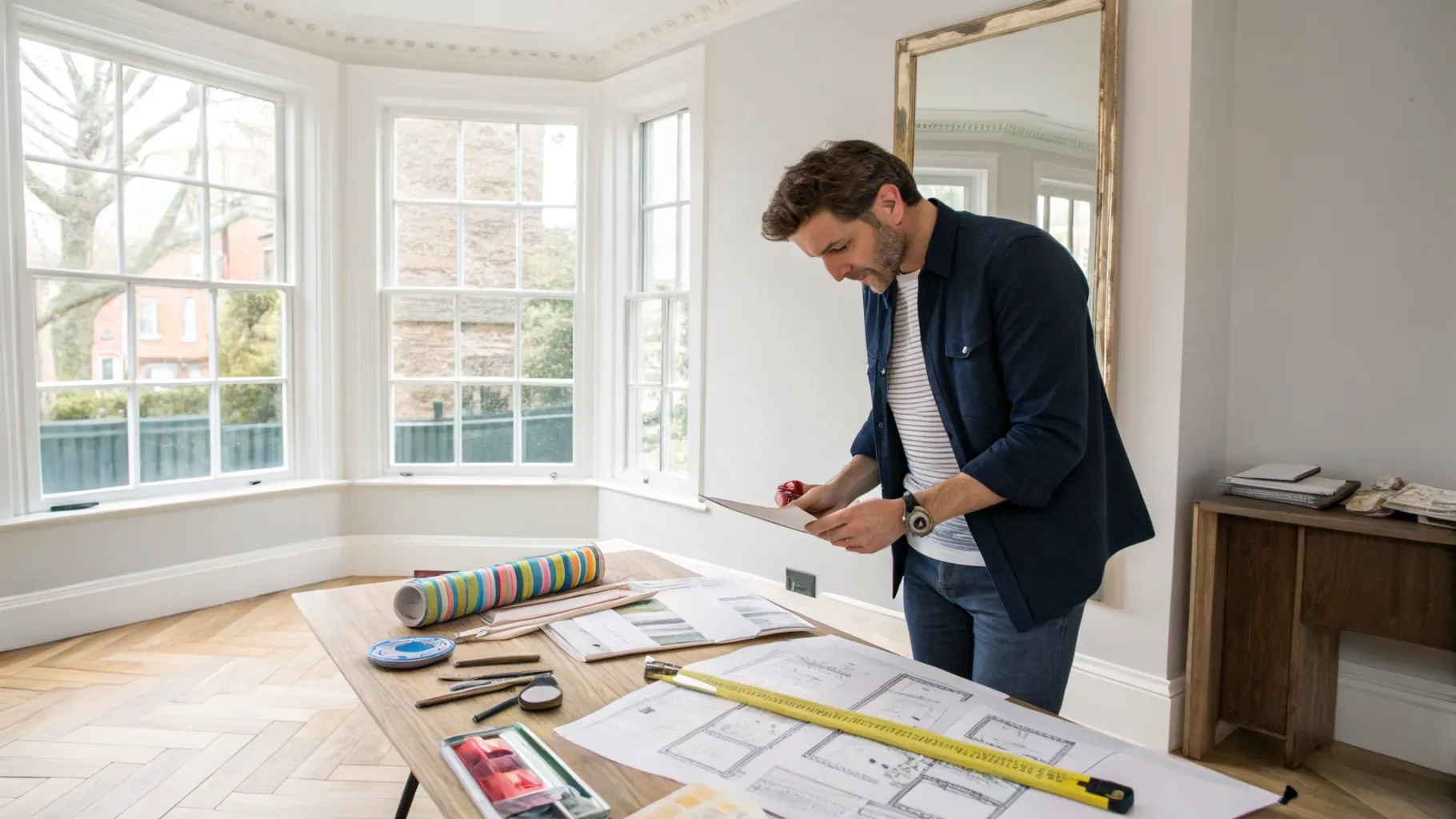
Hiring an interior designer in London means buying time, taste, and project management, but the way that cost is structured varies enormously between firms. One designer quotes an hourly rate, another a flat fee per room, a third a percentage of your total budget, and a fourth bundles everything into a single “design package.” The same flat in Clapham could cost a modest sum for an online room scheme or many times that for a full-service redesign with bespoke joinery. This guide explains which fee model you are actually paying under, and it covers the two things most price articles skip: how VAT changes your final bill, and how trade discounts on furniture really work.
A note before anything else: most professional fees in this industry are quoted exclusive of VAT, and most established London designers are VAT-registered. Where a quote says “+ VAT,” budget the VAT on top. We cover that properly further down.
How interior designers charge: the four fee models
Before comparing quotes, work out which model each one uses, because the same project can look cheap or expensive depending on how it is packaged.
The British Institute of Interior Design (BIID) ran a fees survey that is still the most useful structural data on this. It found that the single largest group of designers, 51%, used a combination of charges rather than one method, and this was most common in residential work. Around 21% used a fixed fee, 18% charged hourly, and only 6% charged a percentage alone. So if a London designer quotes you a mix (a fixed design fee plus hourly project management plus a procurement margin), that is the industry norm, not a designer being awkward. You can read the full method on the BIID’s guide to pricing a project.
1. Hourly rate
This is the most transparent model and the one most buyers ask about first. Rates track experience closely: a junior designer sits at the bottom of the scale, a mid-level designer in the middle, and a senior designer with a strong portfolio at the top. In central London, in-demand designers charge a premium on top again, and the very top of the range is often what an initial consultation alone costs with a sought-after name. Consultancy-only or design-only services, where the designer gives advice rather than delivering the whole job, tend to charge less per hour.
Hourly suits small jobs, second opinions, and clients who want to cap involvement. It gets unpredictable on large projects, which is why most full schemes move to a fixed or combination fee. For your own figure, our interior designer cost calculator lets you model an hourly engagement.
2. Fixed fee per room or per project
This is a flat price for a defined scope. Full-service single rooms are quoted by the room, with kitchens and bathrooms at the higher end because of the technical detail involved, and bedrooms and reception rooms lower. In central London the same room can cost several times the national figure, and luxury per-room work runs higher again before you have bought a single sofa.
Design-only fees, meaning drawings and specification with no procurement or site management, are lower than full-service fees. Remember that these are usually quoted exclusive of VAT, so add the VAT before comparing.
3. Percentage of the project
Here the fee is a slice of your total spend. The BIID survey gives a real-world picture of designers who use a percentage: 53% charged in the 6% to 10% band, 13% charged 11% to 15%, and 33% charged over 16%. Bear in mind that survey is from 2019, so current London percentages sit towards the higher end of those bands.
Percentage fees are common on larger renovations where the scope is hard to fix in advance. The obvious tension: the more you spend, the more your designer earns, so it works best with a designer you trust and a clear brief.
4. Combination
This is the most common in practice. A typical structure is a fixed design fee for the creative work, hourly or staged billing for project management, and a separate procurement margin on furniture and finishes. If you only remember one thing from this section: ask the designer to itemise which parts are fixed, which are hourly, and what the margin on purchases is.
Online and e-design: the budget tier
If you want a professional scheme without full-service prices, remote e-design is the entry point. Packages are priced per room and delivered as a digital pack rather than a managed project, with kitchens and bathrooms costing more than bedrooms and reception rooms because there is more technical detail.
A real example of named packages at this tier is My Bespoke Room, which publishes a tiered set of services: a fuller Room Design service, a lighter Room Styling service, and a basic “Design Fix.” Their packages typically include a video consultation with a personal designer, a moodboard, 3D visuals, a final room layout, and a curated shopping list, plus access to savings on a range of trusted brands. That discount point matters, and we explain the mechanics below.
E-design suits one or two rooms, a clear layout that you are not changing structurally, and a client happy to do the buying and coordination themselves.
The free consultation versus the paid one
This trips buyers up. There are usually two different things both called a “consultation.”
Most designers offer a free short intro, often around 20 minutes, to check whether you are a good fit and to scope the job. This is a sales conversation, not design advice. The paid initial consultation is the real thing: usually 60 to 90 minutes, often on site, where the designer gives concrete direction, and in London that session is charged at the designer’s hourly rate. Some firms credit the consultation fee against the project if you go ahead. Ask which one you are booking, and ask whether the fee is deducted from the project cost.
The London premium
London and the South East run well above the national average, driven by demand, higher operating costs, and the concentration of high-spec work. Prime central London (think the prime boroughs, period townhouses, and new-build penthouses) is a separate market again: luxury whole-property work can run into six figures and beyond on a substantial townhouse or penthouse. At the room level, with furniture, lighting, and soft furnishings included, a high-spec living room or kitchen can cost a multiple of a standard London scheme.
If you are pricing a renovation rather than a decoration scheme, our London renovation cost calculator and interior designer cost calculator are a better starting point than a single headline figure.
Designer, decorator, or stylist: who does what
These three titles are used loosely, and they do not cost the same. Worth noting before you read on: in the UK, the title “interior designer” is unregulated and unlicensed, and “decorator” usually means a painter and decorator in everyday trade use, so always check what a person actually delivers rather than relying on the label.
An interior designer handles form and function: space planning, layout changes, finishes and materials, lighting and electrical layout, bespoke joinery, coordinating architects, engineers and contractors, procurement, and building regulations. They tend to charge a percentage of the project, a fixed fee by scope, or an hourly rate.
An interior decorator handles aesthetics only: colour schemes, wallpaper, soft furnishings, fabrics, art and accessories, and retail or trade furniture. They do not alter layouts or coordinate trades, and they usually charge by the hour, a flat fee per room, or a commission on purchases.
An interior stylist does editorial, photoshoot, and commercial styling: sourcing and arranging for visual appeal, not a build or layout role. They usually quote a project or day rate depending on the brief.
If your project involves moving walls, reconfiguring a kitchen, or coordinating builders, you want a designer, not a decorator. If you just want a room to look better with the layout staying put, a decorator or stylist may be enough, and cheaper.
Trade discounts and furniture markup: how designers really make money on products
This is the most misunderstood part of an interior design bill, and the part where two quotes for “the same project” diverge most.
Designers buy “to the trade,” meaning at prices below retail. Trade pricing in the UK typically sits below retail by a meaningful margin, with most mainstream programmes clustered in the lower part of that range and a few designers securing deeper discounts. The industry-standard markup is then applied on top of the trade cost, which usually lands the client somewhere near the normal retail price. That difference is not pure profit: it covers the designer’s trade access plus the hours of sourcing, ordering, and chasing each piece takes.
There are three procurement models, and you should know which one you are on:
- Cost-plus: the designer charges you the trade price plus a procurement fee, and you see both numbers. The trade discount is effectively passed to you.
- Retail: the designer sells goods at or near retail and keeps the trade discount as their margin. You do not see the trade price.
- Hybrid: the design fee covers the creative work, and procurement is billed separately on top.
None of these is dishonest, but they produce very different totals. The single best question to ask any London designer is plain: do you retain, share, or pass through trade pricing? UK best practice, and the standard set by industry bodies, is for the contract to state this clearly. The widely used RIBA and BIID joint contracts are built to cover exactly this. For a homeowner doing their own home, the relevant document is the RIBA/BIID Domestic Professional Services Contract for interior design services, which is the standard consumer contract to expect.
VAT: the line that changes your total
Most established London designers are VAT-registered, so their fees are quoted “+ VAT,” and you add 20%. The UK VAT registration threshold is £90,000 of taxable turnover, with 30 days to register after exceeding it on a rolling 12-month basis.
The part almost no consumer guide explains is what happens when the designer buys your furniture. There are two setups, and they change your bill materially:
- Designer as principal: the designer buys the goods and resells them to you. The full selling price counts toward their turnover, and they charge 20% VAT on the whole bill, fee and furniture together.
- Agency or disbursement: you buy the goods (the designer arranges it on your behalf), so the designer only charges VAT on their own fee, and the goods pass through at cost.
On a project with a lot of procurement, that difference is real money. Ask which basis the designer works on. The BIID has a clear explainer on VAT for interior designers if you want the detail behind it.
Is hiring an interior designer worth it?
For small, single rooms with no structural change, you may not need full service; an online package or a paid consultation to set direction can be enough. The value of a full-service designer shows up on bigger or more complex projects: avoiding expensive layout mistakes, getting trade access you could not get alone, and not having to project-manage trades yourself. A designer can save you money by buying better, ordering correctly the first time, and stopping you from buying the wrong sofa twice. Whether that nets out cheaper depends on the markup model above, which is exactly why you ask about it up front.
For a deeper breakdown of fee structures beyond London, see our guides on interior designer fees across the UK and how to hire an interior designer in London.
Frequently asked questions
How do interior designers in London charge by the hour? Hourly rates track experience: a mid-level designer sits in the middle of the scale, a senior designer with a strong portfolio higher, and an in-demand central London designer higher again, with the top of the range often applying to an initial consultation. Consultancy-only or design-only services, where the designer gives advice rather than delivering the whole job, tend to charge less per hour.
How much does it cost to design a whole flat or house in London? A full home or full residential project covers the design or design-led service and is separate from the cost of furniture and building work. At the luxury and prime central London end, whole-property work runs into six figures and beyond on a substantial townhouse or penthouse. Use our interior designer cost calculator to model your own figure.
Do interior designers charge a percentage of the project, and how much? Some do. Real-world survey data from the BIID shows that, among designers using a percentage, 53% charged in the 6% to 10% band, 13% charged 11% to 15%, and 33% charged over 16%. In practice, only a small minority charge by percentage alone; just over half of designers use a combination of fixed fees, hourly billing, and a procurement margin.
Do I get the trade discount on furniture? It depends on the designer’s model. Under cost-plus pricing, you see the trade price and pay a procurement fee on top, so the discount is largely passed to you. Under retail pricing, the designer sells at or near retail and keeps the trade discount as their margin. Ask the designer directly whether they retain, share, or pass through trade pricing, and check that the contract states it.
Does an interior designer charge VAT on top of the fee? Usually yes. Most established London designers are VAT-registered (the threshold is £90,000 of taxable turnover), so fees are quoted “+ VAT” and you add 20%. It matters most when the designer buys furniture: if they act as principal and resell the goods, they charge 20% VAT on the whole bill including the furniture; under an agency or disbursement setup, you buy the goods at cost and the designer only charges VAT on their fee.
Is the initial consultation free? There are usually two different consultations. A free short intro, often around 20 minutes, is a fit-check and scoping call, not design advice. A proper initial consultation runs 60 to 90 minutes, gives real direction, and is charged at the designer’s hourly rate. Some designers credit that fee against the project if you proceed, so it is worth asking whether it is deducted from your final cost.
The Folio
Want more like this in your inbox?
One considered idea for your London home, every Thursday.
SubscribeMore from KDS London
All guides
How Much Does an Interior Designer Cost in London in 2026?
What interior designers charge in London in 2026: hourly rates, day rates, per-room fees and percentage models, with real figures and what each one buys you.
Read
Navy Kitchen Ideas: Blue, Teal and Cobalt Cabinet Designs
Navy kitchen ideas that work: the best blue cabinet shades, worktop and hardware pairings, and how to use navy, teal and cobalt without dating the room.
Read
Gold and Brass Bathroom Accessories: How to Style Warm Metallics
How to choose and style gold bathroom accessories and brass fittings, from brushed vs polished finishes to mixing metals and avoiding tarnish.
Read