Wooden Bathroom Cabinets: Oak, Pine, and Natural Wood Options
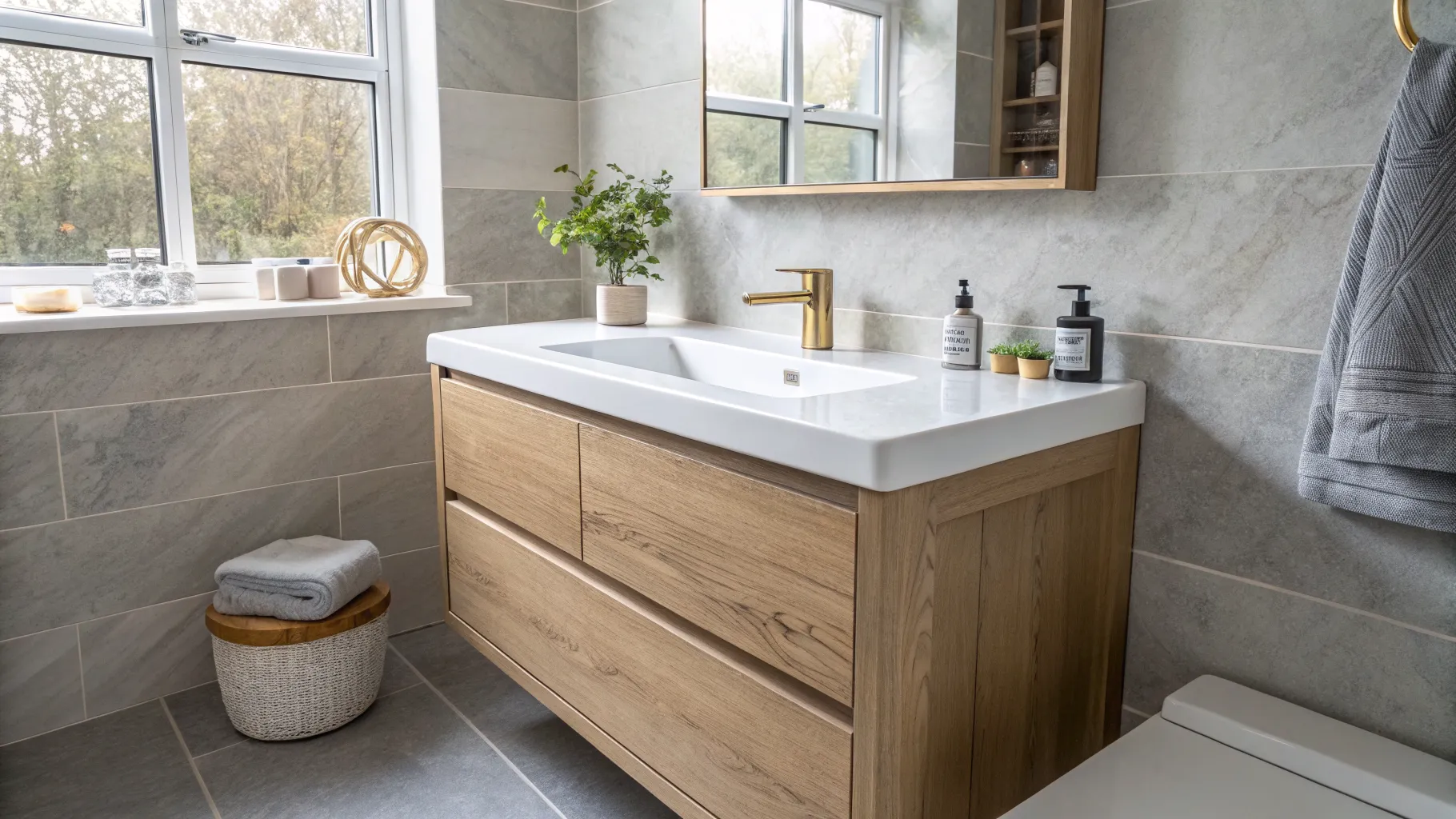
Wooden bathroom cabinets give a room warmth that gloss white units never manage, but the word “wood” hides three completely different products sold at the same price-defying spread. Before you buy, you need to know whether you are getting solid timber, a thin real-wood veneer, or an oak-effect laminate printed onto chipboard. They look similar in a photo and behave nothing alike in a steamy room. This guide sorts oak, pine and the other natural wood options buyers actually meet in UK showrooms, with real model names, honest durability, and the two things you control that decide whether the cabinet survives.
The three tiers hiding behind the word “oak”
Most ranking pages and most showroom labels are vague on purpose. Here is the plain version.
- Solid oak. Real timber throughout, made to order in the UK by makers like Harvey George in Yorkshire and Furnewal in Sussex. Furnewal uses kiln-dried British and European oak, some of it reclaimed. This is the only tier that is genuinely waterproof when sealed, and the only one you can sand back and refinish in ten years. It is also the dearest by a wide margin.
- Real-oak veneer. A thin slice of genuine oak bonded to an engineered core. Roper Rhodes’ Walcot range is the textbook example: real-wood veneer in Light Oak (also Walnut), Hettich soft-close hinges and runners, and a ten-year guarantee. It looks like solid oak and costs a fraction as much. The catch is the core, which is engineered board, so a deep chip or a soaked edge cannot be repaired.
- Oak-effect laminate or MFC. A printed wood-look surface on chipboard or MDF. This is what most mass-market “oak” units actually are, including the popular Victorian Plumbing models below and Roper Rhodes’ Faber, Scheme and System ranges in Sand Oak. Splash-proof, not waterproof. Fine for years if water never gets into the board.
A useful rule from the trade: MFC and MDF cores swell and turn to mush if water gets past the surface, while solid timber simply dries out again. Match the tier to the room. A guest cloakroom that sees a quick hand-wash twice a day does not need solid oak. A family bathroom with a daily bath and a teenager’s showers is where solid timber or a good veneer earns its keep.
Oak versus pine: an honest verdict
Oak wins for a bathroom, and the reason is physical, not fashion. Oak is one of the hardest and most stable common cabinet woods. Its density resists swelling and warping, so doors and drawers keep operating smoothly in a humid room when the timber is sealed and maintained. Kiln-dried oak typically comes down to around 10% moisture content after drying, which cuts later cracking and movement. White oak is the timber the trade is pushing for 2026, and it has a real biological edge: its tyloses (cell blockages) make it more water-resistant than red oak.
Pine is the opposite case. It is a softwood that absorbs moisture quickly and is prone to swelling, denting and even fungal or mould growth in a bathroom unless it is heavily sealed. Its low hardness means it marks easily. That is why every guide tells you to avoid it.
But “avoid pine” is lazy advice. Pine is fine in the right spot: a low-use cloakroom or a downstairs loo with good ventilation and a properly built-up seal of several coats. It is cheaper, it takes paint and oil beautifully, and a dented soft edge has a certain cottage charm. What pine cannot do is shrug off daily steam in a poorly ventilated family bathroom. If that is your room, spend the extra on oak.
Real UK products, by tier
Names and specs you can actually shop for. No prices here on purpose: check the current price with each retailer, as they move with finance offers and sales.
Laminate and wood-effect (the entry tier):
- Venice Linea Rustic Oak 800mm countertop basin unit, two drawers, oval gloss-white basin (Victorian Plumbing). Wood-effect, not solid.
- Milan Fluted 600mm Autumn Oak two-door floor-standing vanity (Victorian Plumbing).
- Osaka Slatted Oak 600mm wall-hung vanity with a white stone worktop (Victorian Plumbing).
- Arezzo 600 Rustic Oak wall-hung vanity with brushed brass handles (Victorian Plumbing).
- Odessa Oak wall-hung storage unit (VictoriaPlum.com), a proper wall cabinet rather than a vanity.
Real-oak veneer (the mid tier):
- Roper Rhodes Walcot, Light Oak or Walnut, real-wood veneer, Hettich soft-close gear, ten-year guarantee. The Walcot 1200 freestanding double-basin unit sits near the top of this tier. The teaching point: even a premium “wood” range like this is veneer, not solid.
Solid, made-to-order (the top tier):
- Harvey George (Yorkshire) and Furnewal (Sussex). Genuinely solid UK oak, sealed with durable lacquer or hardwax plus a water-resistant lacquer. Expect this tier to start well above the veneer units and run higher for a freestanding double.
Victorian Plumbing, the UK’s largest online bathroom retailer, lists 450-plus oak furniture items alone, with free standard delivery over a spend threshold and 0% finance on larger orders. The breadth is handy, but read each listing carefully: most of it is the wood-effect tier.
Will a solid oak vanity warp or crack?
Solid wood moves, and you cannot stop it; you design around it. Timber is hygroscopic, meaning it constantly absorbs and releases moisture, so it expands and contracts with the air around it. A typical seasonal swing in humidity shifts wood moisture content by roughly 6%, which is exactly why a well-made solid unit allows the panels to move rather than pinning them rigidly. Cheap solid furniture that fixes a wide panel solid is the kind that splits.
The number you can act on is room humidity. Keep indoor relative humidity in the 40 to 60% range and solid oak is happy. Let a bathroom sit at sauna levels every evening and any wood will struggle. Which brings us to the single biggest factor in whether wooden furniture survives.
The two things that actually decide longevity
Forget luck. Two controllable factors do almost all the work.
1. Ventilation. UK Building Regulations Approved Document F sets bathroom extract ventilation at 15 litres per second (54 cubic metres per hour) for an intermittent fan, or 8 l/s for a continuous one. A fan that meets this, runs during and after a shower, and vents outside (not into a loft) keeps humidity down and condensation off your timber. A weak or blocked extractor is the most common reason wooden furniture fails early. The official guidance is worth a look: Approved Document F.
2. The finish, and re-doing it. Oil alone is not enough for a bathroom. Penetrating oils such as tung oil soak into the timber and need three to four coats, and they are best topped with a water-based polyurethane for a real barrier. Many UK owners prefer Osmo hardwax oils because Osmo Raw does not darken light oak. Whatever you use, an oil finish needs re-applying roughly once a year to keep working. That annual half-hour is the difference between a vanity that lasts decades and one that greys and swells at the edges.
How to seal or re-oil a wood vanity
A simple yearly refresh on a solid or veneer-with-solid-edges unit:
- Empty the cabinet and wipe it down. Let it dry fully.
- Lightly key the surface with fine abrasive (a worn 240-grit pad), going with the grain. You are not stripping it, just giving the new coat something to bite.
- Wipe off all dust with a slightly damp lint-free cloth, then dry.
- Apply a thin, even coat of hardwax oil such as Osmo, working along the grain. Thin is the rule: thick coats stay tacky.
- Leave it to cure for the time on the tin before refitting doors and putting things back. Osmo UK publishes coverage and recoat times for each product: osmouk.com.
Pay extra attention to the bottom edges and the back, where splashes and condensation gather and where finishes are usually thinnest from the factory.
Wall-hung or floor-standing?
For damp control and cleaning, wall-hung wins. Lifting the cabinet off the floor keeps the base out of standing water and mop splashes, lets air move underneath, and makes the floor easy to wipe. The trade-off is that a wall-hung unit needs a solid wall and proper fixings, especially with a stone worktop adding weight. Floor-standing units give more storage and need no special fixing, but the kickboard area sits in the splash zone, so seal it well and keep it dry.
On sizing, UK vanities follow standard widths. A 450mm unit suits a tight cloakroom, 600mm is the everyday family size, and 800mm or 1000mm gives you a generous single or a near-double. Measure the door swing and the basin overhang before you commit, not just the cabinet footprint.
For more on fitting and finishing a new suite, see our bathroom renovation guide and our small bathroom storage ideas.
Frequently asked questions
Are wooden or oak bathroom cabinets waterproof, or just splash-proof? It depends on the tier. Solid oak that is properly sealed is effectively waterproof and dries out after a soaking. Real-oak veneer and oak-effect laminate units are splash-proof, not waterproof: the surface resists water but the engineered core will swell if water reaches it through a chip or an unsealed edge. Most mass-market “oak” units are this kind.
Is oak better than pine for a bathroom? Yes, for any room with regular steam. Oak is hard, dense and stable, so it resists the swelling and warping that ruin softer woods, and kiln-dried oak sits low in moisture content. Pine is a softwood that absorbs water fast and can swell, dent or grow mould unless heavily sealed. Pine is acceptable in a low-use, well-ventilated cloakroom with several coats of sealer, but oak is the safer buy.
How do I waterproof or seal a wooden bathroom cabinet? Use a finish that builds a barrier. Oil alone is not enough: tung and similar oils soak in and need three to four coats, ideally topped with a water-based polyurethane. Hardwax oils such as Osmo are popular in the UK, and Osmo Raw keeps light oak pale. Whatever you choose, plan to re-apply roughly once a year, paying attention to bottom edges and the back.
What is the difference between solid oak, real-oak veneer and oak-effect laminate? Solid oak is real timber throughout, repairable and the only truly waterproof tier when sealed. Real-oak veneer is a thin slice of genuine oak on an engineered core, like Roper Rhodes Walcot, which looks like solid and often carries a long guarantee but cannot be refinished. Oak-effect laminate or MFC is a printed wood-look surface on chipboard, the cheapest tier and the one to keep driest. Solid is worth the extra in a busy bathroom; laminate is fine in a guest cloakroom.
How long do wooden bathroom cabinets last, and what shortens their life? With good ventilation and an annual re-seal, solid oak lasts decades and veneer units comfortably outlast their ten-year guarantees. The two things that shorten their life are poor ventilation and a tired finish. A fan meeting the Building Regulations standard of 15 l/s, run during and after showers, plus a yearly coat of hardwax oil, does almost all the work.
What size vanity do I need? Standard UK widths are 450mm for a cloakroom, 600mm for an everyday family bathroom, and 800mm or 1000mm for a larger single or near-double. Measure the basin overhang and door swing as well as the cabinet width before buying.
The Folio
Want more like this in your inbox?
One considered idea for your London home, every Thursday.
SubscribeMore from KDS London
All guides
How Much Does an Interior Designer Cost in London in 2026?
What interior designers charge in London in 2026: hourly rates, day rates, per-room fees and percentage models, with real figures and what each one buys you.
Read
Navy Kitchen Ideas: Blue, Teal and Cobalt Cabinet Designs
Navy kitchen ideas that work: the best blue cabinet shades, worktop and hardware pairings, and how to use navy, teal and cobalt without dating the room.
Read
Gold and Brass Bathroom Accessories: How to Style Warm Metallics
How to choose and style gold bathroom accessories and brass fittings, from brushed vs polished finishes to mixing metals and avoiding tarnish.
Read