Interior Design Budget Planner: How to Set and Split Your Budget
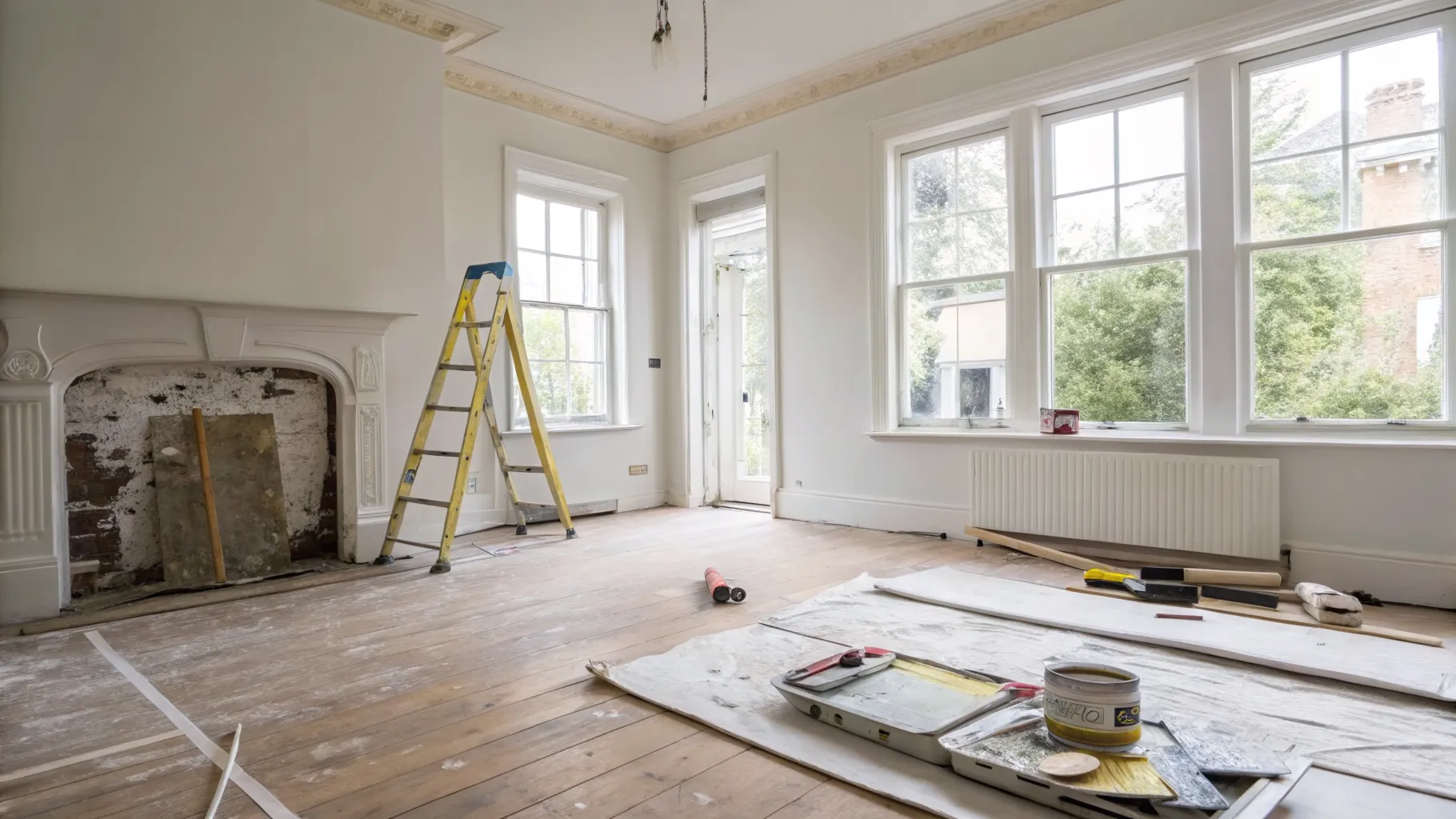
Why your budget needs two numbers, not one
Most London interior projects go wrong in the same place: the homeowner sets a single total, hands the whole figure to a builder, and discovers there is nothing left to actually furnish the rooms. The fix starts with a distinction that thin guides skip over. Your project budget is everything the job will cost: building works, furniture, soft furnishings, professional fees, and a contingency. The designer’s fee is only the labour of designing and managing that work. It is not the cost of the sofa, the rewiring, or the curtains.
Get those two numbers clear before you brief anyone, and the rest of the plan falls into place. This guide shows you how to set a realistic total for a London project, how to split it across categories by proportion, where Londoners most often run out of money, and how to phase spending over time.
Set the total first, then split it
Begin with the whole number you can commit to the project, including the parts that are easy to forget: VAT, delivery, and professional fees beyond the designer. Then divide it. Working in percentages keeps you honest, because it forces every category to compete for a share rather than letting one swallow the lot.
A defensible split for a residential London renovation looks like this:
| Category | Share of total project |
|---|---|
| Design fees | around 8 to 20% (higher end for full service with project management) |
| Building and construction works (hard costs) | the largest single slice on a renovation |
| Furniture, fixtures and equipment (FF&E) | typically 10 to 15%, more on light-build, high-spec jobs |
| Soft furnishings and accessories | an extra 5 to 10% |
| Contingency | 10 to 20%, weighted to the top end for period property |
On a project where you are knocking through, replacing a kitchen or bathroom, rewiring or doing anything structural, the building works dominate. On a job where the bones are sound and you are mainly furnishing and decorating, FF&E rises sharply and can pass 30% of the total. Within the furnishing pot itself, the larger case goods, furniture and lighting tend to take roughly 25 to 40%, with soft goods such as curtains, blinds, rugs and cushions accounting for a further slice on top.
For a category-by-category view of how spending lands in different rooms, our interior design cost per room breakdown and the whole-house interior design cost in London guide show how these proportions translate across a full property.
The fee question that catches people out
When a designer charges a percentage, you need to know one thing above all: is the fee taken from the budget, or added on top of it?
Say you set aside a round sum for purchasing. If a procurement fee is drawn out of that same pot, your actual spending power on furniture and finishes drops by the fee percentage. Set aside a buying budget with a 20% fee taken from it, and only four-fifths reaches the suppliers. Ask the question plainly before you sign: does your fee come out of my budget or sit on top of it? A written agreement that sets out the scope of services and the fee schedule is precisely what stops this being ambiguous, which is why the British Institute of Interior Design points designers towards formal contracts that pin both down from the start (BIID discussion of fee structures).
Designers price in four broad ways, often blended:
- Hourly: you pay for time. London rates run higher than the rest of the UK.
- Percentage of project value: the mainstream model sits in the region of 8 to 15%, rising to 15 to 25% for full service including procurement and project management.
- Flat or fixed fee: an agreed sum for a defined scope.
- Per-room package: a set price per room for a standard deliverable.
A phased fee splits that total across the stages of the work: concept, then design development, then technical drawings, then procurement coordination. Each stage is a checkpoint, which suits a budget-conscious client who wants to control commitment as they go. Our interior designer fees explained page walks through each model in detail, and the interior designer cost in London guide covers why the capital sits at the higher end.
The trade discount: ask who keeps it
When a designer buys furniture and finishes, they usually buy at trade prices below retail. What happens to that saving is a real lever you can pull. Broadly, a designer either passes the full trade discount to you and adds a handling fee of around 10%, or sells the item at or near retail and keeps the margin. Industry markups run in the region of 30 to 50%, averaging around a third.
Neither approach is wrong, but you are entitled to know which one you are getting. Two questions settle it: do I receive the trade discount, and what is the handling fee on procured items? A transparent designer will answer both without hesitation.
Design only or full service
These cover very different scopes, and confusing them wrecks a budget.
- Design only: concept, drawings, schedules and specifications. You buy and manage the works yourself. Far lower fee, far more of your own time and coordination.
- Full service: the designer procures everything, project-manages the trades, and handles installation. Higher fee, near-zero legwork for you.
Decide which you want before you compare quotes, or you will be comparing numbers that mean different things.
Where Londoners overspend
The capital has its own traps, several of them tied to its housing stock.
- Telling the contractor the whole number. Split works from furnishings before you brief anyone. Ring-fence the furnishing pot so it cannot be spent on building.
- Folding furniture into the renovation. Sofas, beds, tables, rugs and decor belong in a separate budget, not the builder’s quote.
- Thin or missing contingency on a period property. Victorian and Edwardian terraces hide outdated electrics, decaying plumbing, asbestos in old insulation, sagging or rotten joists, and damp behind original lath-and-plaster. Renovations in pre-1920 stock commonly land 15 to 20% over the first estimate, so set contingency at the top of the range.
- Forgetting VAT. Most building works carry standard-rate VAT at 20%, and an approved variation grows by a fifth the moment it is signed off. Check what rate applies to your job in the official VAT Notice 708 on buildings and construction.
- Forgetting the other professionals. A structural engineer, a party wall surveyor (common in terraced London), building control and a quantity surveyor can add roughly 12 to 18% on top of build cost.
- Spending evenly. Cheapest everywhere or premium everywhere both waste money. Tier it: invest in the things that take daily wear (sofa, bed, kitchen, flooring, lighting) and economise on decorative layers you can swap cheaply later.
- Rushing. Expedited materials and pressured trades cost more and cause rework.
Phasing a budget over time
You do not have to do everything at once, but you should plan everything at once. Commission the full design and vision up front: a whole-home plan with estimates for every room, even if you build in stages. That stops piecemeal spending from drifting into an incoherent result.
Sequence the work by disruption and use:
- First, while rooms are empty: floors, rewiring, kitchen, anything structural. These are the jobs you never want to revisit.
- Then settle in, living with the space before committing to the next round.
- Later, in phases: bathrooms, secondary bedrooms, and the decorative layers, spread over time.
Prioritise the focal, high-use rooms (living room, kitchen, entrance) for early investment. Phasing spreads the cost, gives you time to make better-considered purchases, and keeps every buy strategic against a master plan rather than reactive.
To pressure-test your own figures before you commit, try our interior designer cost calculator and the furniture budget calculator to see how the split lands on your numbers.
Frequently asked questions
Is the designer’s fee separate from the cost of the furniture and building work? Yes. The fee covers design and management labour only. Furniture, finishes and construction are separate line items in your project budget, and you should always confirm whether a percentage fee is taken from your budget or added on top of it.
What percentage does an interior designer charge in London? Percentage fees commonly sit around 8 to 15% of project value for mainstream service, rising to roughly 15 to 25% for full service that includes procurement and project management. London rates run higher than the rest of the UK across every pricing model.
How much contingency should I keep for an older house? For a newer property, 10% is a sensible floor. For period stock such as a Victorian or Edwardian terrace, set 15 to 20%, because hidden problems in old electrics, plumbing, joists and damp routinely push these renovations 15 to 20% over the first estimate.
How do I split my budget between building work and furnishings? Decide the two pots before briefing anyone. On a renovation, building works take the largest share, with FF&E typically at 10 to 15% and soft furnishings a further 5 to 10%. Ring-fence the furnishing money so it cannot be absorbed by the construction.
Do I get the trade discount, or does the designer keep it? It depends on the designer. Some pass the full trade discount to you and add a handling fee of around 10%; others sell at or near retail and keep the margin. Ask directly whether you receive the discount and what the handling fee is.
Can I do my interior design project in stages? Yes, and it can be a smart way to spread cost. Plan the whole home up front, then build in sequence: disruptive structural work first while rooms are empty, then bathrooms, secondary rooms and decorative layers over time, prioritising your highest-use rooms early.
The Folio
Want more like this in your inbox?
One considered idea for your London home, every Thursday.
SubscribeMore from KDS London
All guides
How Much Does an Interior Designer Cost in London in 2026?
What interior designers charge in London in 2026: hourly rates, day rates, per-room fees and percentage models, with real figures and what each one buys you.
Read
Navy Kitchen Ideas: Blue, Teal and Cobalt Cabinet Designs
Navy kitchen ideas that work: the best blue cabinet shades, worktop and hardware pairings, and how to use navy, teal and cobalt without dating the room.
Read
Gold and Brass Bathroom Accessories: How to Style Warm Metallics
How to choose and style gold bathroom accessories and brass fittings, from brushed vs polished finishes to mixing metals and avoiding tarnish.
Read