Interior Design Trends 2026: Blue Beat Grey, 18% to 12%
Most articles about interior design trends are written from a mood board and a press release. This one is written from a survey of what more than 400 British homeowners actually did to their houses this year, which produces a shorter and more surprising list. The headline finding is that the colour that defined a decade of British interiors has quietly moved to fourth place.
Grey is finished as a default
The 2026 UK Houzz Kitchen Trends Study asked renovating homeowners what colour they chose for their cabinets. Blue came first on 18%, green second on 17%, and grey, which was close to a national uniform between roughly 2013 and 2021, came fourth on 12%.
Two things are worth noticing about that ranking beyond the obvious.
The first is that blue and green together take 35% of the market, more than double grey and off-white combined. Colour has come back and it has come back saturated. A decade of clients asking for something inoffensive has turned into clients asking for something with a temperature.
The second is that this is one of the rare years when the paint industry’s forecast and real behaviour point the same way. Dulux named a trio of blues, Mellow Flow, Slow Swing and Free Groove, as its Colours of the Year for 2026, the first time it had picked three rather than one. Usually a colour of the year describes an aspiration. This one described what people were already buying.
A note on timing if you are reading this in early September. Dulux has announced its UK colour for the following year in early September in recent years, so the 2027 shade is imminent rather than published, and Pantone does not announce until December. Any “2027 trends” piece you find this week is a guess.
The trends the survey supports, with numbers
Here is what the 2026 UK Houzz Kitchen Trends Study found, stripped of adjectives:
| What people did | Share |
|---|---|
| Upgraded cabinets in some way | 98% |
| Replaced all cabinets rather than doors only | 78% |
| Added at least one speciality built-in feature | 82% |
| Added a pantry cabinet | 40% |
| Changed the size of the kitchen | 51% |
| Enlarged it by more than 50% | 23% |
| Addressed current or future accessibility needs | 55% |
| Planned for ageing in the future specifically | 37% |
| Hired a professional of some kind | 90% |
| Hired tradespeople | 58% |
| Hired a kitchen designer | 42% |
| Added a beverage station | 12% |
| Added a walk-in pantry | 12% |
| Added a butler’s pantry or prep kitchen | 11% |
| Added a baking station | 5% |
Read as a list of trends rather than a list of statistics, four things stand out.
Storage has replaced the island as the status feature. Forty per cent added a pantry cabinet. Only 12% managed a walk-in pantry and 11% a butler’s pantry, which tells you those are aspirational rather than mainstream, but the tall internal larder is now close to standard. It is also the single upgrade with the best ratio of usefulness to cost in a normal London kitchen, which is why we cover it in the kitchen larder units guide.
Accessibility has gone mainstream without being called that. Fifty-five per cent addressed current or future needs, and 37% specifically designed for ageing. Nobody markets this as a trend because it does not photograph well, but it is now a majority behaviour and it changes real decisions: drawer bases instead of cupboards, lever taps, worktop heights, lighting levels.
The beverage station is the fastest riser. It went up five percentage points in a year to 12%. Coffee has done to the modern kitchen what the wine fridge did to the 2000s one.
Doors-only refreshes are rarer than the internet suggests. Only 6% did a partial cabinet replacement, against 78% replacing everything. If you are weighing a door swap against a new kitchen, the honest position is that most people who start down the door route end up doing the whole thing, so price both before you commit. Our new kitchen cost guide has the numbers.
What the data does not say
Two things sit in every trends list this year and are not in this data at all.
Japandi. The blend of Japanese restraint and Scandinavian warmth is a real and coherent look, and it is also a phrase that appears far more often in articles than in finished houses. What the survey supports is the underlying components: wood tones at 9%, a preference for calm over pattern, and heavy investment in concealed storage. Take the storage discipline and the material honesty and leave the label.
Mid century modern. Still the most searched named style in British interiors, and still overwhelmingly expressed through furniture rather than through the fabric of the room. That distinction matters for budgeting. A mid century room is a sofa, a sideboard and lighting decisions. It is not a kitchen specification, and treating it as one is how people spend structural money on a look they will change in five years.
The broader point for anyone planning work in London this year: the durable decisions in the survey are the boring ones. Storage volume, accessible heights and doing cabinetry once. The colour is the reversible part, and reversible parts are where trends belong.
How this changes what you brief a designer
If you are commissioning work rather than reading for interest, the data suggests three practical adjustments.
Brief the storage before the style. Forty per cent of the market added a pantry cabinet and 82% added some built-in feature, which means storage is where the design work actually happens. Arrive with a list of what has to go somewhere, not a mood board.
Assume you will change the layout. Half of renovating homeowners changed the size of the kitchen and nearly a quarter enlarged it by more than half. If your project involves moving a wall, the design fee stops being optional, which is part of why 42% hired a kitchen designer. Our guide to what an interior designer costs in London covers how those fees are structured.
Put the colour decision last. It is the cheapest thing to change and the thing most likely to date. Blue is having its year, and so did grey. If you want the room to survive the next cycle, spend the money on the parts you cannot repaint. The kitchen colour ideas page covers the palettes without pretending any of them are permanent.
Frequently asked questions
What are the biggest interior design trends in 2026? Judged by what British homeowners actually did rather than what was forecast: coloured kitchen cabinets, with blue at 18% and green at 17% now well ahead of grey at 12%; heavy investment in built-in storage, with 40% adding a pantry cabinet; designing for accessibility, which 55% of renovators addressed; and layout changes, with 51% altering the size of the kitchen.
Is grey out of style in 2026? As a default it is. Grey now accounts for 12% of kitchen cabinet choices in the UK, behind blue and green and only just ahead of off-white and wood. That does not make an existing grey kitchen look wrong, and grey is still the most forgiving background for a room with strong architecture. It is no longer the automatic choice it was for most of the last decade.
What colour kitchen is most popular in the UK? Blue, at 18% of renovating homeowners in 2026, followed by green at 17%. Grey is third among the plain colours at 12%, with off-white and wood tones at 9% each. Dulux also named a family of blues as its Colours of the Year for 2026, which is unusual agreement between an industry forecast and what people were already choosing.
Is Japandi still a trend? The look is real, the label is doing most of the work. There is no survey category for Japandi, and the components it is built from show up modestly: wood tones at 9% of cabinet finishes, plus the general shift towards concealed storage. Treat it as a set of principles about restraint and materials rather than a style to buy wholesale.
Should I follow interior design trends at all? Follow them in the reversible layer and ignore them in the structural one. Paint, textiles, handles and lighting are cheap to change and are where a trend can live safely. Cabinet carcasses, layout, plumbing positions and worktops are expensive and slow to change, and should be decided on how you use the room. The survey backs this up indirectly: the things people most often regret and redo are the ones they chose to look current.
When are next year’s colours of the year announced? Dulux has announced its UK colour of the year in early September in recent years, with the 2026 trio revealed in September 2025. Pantone announces its Colour of the Year in December. So a “next year’s trends” article published before those dates is forecasting rather than reporting, which is worth knowing when you read one.
The Folio
Want more like this in your inbox?
One considered idea for your London home, every Thursday.
SubscribeMore from KDS London
All guides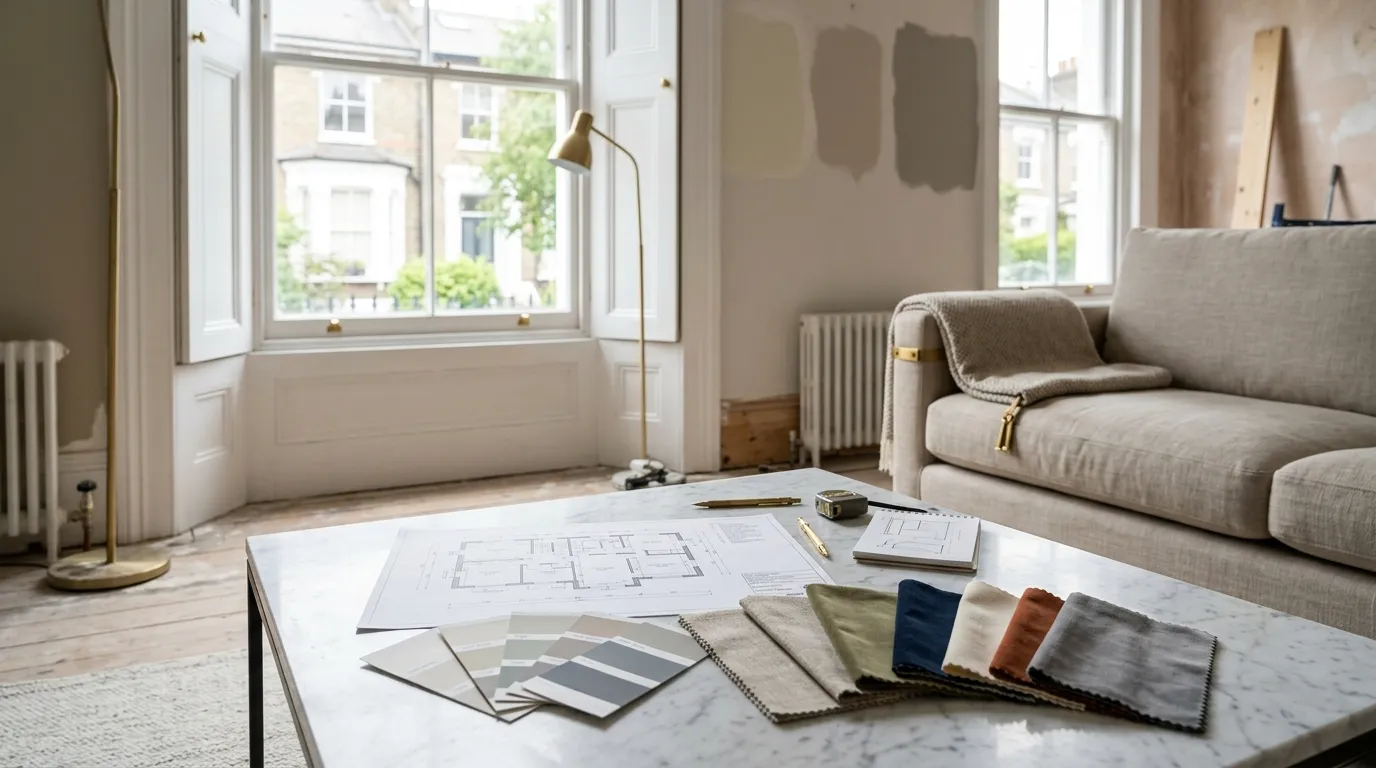
How Much Does an Interior Designer Cost in London in 2026?
What interior designers charge in London in 2026: hourly rates, day rates, per-room fees and percentage models, with real figures and what each one buys you.
Read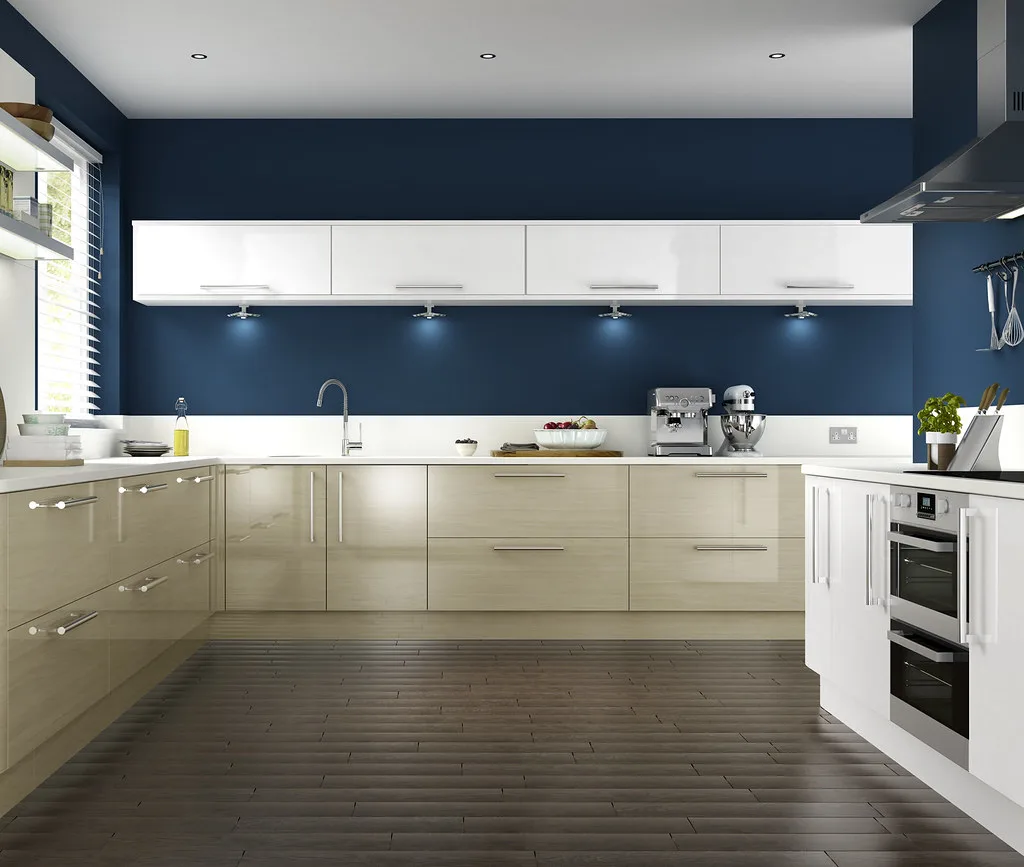
Navy Kitchen Ideas: Blue, Teal and Cobalt Cabinet Designs
Navy kitchen ideas that work: the best blue cabinet shades, worktop and hardware pairings, and how to use navy, teal and cobalt without dating the room.
Read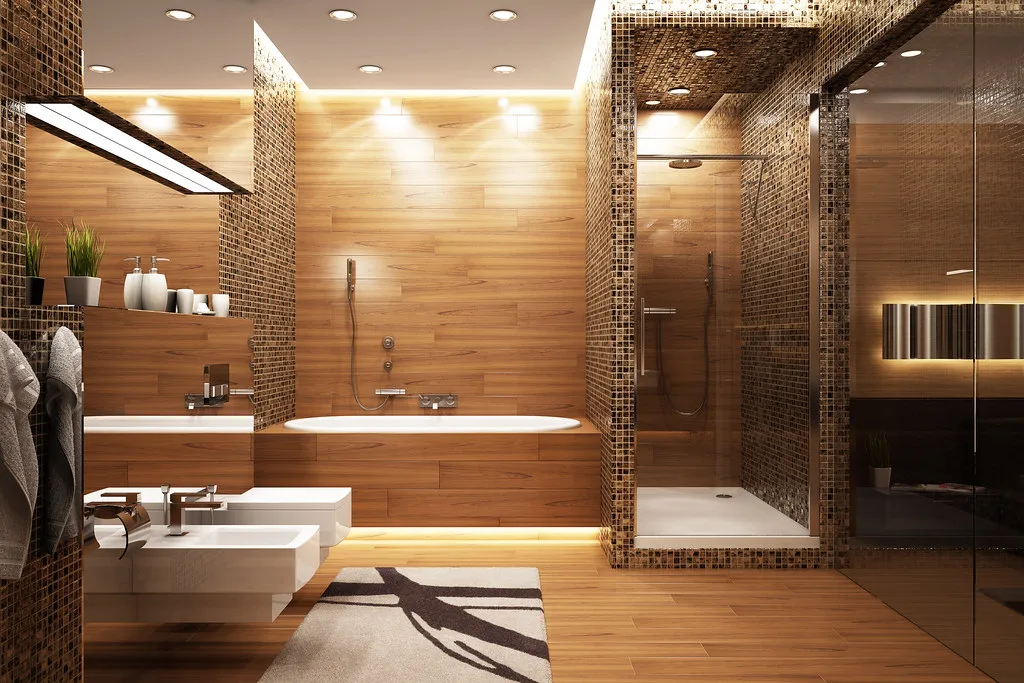
Gold and Brass Bathroom Accessories: How to Style Warm Metallics
How to choose and style gold bathroom accessories and brass fittings, from brushed vs polished finishes to mixing metals and avoiding tarnish.
Read