Interior Designers in Canary Wharf: Tower Flat Rules for 2026
Interior designers in Canary Wharf and Docklands spend most of their time on flats, not houses, and that changes what can hold a project up. On the Isle of Dogs, in Limehouse and in Wapping the obstacles are rarely planning permission. They are your lease, your building’s managing agent, the fire safety rules for tall residential blocks and, in the tallest towers, a national regulator that must approve some building work before it starts.
KDS London is an independent guide, not a design studio, so this is not a list of firms. It sets out what shapes an interior project in Canary Wharf, the Isle of Dogs, Limehouse, Wapping and the wider Docklands in late 2026, and what to ask a designer before you hire one. We checked Tower Hamlets Council’s conservation area, Article 4 and construction noise pages and the government’s guidance on higher-risk buildings on 18 November 2026. For neighbouring areas, see our pages on Islington and Mayfair.
1. Which council are you in?
Canary Wharf, the Isle of Dogs, Limehouse, Poplar and Wapping are in the London Borough of Tower Hamlets. Docklands spreads further than that:
- Royal Docks, Royal Victoria Dock and Silvertown are in Newham;
- Rotherhithe, Canada Water and Surrey Quays are in Southwark;
- Greenwich Peninsula is in the Royal Borough of Greenwich.
Each council has its own planning and noise rules. Check your council tax bill before you look anything up. The rest of this page covers Tower Hamlets.
2. In a flat, the lease comes first
Most Docklands homes are leasehold flats in purpose-built blocks, and the lease usually decides more than the council does. Before any design work, read it for:
- Alterations. Most leases need the freeholder’s written consent for structural changes, moving walls, and often for moving a kitchen or bathroom. Many also need consent for new flooring.
- Flooring. Purpose-built blocks commonly require carpet or an approved acoustic underlay, and some ban hard floors outright. Replacing carpet with engineered oak is one of the most common Docklands briefs, and one of the most common lease breaches.
- Working hours and access. Managing agents often set their own rules for contractors: booked lifts, protected corridors, a deposit against damage, and hours that can be shorter than the council’s.
- Fees. Freeholders can charge for considering a licence for alterations, and for their surveyor’s review. Ask for the figure up front.
A designer who works in Docklands should ask for the lease and the building’s contractor rules at the first meeting. If they do not, that tells you something.
3. Tall towers: when the Building Safety Regulator gets involved
Canary Wharf and the Isle of Dogs have more residential towers than anywhere else in London. Many are “higher-risk buildings” under the Building Safety Act 2022: at least 18 metres or seven storeys tall, with at least two homes.
For building work in an existing higher-risk building, building control approval comes from the Building Safety Regulator, not from the council or a private inspector. Government guidance says you do not need the regulator’s approval if the work is exempt from building regulations, is done under a competent person scheme, or is an emergency repair. Starting work that needs approval without it is a criminal offence. The government’s guidance on building control approval for higher-risk buildings sets out the categories and what an application must include.
In practice, a paint, joinery and furniture scheme does not come near this. Moving walls, altering a kitchen’s ventilation, new electrics beyond a registered electrician’s scheme or anything touching fire compartments can. The building’s accountable person (usually the freeholder or managing agent) will also want to see what you plan to do, because any work that weakens fire separation between flats is their problem as well as yours.
4. Fire doors and compartments: do not touch without asking
In any block of flats over 11 metres, the building’s responsible person must use their best endeavours to check flat entrance doors at least once a year under the Fire Safety (England) Regulations 2022. Your front door is a fire door, and so is its frame, closer, seals and letterbox.
That rules out some popular ideas unless the building agrees them in writing: replacing the front door with a decorative one, adding a cat flap or spyhole, trimming the door to fit thick new flooring, removing the self-closer, and knocking through walls that form part of the fire compartment. Open-plan schemes that remove a hallway door between the kitchen and the bedrooms can also affect the fire strategy for the flat. Ask the designer to check the building’s fire strategy before the layout is fixed.
5. Planning: few controls, but some streets have them
For a flat interior, planning permission rarely comes up. Where it does in Docklands, it is usually because of a conservation area or a listed building.
Tower Hamlets has 58 conservation areas. Those in and around Canary Wharf and Docklands include:
- West India Dock, around the Grade I listed warehouses at the north of Canary Wharf;
- Coldharbour, on the riverside at the north-east corner of the Isle of Dogs;
- Island Gardens, at the southern tip of the Isle of Dogs;
- Narrow Street, the Limehouse riverside;
- St Anne’s Church and Limehouse Cut in Limehouse;
- Naval Row and All Saints Poplar in Poplar, and Balfron Tower;
- Wapping Pierhead and Wapping Wall in Wapping.
The council publishes a character appraisal and management guidelines for each one. If you live in a converted warehouse in Wapping or Limehouse, check whether it is listed: listed building consent covers interiors, so removing original timber, cast iron columns or brick vaults needs consent, and doing it without is a criminal offence.
Tower Hamlets’ Article 4 directions mostly target changes of use rather than home alterations. Its current directions remove the right to turn offices and other Class E premises into homes in parts of the borough, and to convert a family home into a small house in multiple occupation (HMO) in the area shown on the council’s map. If your project turns a house or flat into a shared let, check that map first.
Flood risk. The Isle of Dogs and much of Docklands sit in areas protected by the Thames flood defences. If a project includes ground floor bedrooms, a lower ground floor or a riverside house, check the Environment Agency’s flood map for planning for the address.
6. Site hours: no noisy Saturdays without approval
Tower Hamlets is stricter than most London boroughs about weekend noise. Its construction noise rules allow noisy building work from 8am to 6pm, Monday to Friday. Noisy work on Saturdays, Sundays and bank holidays needs approval from the council’s Environmental Protection (Noise) team first. Many other boroughs, including Merton and Wandsworth, allow 8am to 1pm on Saturdays as standard.
Separately, the council will investigate DIY noise after 8pm or before 8am. In a tower, the building’s own rules are usually tighter still: many limit drilling and stripping-out to set weekday hours to protect neighbours working from home. Build both into the programme. A strip-out and floor change that would take a week in a house can take two in a tower once lift bookings and quiet hours are added.
What to ask a Canary Wharf or Docklands designer
- Have you read my lease and the building’s contractor rules, and what consents will we need from the freeholder?
- Is my building a higher-risk building, and will any of the work need Building Safety Regulator approval?
- Does the layout change the flat’s fire strategy or touch the front door?
- Will the flooring meet the lease’s acoustic requirement?
- How will noisy work fit into weekday-only hours and the building’s own quiet hours?
- Is your fee fixed, hourly or a percentage of the build? Our guides to interior designer fees and interior designer costs in London explain what is normal.
Frequently asked questions
Do I need planning permission to redesign a flat in Canary Wharf? Usually not for internal changes to a flat. You are much more likely to need the freeholder’s written consent under your lease, and in a tall building possibly Building Safety Regulator approval for some building work. Planning becomes relevant for listed warehouse conversions, external changes and changes of use.
What is a higher-risk building? Under the Building Safety Act 2022, a building at least 18 metres or seven storeys tall with at least two residential units. Many towers on the Isle of Dogs and around Canary Wharf qualify. Building control approval for work in them comes from the Building Safety Regulator.
Can I put wooden floors in a Docklands flat? Only if your lease allows it. Many purpose-built blocks require carpet or an approved acoustic underlay and some ban hard floors. Ask the managing agent for the acoustic specification before you choose a floor.
What hours can builders work in Tower Hamlets? Noisy work is allowed from 8am to 6pm, Monday to Friday. Noisy work on Saturdays, Sundays and bank holidays needs approval from the council’s noise team first. Your building may set shorter hours.
Can I replace my flat’s front door? Not without the building’s agreement. In a block of flats, the front door is a fire door and part of the building’s fire safety, and in blocks over 11 metres the responsible person must try to check it every year. Any replacement has to meet the building’s fire strategy.
Which conservation areas are near Canary Wharf? West India Dock, Coldharbour and Island Gardens on the Isle of Dogs, Narrow Street, St Anne’s Church and Limehouse Cut in Limehouse, Naval Row and All Saints in Poplar, and Wapping Pierhead and Wapping Wall in Wapping.
The Folio
Want more like this in your inbox?
One considered idea for your London home, every Thursday.
SubscribeMore from KDS London
All guidesHow Much Does an Interior Designer Cost in London in 2026?
What interior designers charge in London in 2026: hourly rates, day rates, per-room fees and percentage models, with real figures and what each one buys you.
Read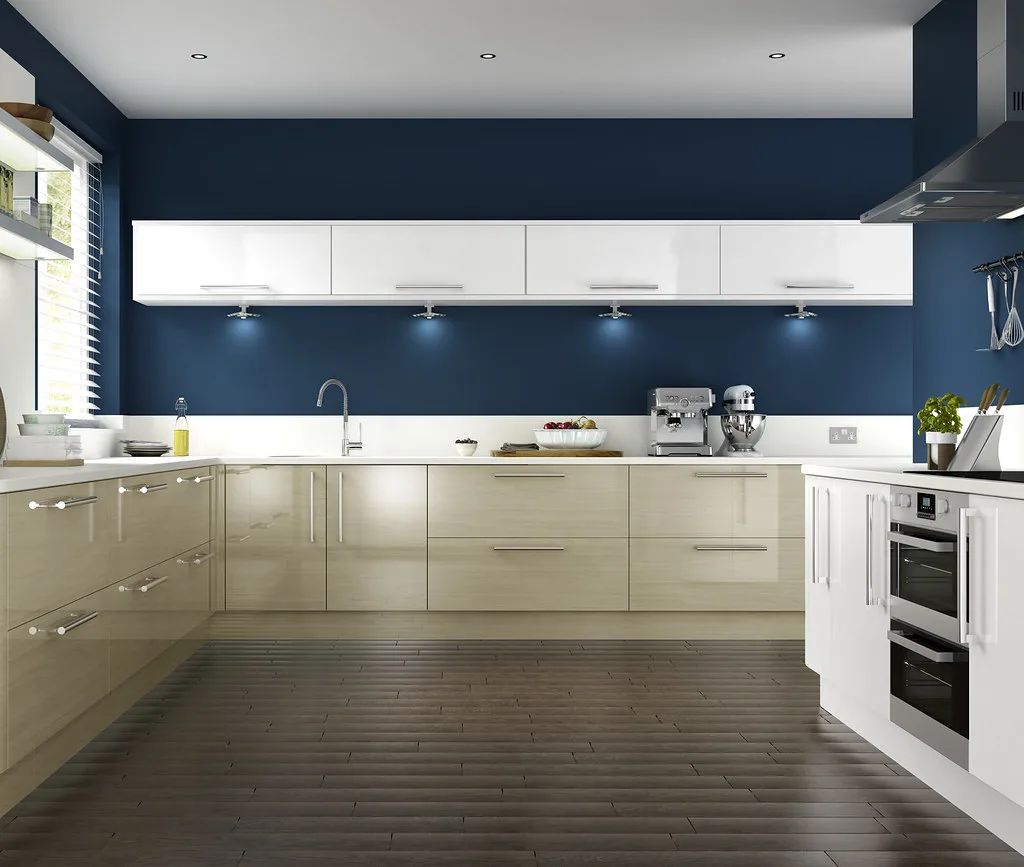
Navy Kitchen Ideas: Blue, Teal and Cobalt Cabinet Designs
Navy kitchen ideas that work: the best blue cabinet shades, worktop and hardware pairings, and how to use navy, teal and cobalt without dating the room.
Read
Gold and Brass Bathroom Accessories: How to Style Warm Metallics
How to choose and style gold bathroom accessories and brass fittings, from brushed vs polished finishes to mixing metals and avoiding tarnish.
Read