Interior Designers in Mayfair: 4 Consents Before Work Starts
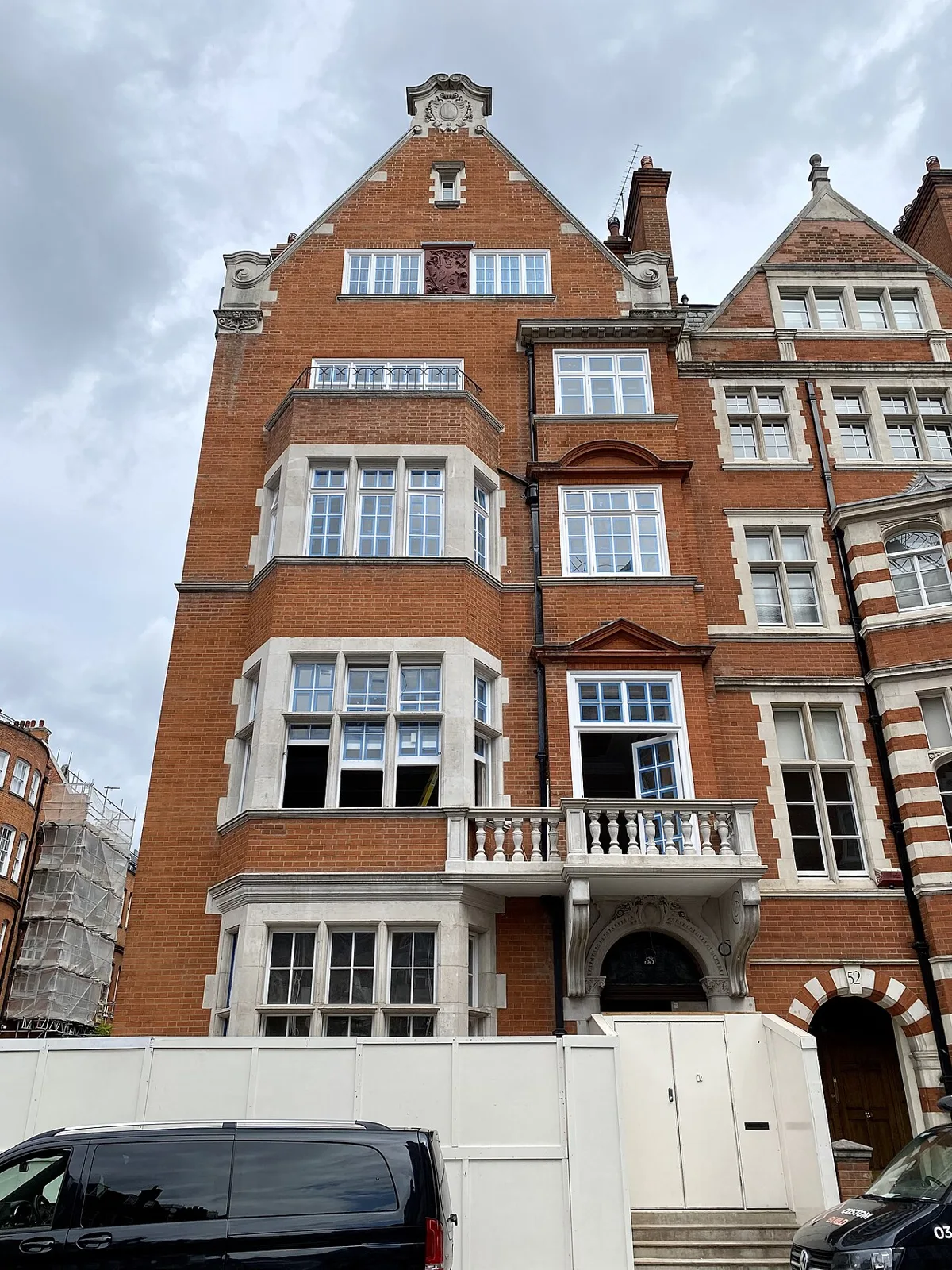
Interior designers in Mayfair work under two sets of rules at once. Westminster City Council controls planning, listed buildings and building site hours, like anywhere in the borough. On top of that, much of Mayfair belongs to the Grosvenor estate, whose Estate Management Scheme means you need Grosvenor’s written consent for many changes even if you own the freehold, and a licence from your landlord if you are a leaseholder. A scheme can win planning permission from Westminster and still be refused by Grosvenor; Grosvenor’s own guidance says you cannot proceed without both.
KDS London is an independent guide, not a design studio, so this is not a list of firms. It covers W1K, W1J and W1S: what shapes an interior project here, and what to ask a designer before you hire one. We checked Grosvenor’s published alterations guidance and Westminster’s construction rules on 11 November 2026. For neighbouring prime areas, see our pages on Kensington and Chelsea.
1. Work out which consents your project needs
A Mayfair interior project can need up to four separate approvals, and they run on different clocks:
| Consent | From | Typically triggered by |
|---|---|---|
| Planning permission | Westminster City Council | External changes, extensions, basements, change of use |
| Listed building consent | Westminster City Council | Almost any change, inside or out, to a listed building |
| Estate consent | Grosvenor, under the Mayfair Estate Management Scheme | External changes, basements, roof terraces, plant, new service connections |
| Licence to alter | Your landlord (Grosvenor or a head lessee) | Most works in a leasehold flat, under the terms of your lease |
Purely internal decoration in an unlisted house usually needs none of them, as our planning permission page explains. The trouble is that a great deal of Mayfair is listed, almost all of it is in a conservation area, and a large share of homes are leasehold flats, so a “simple” kitchen can still touch three of these.
2. What Grosvenor does and does not control
Grosvenor’s guidance for freeholders under the Mayfair and Belgravia schemes is clear about where the line falls.
No consent needed for:
- external repairs using identical materials;
- internal or external redecoration, though external paint colours and types are strictly specified;
- new kitchens, bathrooms or cupboards, provided they use the existing plumbing, electrical and gas connections without making new ones.
Consent needed for:
- extensions, including conservatories and basements;
- replacing or altering windows, including security grilles;
- works to walls and roofs, including new external pipework;
- roof terraces;
- air conditioning, comfort cooling and any other external plant;
- security cameras, satellite dishes, alarm boxes, external lighting and boiler flues;
- any change of use.
That third “no consent” point is the one that catches kitchen and bathroom projects. Move the sink to an island, add a shower room where there was a dressing room, or switch to a new boiler position with a new flue, and you have left the exempt list. In Belgravia, internal load-bearing walls also need Grosvenor’s consent; in Mayfair they do not under the scheme, though Westminster’s listed building rules may still apply.
3. The consent process takes time, and costs a fee
Grosvenor sets out four stages:
- Initial consultation. Your architect, chartered building surveyor or accredited designer sends concept drawings to Grosvenor’s Building Surveying team to test whether the principle is acceptable.
- Formal submission through the Grosvenor Connect online portal, with drawings at 1:50 or larger and an application fee based on the cost of the works to a builder’s finish.
- Approval conditions. The approval letter can add inspection fees, hoarding and scaffolding fees, deposits and the cost of Grosvenor’s consultants (structural, acoustic, highways and others). Grosvenor may also phase or delay approval to avoid disturbing neighbours, particularly in mews.
- Conditional consent, with conditions that must be met before work starts, such as paying fees, providing insurance details and confirming planning and listed building consent.
If your scheme adds floor area or significantly increases the property’s value, Grosvenor may ask for a premium. Ask a designer at the first meeting whether they have taken a scheme through Grosvenor Connect, and build the consent fees into the project budget from the start.
4. Basements and roof terraces are the hard cases
Westminster’s City Plan limits new residential basements to a single storey and to no more than half of the garden. Grosvenor adds its own tests, and says basement developments “can cause severe problems for the buildings and the local area”. Its published criteria include:
- basements are generally discouraged under mews houses;
- digging below a floor that is already below street level is generally not allowed, unless the existing ceiling height is under 2.4m;
- a basement storey should not exceed 3.0m from slab to structural ceiling, with total excavation no deeper than 4.2m;
- excavation that cuts a 45 degree line from the foundations of a neighbouring listed building is unlikely to be approved.
Roof terraces are tightly drawn too. Grosvenor wants them for “occasional enjoyment rather than as permanent outdoor rooms”: not visible from the street, planting and trellis no higher than 1.8m, only discreet down-lighting, and no fire pits, fixed barbecues or permanent audio and video. Some properties have no right to a terrace at all, so check your purchase documents before a designer draws one.
5. Plan the programme around Westminster’s site hours
Westminster’s normal working hours for noisy building work are 8am to 6pm Monday to Friday and 8am to 1pm on Saturday, with nothing on Sundays or bank holidays. Noisy work outside those hours needs a Section 61 prior consent application at least 28 days before work starts. Basement sites run under the council’s Code of Construction Practice, and since January 2018 the council has served Section 60 notices on all of them setting hours of 8am to 6pm on weekdays. Westminster’s Section 61 guidance has the forms.
In mansion blocks, your lease or the building’s rules often set tighter hours still and may require acoustic underlay under new hard floors. Ask the managing agent for the block rules before the designer specifies flooring.
What to ask a Mayfair designer
- Have you taken a project through Grosvenor’s consent process, and how long did it take?
- Will you prepare the 1:50 drawings and the heritage statement, or do I need an architect too?
- Which of my kitchen and bathroom changes need new service connections?
- Have you checked my lease for a licence to alter, and who pays the landlord’s legal and surveyor fees?
- How will the programme fit Westminster’s Saturday 1pm cut-off and any block rules?
Our guides to vetting an interior designer and London interior designer costs cover fees and contracts; the London areas hub has the other neighbourhoods.
Frequently asked questions
Do I need Grosvenor’s permission to redecorate my Mayfair home? Not for internal redecoration in an unlisted building. Grosvenor’s guidance says external redecoration does not need consent either, but external paint colours and types are strictly specified. Listed buildings may need consent for interior work too.
Do I need consent for a new kitchen in Mayfair? Not from Grosvenor if the new kitchen uses the existing plumbing, electrical and gas connections. Moving the sink, adding new waste runs or a new boiler flue takes it outside that exemption. Leaseholders will usually need a licence to alter from their landlord as well.
Can I build a basement in Mayfair? Sometimes, but it is difficult. Westminster limits residential basements to a single storey under no more than half the garden, and Grosvenor generally discourages basements under mews houses and caps excavation at 4.2m.
What hours can builders work in Mayfair? Westminster’s normal hours for noisy work are 8am to 6pm on weekdays and 8am to 1pm on Saturdays, with none on Sundays or bank holidays. Basement sites are limited to 8am to 6pm on weekdays.
Is all of Mayfair owned by Grosvenor? No. Grosvenor’s estate covers a large part of Mayfair, but not all of it. Check your title or lease to see whether your property falls under the Mayfair Estate Management Scheme.
Should I hire a designer who has worked in Mayfair before? It helps. A designer who knows Grosvenor’s process, Westminster’s listed building officers and the mansion block rules will build the consents into the programme, rather than discovering them after the joinery has been ordered.
The Folio
Want more like this in your inbox?
One considered idea for your London home, every Thursday.
SubscribeMore from KDS London
All guides
How Much Does an Interior Designer Cost in London in 2026?
What interior designers charge in London in 2026: hourly rates, day rates, per-room fees and percentage models, with real figures and what each one buys you.
Read
Navy Kitchen Ideas: Blue, Teal and Cobalt Cabinet Designs
Navy kitchen ideas that work: the best blue cabinet shades, worktop and hardware pairings, and how to use navy, teal and cobalt without dating the room.
Read
Gold and Brass Bathroom Accessories: How to Style Warm Metallics
How to choose and style gold bathroom accessories and brass fittings, from brushed vs polished finishes to mixing metals and avoiding tarnish.
Read