Kitchen Base Units: Standard Sizes, Types, and Buying Guide
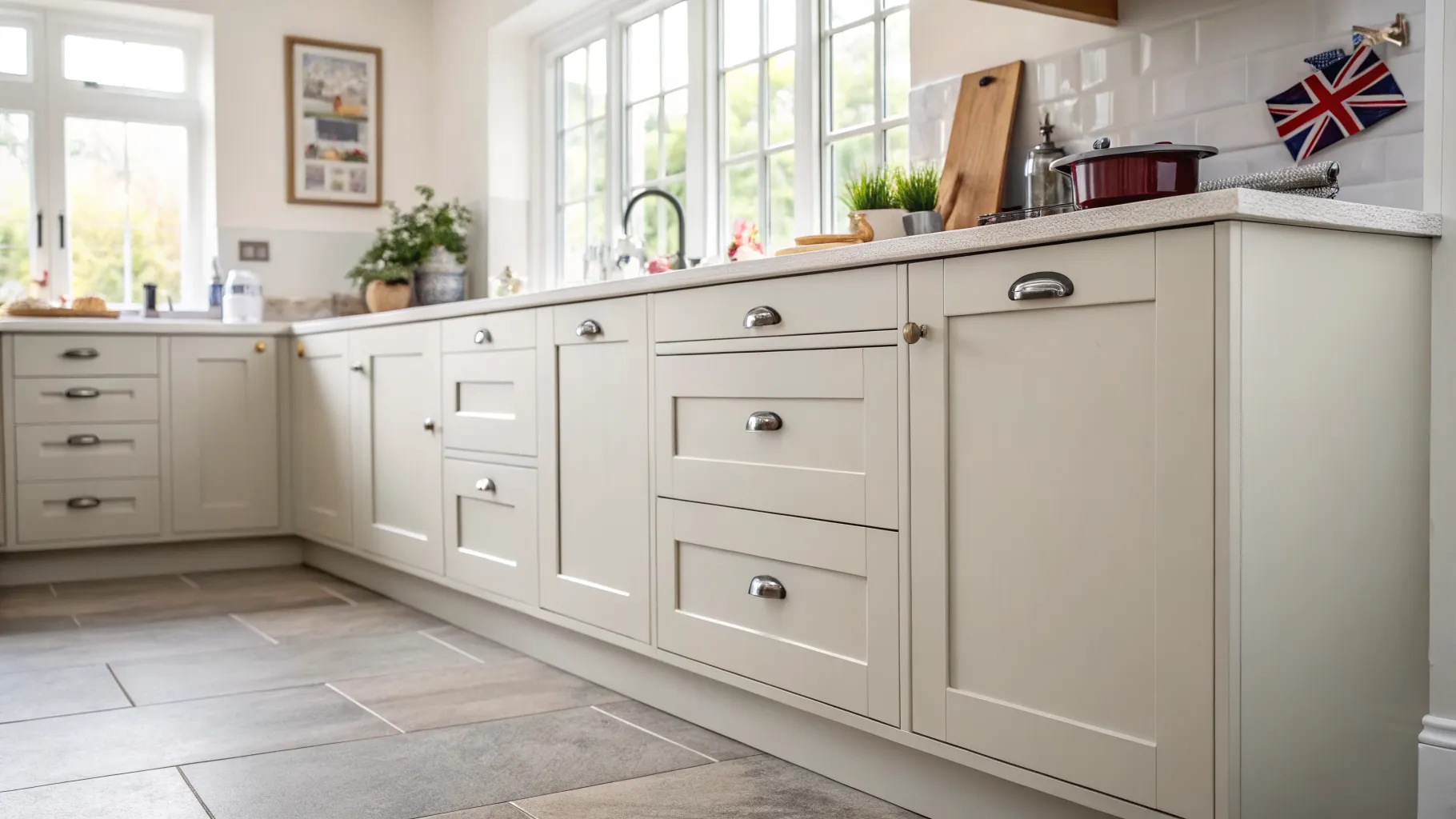
Kitchen base units are the floor-standing cabinets that carry your worktop, sink and hob, and everything in a kitchen layout is built around their sizes. Get the dimensions right and a kitchen plan falls into place; get them wrong and you end up with a fridge that will not fit or a run that is 40mm short. The good news is that UK units follow a small set of standard sizes, so once you know the numbers you can plan a whole kitchen on paper.
This guide covers those standard sizes in millimetres, the main types of base unit and what each is for, and how to work out how many units a wall will take.
Standard base unit sizes
UK base units are remarkably consistent across brands, which is what makes mixing and matching possible.
- Height: the carcass is around 720mm tall. Add a 150mm plinth (the kickboard at the bottom) and a worktop of roughly 20mm to 40mm, and you land at the standard finished worktop height of about 900mm from the floor.
- Depth: the carcass is about 560mm to 570mm deep, with doors taking the total to roughly 580mm to 600mm. Worktops are usually 600mm deep so they overhang slightly at the front.
- Width: this is the number that varies, and the common widths are 300, 400, 500, 600, 800 and 1000mm. Most kitchens are built mainly from 500mm and 600mm units, with narrower ones used to fill gaps.
Because the height and depth are fixed, planning a kitchen is mostly an exercise in adding up widths along each wall.
The main types of base unit
Standard cabinet units have a door (or two) and an internal shelf, sometimes with a single drawer on top. They are the cheapest per metre and the default for general storage.
Drawer units (pan drawers) replace the door with a stack of two, three or four drawers. They cost more but are far easier to use, because everything slides out to you rather than hiding at the back of a cupboard. Many people now fit drawer units below the hob for pans and a couple of door units elsewhere to keep the budget in check.
Corner units turn a corner without losing the cabinet behind it. Options range from a simple L-shaped cupboard to a carousel (a rotating shelf) or a pull-out mechanism that brings the contents forward. Corners are the most awkward part of any layout, so it is worth deciding how you will access them before you buy.
Sink and appliance units are base units adapted to house a sink (no back panel, open at the top) or to take an integrated dishwasher or washing machine, usually built to 600mm to suit standard appliance widths.
For full-height storage, ovens and larders, you move to tall units, which stand roughly 1800mm, 1950mm or 2150mm high at 600mm wide. These are not base units but they sit in the same run, so plan them in at the same time.
How to plan a run of units
Measure each wall in millimetres, then subtract anything fixed, such as a chimney breast or a doorway. What is left is your “budget” of width to fill with units.
Start by placing the big, non-negotiable items: the sink unit, the appliance housings and any tall unit for the oven or fridge. Then fill the remaining gaps with base units, working in the standard widths above. A common mistake is forgetting that worktops and end panels add a few millimetres, so leave a little tolerance rather than planning a wall to the exact millimetre.
If a gap does not match a standard width, you have two options: a made-to-measure unit, or a filler panel (a strip of matching board) to bridge the difference neatly. Fillers are also useful in a corner, where two runs meet and a door needs clearance to open.
For the spending side of all this, our kitchen interior design cost in London guide breaks down where the money actually goes, and if you are tight on space, small kitchen design ideas covers layouts that make the most of a short run. You can compare unit ranges and exact carcass sizes on a manufacturer’s site such as Howdens before you commit.
Base units vs wall units
Wall units (the cabinets above the worktop) follow their own standards: commonly 720mm tall, around 300mm deep, and fitted 450mm to 500mm above the worktop so there is room to work underneath. They share the same standard widths as base units, which keeps a kitchen looking aligned from top to bottom. Plan them together so doors line up and the proportions feel deliberate rather than accidental.
Getting it right
The single most useful habit is to sketch the layout to scale before buying anything, using the standard sizes above. Most problems, an appliance that does not fit, a corner you cannot reach, a run that comes up short, are visible on paper long before they become expensive on site. If your kitchen is part of a wider project, a designer will do this drawing for you and catch the clashes a supplier’s free planner often misses.
Frequently asked questions
What are the standard sizes of kitchen base units in the UK? UK base units are about 720mm tall (around 900mm finished with plinth and worktop) and roughly 560mm to 570mm deep. Widths come in standard sizes of 300, 400, 500, 600, 800 and 1000mm, with 500mm and 600mm the most common.
What is the difference between a base unit and a wall unit? A base unit is a floor-standing cabinet that supports the worktop, sink and hob. A wall unit is mounted on the wall above the worktop, is shallower (around 300mm deep), and is usually fitted 450mm to 500mm above the worktop for easy access.
How tall is a kitchen worktop in the UK? The standard finished worktop height is about 900mm from the floor. That is made up of a 720mm base unit carcass, a 150mm plinth at the bottom, and a worktop of roughly 20mm to 40mm thick.
Are drawer units better than cupboard base units? Drawer (pan drawer) units cost more but are easier to use, because the whole drawer slides out so you can reach the back without bending in. Many people fit drawers near the hob for pans and use cheaper cupboard units elsewhere to balance the budget.
How do I fill an odd gap in a run of kitchen units? If a gap does not match a standard unit width, use a filler panel, a strip of matching board that bridges the space, or order a made-to-measure unit. Fillers are also handy in corners to give doors room to open fully.
The Folio
Want more like this in your inbox?
One considered idea for your London home, every Thursday.
SubscribeMore from KDS London
All guides
How Much Does an Interior Designer Cost in London in 2026?
What interior designers charge in London in 2026: hourly rates, day rates, per-room fees and percentage models, with real figures and what each one buys you.
Read
Navy Kitchen Ideas: Blue, Teal and Cobalt Cabinet Designs
Navy kitchen ideas that work: the best blue cabinet shades, worktop and hardware pairings, and how to use navy, teal and cobalt without dating the room.
Read
Gold and Brass Bathroom Accessories: How to Style Warm Metallics
How to choose and style gold bathroom accessories and brass fittings, from brushed vs polished finishes to mixing metals and avoiding tarnish.
Read