Mid Century Modern Interior: 7 Rules for a London Home
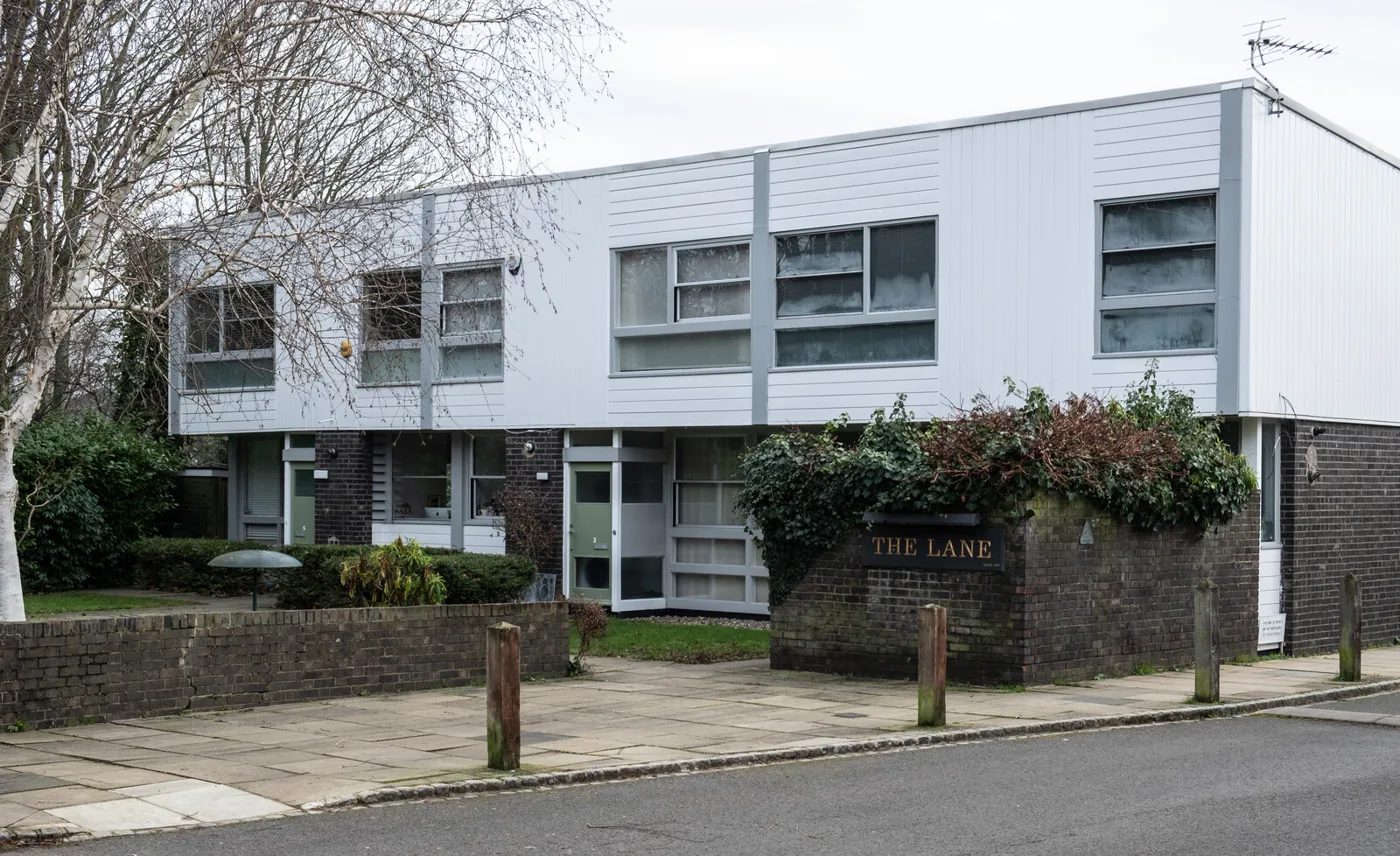
A mid century modern interior is the one style that fits the London housing stock almost too well. A large share of the city was built or rebuilt between the late 1940s and the late 1960s: council flats, Span estates in Blackheath and Ham, and private blocks across the suburbs. The furniture of the same years was designed for those rooms: low, light, made to be moved around, and scaled for ceilings of about 2.4 metres rather than Victorian 3-metre ones.
This page sets out what actually defines the style, the British names worth knowing (most guides only list American and Danish ones), how to buy second-hand without paying for a fake, and how to make the look work in a Victorian terrace that was never built for it.
What counts as mid-century modern
The term covers design from roughly the mid-1940s to the late 1960s. It grew out of the pre-war modernism of the Bauhaus, but softened it: where Bauhaus used tubular steel and hard edges, mid-century designers used warm timber, moulded plywood and gentle curves, partly because new post-war techniques made bent and moulded wood cheap to produce.
The look is consistent wherever it was made:
- Raised off the floor. Sideboards, sofas and beds stand on slim, often tapered legs, so you can see the floor underneath. This is the single quickest way to recognise the style, and it is why these rooms feel bigger than they are.
- Warm, dark-ish timber. Teak above all, plus walnut, rosewood and later light oak and beech.
- Clean lines with soft corners. Long low horizontals, rounded edges, organic shapes in chairs.
- Colour as accent. Mustard, burnt orange, olive, teal and turquoise against off-white walls and timber, not wall to wall.
- Pattern from nature, made abstract. Stylised plants, seed heads and atoms on fabrics and wallpaper.
The 7 rules for doing it well
| Rule | Do | Avoid |
|---|---|---|
| 1. Legs | Most large pieces on visible legs | A room of furniture sitting flat on the floor |
| 2. Timber | One dominant warm wood, repeated | Five different wood tones fighting each other |
| 3. Colour | Off-white or warm white walls, two or three accent colours | Every wall a different 1960s shade |
| 4. Scale | Low sofa, low sideboard, low coffee table | Deep, oversized modern sofas that swallow the room |
| 5. Light | A statement pendant or arc lamp plus table lamps | A single ceiling light |
| 6. Mix | One or two genuine classics with modern pieces | A full period set that looks like a museum room |
| 7. Edit | Sideboard top with three objects | Every surface full of ceramics |
Rule six matters most. A room where every object is from 1962 looks like a film set. Designers almost always mix in contemporary upholstery, a modern rug and current lighting, and let a teak sideboard or a pair of chairs carry the period.
The British names to look for
Most mid-century guides are written in America and point you to Eames and Knoll, which are expensive here and widely faked. Britain had its own industry, centred on High Wycombe, and its pieces turn up in London’s vintage shops and auctions far more often.
- Ercol. Founded by Lucian Ercolani in High Wycombe in 1920. Its 1950s range of steam-bent elm and beech Windsor chairs, dining tables and sideboards defines the British version of the style, and many designs are still made.
- G-Plan. E. Gomme’s range, launched in 1953, sold teak sideboards, wall units and dining sets that you could buy piece by piece. Its teak Fresco range is one of the most common in vintage shops today.
- Robin Day. Designed furniture for Hille from 1948 and the seating for the Royal Festival Hall. His polypropylene chair of 1963 has been in production ever since.
- Lucienne Day. His wife designed the abstract plant-form fabric Calyx for the 1951 Festival of Britain, produced by Heal’s. Her fabric and wallpaper patterns are now reissued and are an easy way to add genuine period pattern.
- Span and Eric Lyons. Not furniture, but the best London houses for the style. Span built estates in Blackheath, Ham, Twickenham and Richmond, with open plans and big windows. The Twentieth Century Society publishes histories of many of them.
From abroad, the names worth knowing are Charles and Ray Eames (the 1956 Lounge Chair), Arne Jacobsen (the Egg chair) and Hans Wegner (the Wishbone chair). All are still made under licence, and all are copied heavily.
Buying second-hand without being caught out
Look for marks. Genuine Ercol often carries a stamped or labelled maker’s mark under the seat or inside a drawer. G-Plan pieces usually have a label or a stamp. A dealer who cannot show you the mark should price the piece as “in the style of”.
Know what a licensed classic looks like. An Eames Lounge Chair from the licensed makers comes with documentation and costs several thousand pounds new. A “premium replica” at a fraction of that is a copy, whatever the listing says, and has no resale value.
Check the teak, not just the photos. Veneer lifting at the edges, water rings and sun bleaching are all fixable, but a cabinet maker will charge for it. Wobbly tapered legs are common; loose leg plates are a cheap fix, split legs are not.
Upholstered pieces and the fire label. Furniture made after 1 January 1950 falls under the Furniture and Furnishings (Fire) (Safety) Regulations 1988, so a shop or dealer selling you a mid-century sofa or chair with its original foam and fabric must be able to show it meets the fire rules. Most original 1950s and 1960s upholstery does not. Expect a dealer to have re-upholstered with compliant foam and fabric, and ask to see the label. A private seller on a marketplace is not bound in the same way, which is one reason old sofas are cheaper there, and one reason to budget for re-upholstery.
Where to look in London. Alfies Antique Market in Marylebone has long been a base for mid-century dealers. The Midcentury Modern fair runs at Dulwich College on Sunday 15 November 2026, according to its organiser Modern Shows. Auction houses’ regular modern design sales are worth watching for G-Plan and Ercol, which rarely make headline prices.
Making it work in London homes
Post-war flats and Span houses
These are the natural home of the style. Keep it honest: retain original parquet or replace with a similar woodblock, keep or restore original glazing proportions, and use furniture of the period’s scale. The low ceilings that make a big modern sofa feel cramped are exactly what a low mid-century sofa was designed for.
Victorian and Edwardian terraces
The style can sit well in a period house if you treat the architecture and the furniture as two separate layers:
- Keep the period features and paint them calm. Cornice, ceiling and walls in one warm white so the mouldings read as texture.
- Let the furniture carry the mid-century look. A teak sideboard in the alcove, a pair of chairs by the window, an arc lamp over the sofa.
- Mind the ceiling height. In a 3-metre room, low furniture can look lost. Add height with a tall plant, a wall-mounted shelving system or a large piece of abstract art.
Barbican-style and brutalist flats
Concrete, timber and big glazing are a perfect backdrop. Warm the hard surfaces with wool rugs, timber and textured fabrics, and keep colour to two or three accents.
How it compares to the styles it is confused with
- Scandinavian: overlaps heavily, since much mid-century furniture is Danish. Scandi today is paler and whiter; mid-century is warmer, darker and more colourful.
- Retro or 1970s: later, louder, with brown, orange and shag pile. Mid-century is lighter and more restrained.
- Japandi: shares the timber and low furniture, but is calmer and almost colourless. Our page on Japandi interior design covers it.
- Contemporary: the design of now. Many of today’s contemporary interiors borrow mid-century shapes, so the two blend easily.
Our overview of interior design styles puts all sixteen side by side, and if you want a designer to source genuine pieces for you, our guide to hiring an interior designer in London explains how sourcing fees usually work.
Frequently asked questions
What is a mid century modern interior? A style based on furniture and design from about the mid-1940s to the late 1960s: furniture raised on slim tapered legs, warm timber such as teak and walnut, clean lines with soft curves, and accent colours like mustard, olive and teal against plain walls.
What is the difference between mid-century modern and retro? Mid-century modern covers roughly 1945 to the late 1960s and is fairly restrained. Retro is a looser term, usually meaning the louder 1970s look with brown and orange palettes, shag pile and heavier furniture.
Does mid-century modern work in a Victorian house? Yes, if you keep the period architecture calm and let the furniture carry the style. Paint walls, cornice and ceiling one warm white, then add a teak sideboard, a pair of period chairs and a statement lamp. Add height with art or shelving so low furniture does not look lost.
Which British furniture makers are mid-century modern? Ercol and G-Plan, both from High Wycombe, are the best known and the most common second-hand. Robin Day’s work for Hille and Lucienne Day’s fabrics for Heal’s are the other key British names.
Is second-hand mid-century furniture safe to buy? Wooden pieces are fine. Upholstered pieces made after 1950 must meet the 1988 furniture fire safety rules when sold by a business, and most original upholstery does not, so expect a dealer to have re-covered them. If you buy privately, budget for re-upholstery with compliant foam and fabric.
Sources
Furniture and Furnishings (Fire) (Safety) Regulations 1988, regulation 4, on legislation.gov.uk. Twentieth Century Society and The Modern House on Span and Eric Lyons. Design Museum on Robin and Lucienne Day. Modern Shows for the Dulwich fair date, checked 12 October 2026.
The Folio
Want more like this in your inbox?
One considered idea for your London home, every Thursday.
SubscribeMore from KDS London
All guides
How Much Does an Interior Designer Cost in London in 2026?
What interior designers charge in London in 2026: hourly rates, day rates, per-room fees and percentage models, with real figures and what each one buys you.
Read
Navy Kitchen Ideas: Blue, Teal and Cobalt Cabinet Designs
Navy kitchen ideas that work: the best blue cabinet shades, worktop and hardware pairings, and how to use navy, teal and cobalt without dating the room.
Read
Gold and Brass Bathroom Accessories: How to Style Warm Metallics
How to choose and style gold bathroom accessories and brass fittings, from brushed vs polished finishes to mixing metals and avoiding tarnish.
Read