Interior Design Styles: 16 Looks and How to Find Yours
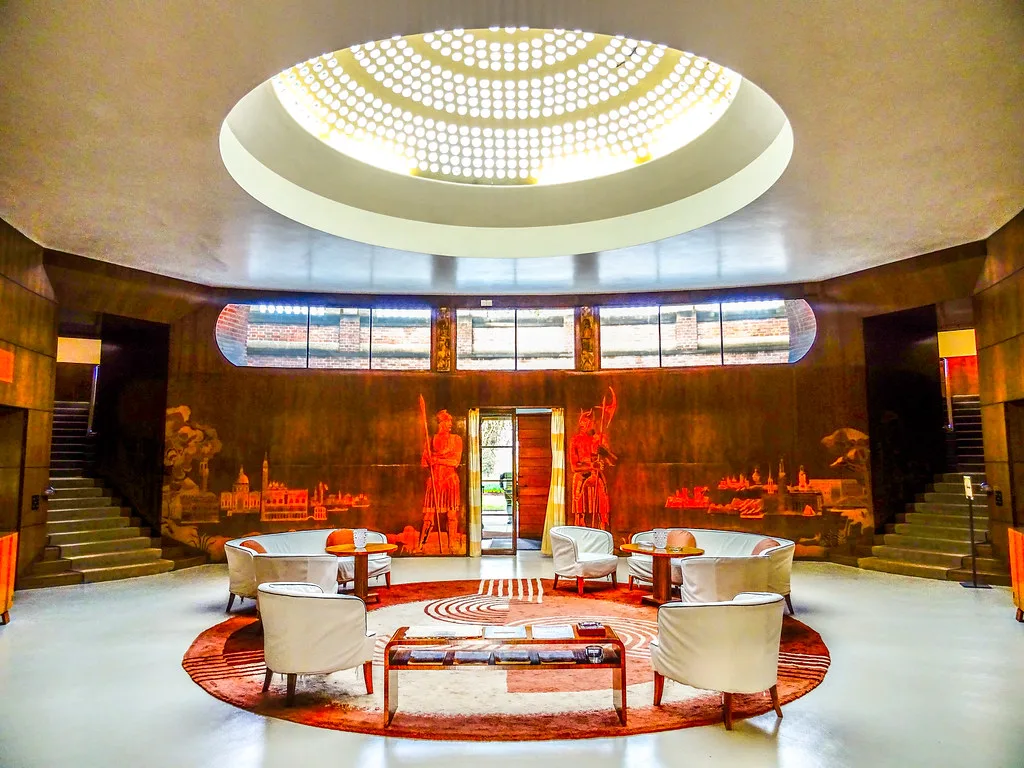
Most lists of interior design styles read like a paint chart: thirty names, a photo each, and no help deciding. This page is shorter on names and longer on what each style actually asks of a room, which ones sit well in a London terrace or mansion flat, and how to tell the difference between looks that get confused, such as modern and contemporary, or Scandinavian and Japandi.
A style is a set of choices that repeat: the shapes of the furniture, the materials, how much ornament there is, how colour is used, and how full or empty the room feels. Once you can name those five things, you can describe any room, and brief a designer far more clearly.
The five things that define any style
| Element | Question to ask | Example contrast |
|---|---|---|
| Line | Are shapes straight, curved or carved? | Bauhaus steel tube against a Victorian turned leg |
| Material | What is it made of, and is it shiny or matt? | Raw oak and linen against lacquer and velvet |
| Ornament | Is decoration added, or does the structure speak for itself? | Cornicing and ceiling roses against flush plaster |
| Colour | Is the palette quiet and tonal, or saturated and contrasting? | Warm whites against deep green and ochre |
| Density | Is the room spare or layered? | Minimalism against maximalism |
Period styles you will meet in London homes
Much of London’s housing was built in a recognisable period, and the architecture already carries a style before you add a single chair. Working with it, or deliberately against it, is the first decision.
Georgian (about 1714 to 1830). Symmetry, tall sash windows, proportioned rooms, restrained plasterwork, panelled doors and fireplaces with simple surrounds. Interiors look best calm and ordered: paired lamps, a central mirror over the fireplace, colours drawn from stone, putty and muted blues and greens.
Victorian (1837 to 1901). The city’s most common period home. Deep skirtings, decorative cornices, encaustic hall tiles, marble or cast-iron fireplaces, and bay windows. Victorian taste was rich and layered, with pattern, dark wood and saturated colour. Our guide to Victorian bathroom ideas shows how to keep the character in a modern bathroom.
Edwardian (1901 to about 1910). Lighter and airier than Victorian, with wider halls, bigger windows and simpler mouldings. It suits paler colours and fewer, better pieces.
Arts and Crafts (late 19th century). A British movement associated with William Morris, reacting against factory-made goods. Hand-made oak furniture, visible joints, botanical wallpapers and tiles, and honest materials. It sits naturally in Victorian and Edwardian houses.
Art Deco (1920s and 1930s). Named after the 1925 Paris exhibition of decorative arts. Geometric patterns, sunbursts, chevrons, lacquer, chrome, mirrored glass and rich colour. London has plenty of Deco mansion blocks and suburban semis where the style belongs. It is also coming back: Houzz reported UK searches for Art Deco interiors up 22% in the first three quarters of 2025 against the year before, and searches for Art Deco bathrooms up 144%.
The current mood is to modernise period homes without stripping them. In Houzz’s UK search data for January to March 2026, searches for “period bathroom” rose 291% and “traditional bedroom” 307% on a year earlier (Houzz UK trends 2026).
Twentieth-century modern styles
Bauhaus and modernism. The Bauhaus school was founded in Weimar in 1919. Its principle that form follows function produced tubular steel chairs, flat surfaces, primary colours used sparingly, and no ornament for its own sake. In a home it reads as clean, graphic and a little austere.
Mid-century modern (roughly mid-1940s to late 1960s). Tapered legs, low sideboards, teak and walnut, moulded plywood, organic curves, and mustard, orange and olive accents. Britain had its own version: Ercol’s Windsor chairs and G-Plan’s teak cabinets are still widely sought second-hand. It works well in 1950s and 1960s flats and in loft spaces, and it mixes easily with contemporary pieces.
Industrial. Taken from converted warehouses and factories: exposed brick, steel-framed glazing, concrete, visible pipework, reclaimed timber and metal light fittings. Classic in Shoreditch and Docklands conversions. In a Victorian terrace, use it in measured doses, such as Crittall-style internal glazing or a concrete worktop, rather than as a whole look.
Modern versus contemporary
The two words are used interchangeably, but they mean different things. Modern refers to a specific historical movement from the early to mid-20th century: clean lines, function first, little ornament. Contemporary simply means the design of now, so it changes. Today’s contemporary rooms tend to favour soft curves, warm neutrals, textured plaster and natural stone, which is a long way from the hard-edged grey minimalism that counted as contemporary fifteen years ago.
Transitional sits between traditional and contemporary: classic proportions and comfortable upholstery, but simpler profiles and a calm, mostly neutral palette. It is the most common brief in London period homes because it respects the architecture without making the house feel like a museum.
Natural, calm styles
Scandinavian. Pale woods such as birch, ash and beech, white or soft-grey walls, simple furniture, wool and sheepskin, and plenty of daylight. Its warmth comes from texture and lighting rather than colour.
Japandi. A blend of Japanese and Scandinavian design. It keeps the Scandinavian comfort but brings in darker woods, lower furniture, more restraint, and the Japanese idea of wabi-sabi, which values imperfection and handmade objects. Compared with Scandinavian it is more muted and more sparse, with earthier tones and fewer accessories.
Minimalism. Fewer objects, hidden storage, flush joinery and a narrow palette. It depends entirely on good storage and good build quality, because there is nothing to hide behind. Handleless kitchens are a typical minimalist choice; see our handleless kitchen guide.
Modern organic. Rounded furniture, limewash and plaster walls, stone, raw linen, and plants. Houzz UK searches for “modern organic” rose 91% in early 2026, with “limewash” up 109% and “natural stone” up 96%.
Expressive, layered styles
Maximalism. Pattern on pattern, saturated colour, collected objects, gallery walls and painted ceilings. It looks deliberate rather than chaotic when one colour or motif repeats through the room. The dark, moody end of it is popular: Houzz UK searches for “moody living room” were up 135% in early 2026.
Eclectic. Pieces from different periods and places, held together by a common palette or repeated material. Harder to do well than it looks, and the style most likely to benefit from a designer’s eye.
Bohemian. Relaxed and well travelled: rattan, kilims, macramé, floor cushions, plants, and global textiles. It suits rooms with good light and owners who like a lived-in look.
Country and cottage styles
English country. Chintz and florals, painted dressers, open shelving, an Aga or range cooker, and comfortable, faded upholstery. In a London house it is usually done lightly, in a kitchen or a snug.
Shaker. From the American Shaker communities: plain frame-and-panel doors, peg rails, and simple turned knobs. The Shaker door is now Britain’s default kitchen style, and it suits both period and new homes. Our Shaker kitchen design ideas and farmhouse kitchen ideas pages go into detail.
Which styles suit which London homes
| Home | Styles that sit naturally | Styles to use with care |
|---|---|---|
| Georgian townhouse | Georgian, transitional, restrained contemporary | Heavy industrial, bohemian clutter |
| Victorian terrace | Victorian, Arts and Crafts, transitional, maximalism | Stark minimalism without warmth |
| Edwardian semi | Edwardian, Scandinavian, Japandi, transitional | Very dark, heavy schemes in small rooms |
| 1930s Deco block or semi | Art Deco, mid-century modern | Rustic country |
| Post-war flat | Mid-century modern, Scandinavian, Japandi | Grand period styles |
| Warehouse or new-build loft | Industrial, minimalism, modern organic | Fussy period details added from scratch |
How to find your own interior design style
- Save 30 to 40 images of rooms you like without thinking about labels.
- Look for repeats. Do the same woods, colours or shapes keep appearing? That pattern is your style, whatever it is called.
- Name what you dislike. It is often faster to rule things out: no gloss, no grey, no clutter.
- Check against your building. A style that fights your architecture costs more to pull off.
- Test it in one room first, often a bedroom or a downstairs loo, before committing a whole house.
Turning that into a usable brief is covered in how to write an interior design brief, and our mood boards and 3D visuals explainer shows how designers present a style before anything is bought. For what is fashionable this year rather than lasting styles, see interior design trends for 2026.
Frequently asked questions
What are the main interior design styles? The most common are traditional (including Georgian and Victorian), transitional, modern, mid-century modern, contemporary, Scandinavian, Japandi, minimalist, industrial, maximalist, eclectic, bohemian, Art Deco and country. Most real homes mix two or three of them.
What is the difference between modern and contemporary interior design? Modern is a fixed historical style from the early to mid-20th century, with clean lines and little ornament. Contemporary means the design of the present day, so it changes over time; right now it leans towards curves, warm neutrals and natural textures.
What is the difference between Scandinavian and Japandi? Both are calm and natural. Scandinavian uses pale woods, white walls and cosy textiles. Japandi adds Japanese restraint: darker woods, lower furniture, earthier colours, fewer accessories, and an appreciation of handmade, imperfect objects.
Can you mix interior design styles? Yes, and most good rooms do. Keep one style dominant, borrow a few pieces from a second, and tie them together with a shared colour, wood tone or metal finish so the mix looks intentional.
Which interior design style is most timeless? Transitional and well-made traditional styles date the least, because they rely on proportion, quality materials and a restrained palette rather than this year’s colours. Shaker is the kitchen equivalent.
How do I describe my style to an interior designer? Bring images rather than labels, and point out what you like in each: the colour, a material, the amount of furniture. Say what you dislike too. A designer will translate that into a named style and a scheme.
Sources
The Folio
Want more like this in your inbox?
One considered idea for your London home, every Thursday.
SubscribeMore from KDS London
All guides
How Much Does an Interior Designer Cost in London in 2026?
What interior designers charge in London in 2026: hourly rates, day rates, per-room fees and percentage models, with real figures and what each one buys you.
Read
Navy Kitchen Ideas: Blue, Teal and Cobalt Cabinet Designs
Navy kitchen ideas that work: the best blue cabinet shades, worktop and hardware pairings, and how to use navy, teal and cobalt without dating the room.
Read
Gold and Brass Bathroom Accessories: How to Style Warm Metallics
How to choose and style gold bathroom accessories and brass fittings, from brushed vs polished finishes to mixing metals and avoiding tarnish.
Read