Japandi Interior Design: How to Make It Work in a London Home
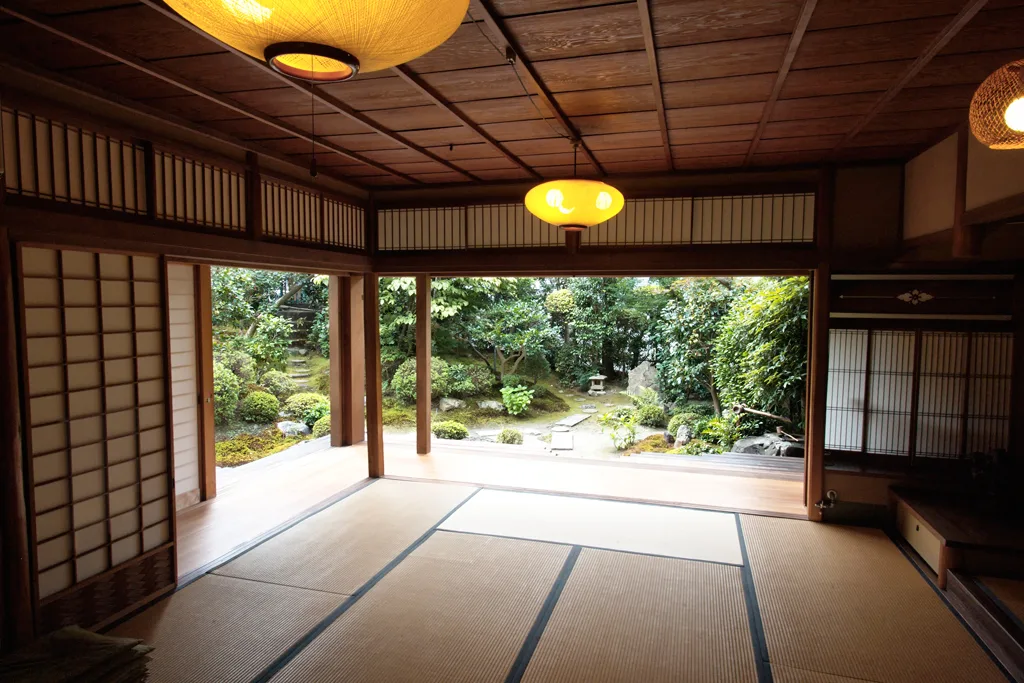
Japandi interior design joins two traditions that have more in common than their geography suggests: the Japanese love of restraint and natural, imperfect materials, and the Scandinavian habit of making a pared-back room comfortable to live in. The result is a calm room in warm, earthy colours, with low furniture, a mix of light and dark timber, and very few objects, each chosen with care.
It photographs beautifully, which is why it fills Instagram. It is also harder to do well than it looks, because it depends on good storage, good materials and a willingness to edit. This page sets out what actually defines the style, how it differs from plain Scandinavian or minimalism, and how to make it work in the houses London actually has: Victorian and Edwardian terraces, mansion blocks and new-build flats.
Where the name comes from
Japandi is a portmanteau of “Japanese” and “Scandi”. The overlap is real: both traditions favour natural materials, simple forms, craftsmanship and a close link to nature. Two ideas sit underneath it:
- Wabi-sabi, the Japanese idea of finding beauty in things that are simple, imperfect and marked by age: a handmade bowl with an uneven glaze, linen that creases, timber that darkens.
- Hygge, the Danish idea of comfort and cosiness: soft textiles, warm light, a room you want to sit in.
On their own, Japanese interiors can feel austere to British eyes and Scandinavian ones can feel pale and a little generic. Japandi borrows the discipline of the first and the warmth of the second.
The five rules of Japandi
| Element | Japandi does | Japandi avoids |
|---|---|---|
| Colour | Warm off-whites, putty, clay, mushroom, soft charcoal, with black or deep green accents | Bright white, pastels, saturated colour |
| Timber | Two tones together: pale oak or ash with walnut or dark-stained oak | One uniform orange-toned wood throughout |
| Furniture | Low, simple, solid, visibly made | Bulky upholstery, ornate legs, gloss |
| Texture | Linen, wool, paper, clay, stone, rattan, matt plaster | Shiny surfaces, synthetic sheen, chrome |
| Objects | A few, handmade, with space around them | Collections, clutter, open shelves crammed full |
If you remember one thing, make it the last row. A Japandi room is defined as much by what is left out as by what goes in.
Japandi against the styles it gets confused with
- Scandinavian: lighter and brighter, more white paint and pale birch, more pattern and colour in textiles. Japandi is darker, earthier and sparser, with lower furniture.
- Minimalism: can be cool and hard, with white walls, handleless gloss and nothing on show. Japandi is minimal in quantity but warm in material: there is always timber, texture and some sign of the hand.
- Wabi-sabi as a style: more rustic and raw, with limewash, rough plaster and worn antiques. Japandi is cleaner-lined and more ordered.
- Modern organic: close cousin, with curved shapes, boucle and travertine. Japandi is more rectilinear and restrained.
Our overview of interior design styles compares these and a dozen others side by side.
A Japandi colour palette
Walls in Japandi are rarely pure white. A warm off-white or a soft putty gives the timber something to sit against without glare. A few Farrow & Ball colours that designers often use for the look:
- Pointing (No. 2003), a warm, slightly chalky white.
- Shaded White (No. 201), a soft off-white with a touch of grey.
- Skimming Stone (No. 241), a pale warm putty.
- Jitney (No. 293), a muted, earthy brown-beige.
- Mole’s Breath (No. 276), a soft dark grey for a bedroom wall, joinery or a kitchen island.
Use matt or dead-flat finishes rather than eggshell where the wall will not be knocked, because sheen works against the soft, chalky feel. Any brand will have equivalents; take samples home and look at them in morning and evening light, which in a north-facing London room can turn a warm neutral grey. Our kitchen colour ideas page goes further into how light changes colour.
Furniture, lighting and textiles
Keep it low. Japanese interiors developed around life at floor level, and Japandi keeps that: a low sofa, a low coffee table, a platform bed that sits close to the floor. Low furniture also makes a room’s ceiling look higher, which helps in a flat.
Choose solid, simple timber. Look for honest joints, visible grain and plain legs. British makers working in this spirit include Ercol, whose spindle-backed chairs sit comfortably in a Japandi scheme. Mix a pale wood with a darker one, and repeat each at least twice in the room so it looks intended.
Light softly. Paper and linen shades in the manner of Isamu Noguchi’s Akari lamps, warm-white bulbs at around 2700K, and more lamps at low level rather than a single bright ceiling light. Our hallway lighting ideas explain layering light in a narrow space.
Use natural textiles. Linen bedding and curtains, wool throws, jute or wool rugs. Keep pattern minimal; texture does the work instead.
Add one living thing. A single sculptural plant, such as an olive tree, a fiddle-leaf fig or a branch in a stoneware vase, does more than a crowd of small pots.
Making Japandi work in London houses
Victorian and Edwardian terraces
The period features are the challenge and the opportunity. Japandi does not ask you to rip out cornicing or fireplaces. Instead:
- Paint walls, cornice and ceiling the same warm off-white so the mouldings read as texture rather than ornament.
- Keep the fireplace and simplify it: a plain stone or painted slip, a timber log store, nothing on the mantel but one or two objects.
- Use the alcoves for flush, painted or timber-fronted joinery with closed doors. Open shelves full of books and ornaments are the quickest way to lose the look.
- Sand and oil original floorboards, or lay a wide oak board. Avoid high-gloss lacquer.
Our living room with fireplace page covers working around a chimney breast.
Mansion flats
Mansion blocks have generous ceiling heights, big windows and often dark, panelled corridors. Japandi suits them well: the proportions take low furniture and large, simple pieces of art. Use warm lighting in the hallway, and a slatted timber screen if you want to divide an open living area without blocking light.
New-build flats
Here the issue is the opposite: plain white boxes with low ceilings and little character. Japandi brings warmth through materials, not architecture. Change the white paint for a warm off-white, add timber through furniture and a slatted wall panel, swap ceiling spotlights for lamps, and invest in closed storage, because new-build flats rarely have enough. Our small kitchen design ideas include storage tactics that work in any small room.
Japandi room by room
- Living room: low sofa in a linen or wool weave, a solid coffee table, one large rug, closed storage for the television and cables.
- Kitchen: flat or slim Shaker doors in timber or a muted paint colour, a stone or matt composite worktop, minimal open shelving with a handful of ceramics. A handleless kitchen suits the look.
- Bedroom: platform bed, linen bedding in oat or charcoal, timber bedside tables, a single wall in a deeper colour. Wardrobes with plain doors, ideally built in.
- Bathroom: timber vanity unit, matt tiles or microcement, a stone basin, brushed or black fittings. See our modern bathroom ideas.
The mistakes that make Japandi look like a showroom
- Buying it all in one go from one shop. The style depends on objects that look collected and made. A room furnished in a single weekend looks like a catalogue page.
- Going too beige. Without contrast, the room becomes flat. Add dark timber, black metal, or one deep wall colour.
- Not enough storage. Clutter breaks the look within a week. Plan closed storage first and furniture second.
- Cheap “wood effect”. Foil-wrapped boards and printed laminate undermine a style built on real materials. One good solid piece beats five imitations.
- Ignoring comfort. Japandi is not austere. If a room is uncomfortable to sit in, it has gone too far towards minimalism.
Should you hire a designer for Japandi?
You can do a convincing Japandi room yourself if you are disciplined about editing. A designer earns their fee in the parts that are hard to fake: bespoke joinery that hides storage, a coherent palette across a whole house, and sourcing handmade pieces from makers. Our guide to what an interior designer costs in London explains the fee models, and our page on writing a design brief helps you describe the look clearly. For inspiration in person, Japan House London on Kensington High Street shows contemporary Japanese design and craft, free to visit.
Frequently asked questions
What is Japandi interior design? A hybrid of Japanese and Scandinavian design: warm, earthy colours, low and simple timber furniture, natural textures and very few, carefully chosen objects. It pairs the Japanese idea of wabi-sabi with the Scandinavian idea of hygge.
What colours are used in Japandi interiors? Warm off-whites, putty, clay, mushroom and soft charcoal for walls, with accents of black, dark timber or deep green. Bright white and saturated colours are avoided.
What is the difference between Japandi and Scandinavian style? Scandinavian is lighter and brighter, with pale woods, more white and more pattern. Japandi is darker and earthier, with mixed light and dark timber, lower furniture and fewer objects.
Can you do Japandi in a Victorian house? Yes. Keep the period features but paint walls, cornicing and ceiling one warm neutral, simplify the fireplace, and use closed joinery in the alcoves so the room stays calm.
Is Japandi going out of style? Its core ideas, natural materials, restraint and good craftsmanship, are long-lived and appear in several 2026 trends. The look dates when it relies on fashion pieces, such as a particular boucle chair, rather than on materials and proportion.
What wood is best for Japandi? Oak, ash and walnut are the most used. Combine a pale and a darker timber, in matt oiled finishes rather than gloss lacquer.
Sources
- Farrow & Ball colour names and numbers checked against the manufacturer’s published colour card, October 2026.
- Japan House London, for current exhibitions of Japanese design.
The Folio
Want more like this in your inbox?
One considered idea for your London home, every Thursday.
SubscribeMore from KDS London
All guides
How Much Does an Interior Designer Cost in London in 2026?
What interior designers charge in London in 2026: hourly rates, day rates, per-room fees and percentage models, with real figures and what each one buys you.
Read
Navy Kitchen Ideas: Blue, Teal and Cobalt Cabinet Designs
Navy kitchen ideas that work: the best blue cabinet shades, worktop and hardware pairings, and how to use navy, teal and cobalt without dating the room.
Read
Gold and Brass Bathroom Accessories: How to Style Warm Metallics
How to choose and style gold bathroom accessories and brass fittings, from brushed vs polished finishes to mixing metals and avoiding tarnish.
Read