How Long Does Interior Design Take? 3 Months to 18
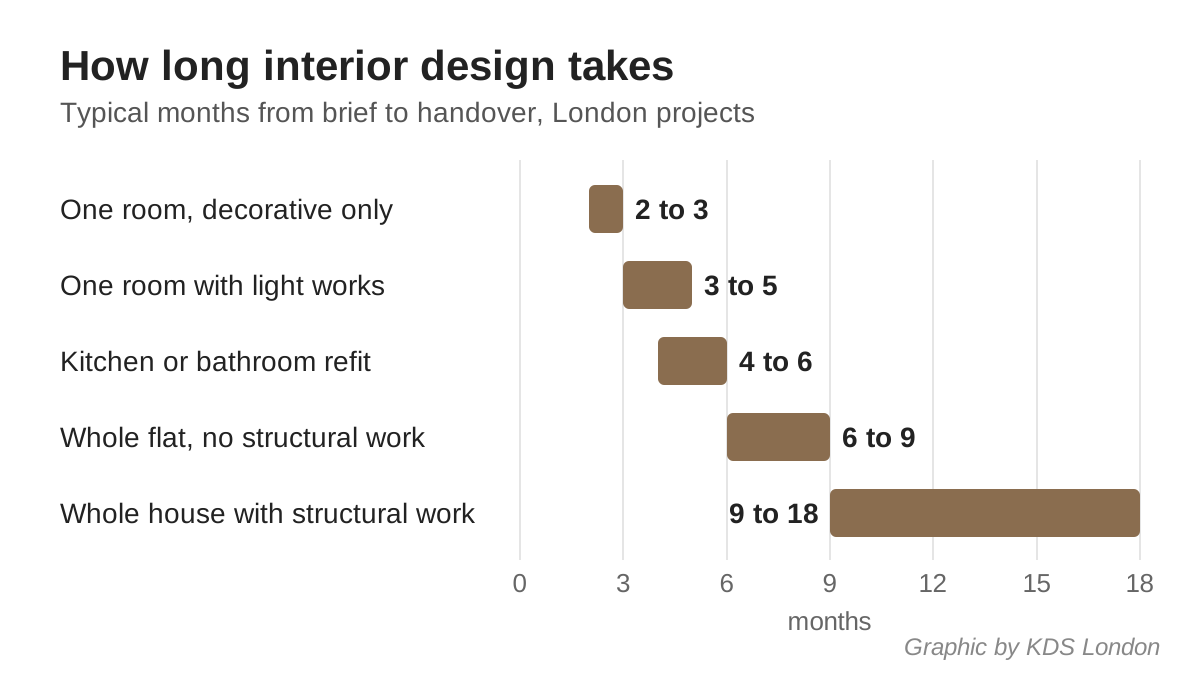
How long does interior design take? For a single room that needs decorating, new furniture and soft furnishings, allow two to three months from the first meeting to the day the last cushion goes in. For a whole London house with building work, allow nine to eighteen months. The spread is wide because design time is rarely what sets the date. Planning decisions, party wall notices, the lead time on a made-to-order sofa and the week your builder can actually start are what move the finish line.
Below is the timeline stage by stage, with the durations we plan around, the external clocks you cannot speed up, and the points where London projects lose weeks.
The short version
| Project | Typical length, brief to handover |
|---|---|
| One room, decorative only (paint, furniture, lighting, curtains) | 2 to 3 months |
| One room with light works (new joinery, rewiring, flooring) | 3 to 5 months |
| Kitchen or bathroom refit | 4 to 6 months |
| Whole flat, no structural work | 6 to 9 months |
| Whole house with extension or structural work | 9 to 18 months |
These are working ranges, not promises. The biggest single variable is whether your project needs a consent (planning, listed building consent or a party wall agreement), because those run on statutory clocks that start only when the application or notice goes in.
Stage by stage: where the weeks go
The stages below follow the RIBA Plan of Work that most UK designers use. Our interior design process page explains what happens and what you sign off at each one; this page is about how long each takes.
Brief and survey: 1 to 3 weeks. A first meeting, a measured survey, and a written brief covering budget, rooms, how you live and what must stay. It goes quickly if you arrive knowing your budget. It drags if the budget is still a conversation between partners.
Concept design: 3 to 6 weeks. Layouts, a mood board or sample scheme, and the first cost check. One round of changes is built into most fee proposals; every extra round adds a week or two.
Developed and technical design: 4 to 10 weeks. Detailed drawings, lighting and electrical plans, joinery drawings, and the specification of every finish, fitting and piece of furniture. This is the stage that grows with the size of the project, because every room needs its own drawings and every item its own decision.
Tender and appointing a contractor: 3 to 6 weeks. Sending the package to builders, getting comparable quotes back, and agreeing a contract. The good London contractors are often booked months ahead, so the real delay here is frequently the start date, not the tender.
Procurement: overlapping, but often the critical path. Orders go in as soon as designs are signed off, and lead times, not the builder, often decide when you can move back in. Made-to-order sofas from mainstream UK makers typically take six to twelve weeks, with Loaf quoting six to nine weeks for most of its handmade range. Bespoke joinery, a made-to-measure kitchen and stone worktops add their own queues, and worktops cannot even be templated until the base units are fitted.
Works on site: from days to months. Decorating a room can take a week or two. A kitchen or bathroom refit usually runs several weeks. A whole-house refurbishment with structural work is measured in months.
Installation and styling: 1 to 2 weeks. Furniture delivery, curtains hung, art placed, the snagging list written. Budget this time: squeezing it into a weekend is how things get scratched.
The clocks you cannot speed up
Three statutory clocks sit outside anyone’s control, and they are where most “why is this taking so long?” questions come from.
Planning permission. In most cases, planning applications are decided within eight weeks, according to GOV.UK’s planning guidance, and the clock starts only once the council has validated the application. Add the time to prepare drawings before you apply, and the chance of a request for more information. Listed building consent runs on a similar eight-week target and is common across central and west London.
Party wall notices. If your works touch a shared wall or involve digging near a neighbour’s foundations, the Party Wall etc. Act 1996 requires notice before you start: two months for work on the party wall itself and one month for excavation. A neighbour who does not reply within 14 days is treated as being in dispute, which means surveyors and more weeks. In a terrace, serve notices while the drawings are still being finished.
Building control sign-off. Structural changes, new electrics and new drainage all need inspecting. Your contractor usually books these, but a missed inspection can hold up the next trade.
What makes projects overrun
The same five things account for most overruns on London projects:
- Late decisions. A tile chosen three weeks after the tiler was booked means a tiler who has moved on to another job.
- Changes after sign-off. Moving a socket after the first-fix electrics is a day. Moving a kitchen island after the floor is laid is a fortnight.
- Discontinued or delayed items. A fabric or light fitting goes out of stock. Good designers specify an alternate for anything critical.
- What the builder finds. Old London houses hide rotten joists, failing lintels and wiring that has to go. A contingency of time as well as money covers it.
- Contractor availability. The start date slips because the previous job overran. Agree the start date in the contract, not in conversation.
How to keep your project on time
- Set the budget before the brief, so the concept stage is not spent redesigning to cost. Our interior design budget planner helps.
- Make decisions in batches, at the meetings set for them, and give written sign-off.
- Order long-lead items as soon as they are approved, even if they then sit in storage.
- Serve party wall notices and submit planning applications as early as the drawings allow.
- Ask your designer for a programme with the critical path marked, and ask what changes it at each review.
If you are still weighing whether the extra time is worth paying a professional for, see is an interior designer worth it, and for what the time costs, interior designer fees explained.
Frequently asked questions
How long does interior design take for one room? Usually two to three months from first meeting to finished room if the work is decorative, and three to five months if new joinery, electrics or flooring are involved. Furniture lead times are usually the deciding factor.
How long does a whole-house interior design project take? In London, typically nine to eighteen months including building work. The design stages are rarely the slow part; consents, contractor availability and lead times on bespoke items are.
Why does interior design take so long? Because much of the timeline is outside the designer’s hands: planning decisions take up to eight weeks, party wall notices need one to two months, and made-to-order furniture often takes six to twelve weeks to arrive.
Can I speed up my interior design project? Yes. Fix the budget early, make decisions promptly and in writing, order long-lead items as soon as they are approved, and start any planning or party wall process while designs are still being finished.
How long does the design stage itself take? For a single room, around four to eight weeks from brief to a signed-off scheme. For a whole house, three to five months is common before works can start.
Does an interior designer make a project faster? Often, because they run the programme, chase suppliers and keep trades in sequence. Where they cannot help is with statutory timescales and a contractor’s availability.
Sources
- GOV.UK: planning permission in England and householder decision targets.
- GOV.UK: party walls and building work (notice periods and the 14-day response).
- Loaf and UK sofa retailers’ published delivery times for made-to-order sofas.
- RIBA Plan of Work 2020, as adopted by the British Institute of Interior Design.
The Folio
Want more like this in your inbox?
One considered idea for your London home, every Thursday.
SubscribeMore from KDS London
All guides
How Much Does an Interior Designer Cost in London in 2026?
What interior designers charge in London in 2026: hourly rates, day rates, per-room fees and percentage models, with real figures and what each one buys you.
Read
Navy Kitchen Ideas: Blue, Teal and Cobalt Cabinet Designs
Navy kitchen ideas that work: the best blue cabinet shades, worktop and hardware pairings, and how to use navy, teal and cobalt without dating the room.
Read
Gold and Brass Bathroom Accessories: How to Style Warm Metallics
How to choose and style gold bathroom accessories and brass fittings, from brushed vs polished finishes to mixing metals and avoiding tarnish.
Read