Is an Interior Designer Worth It? When the Fee Pays Back
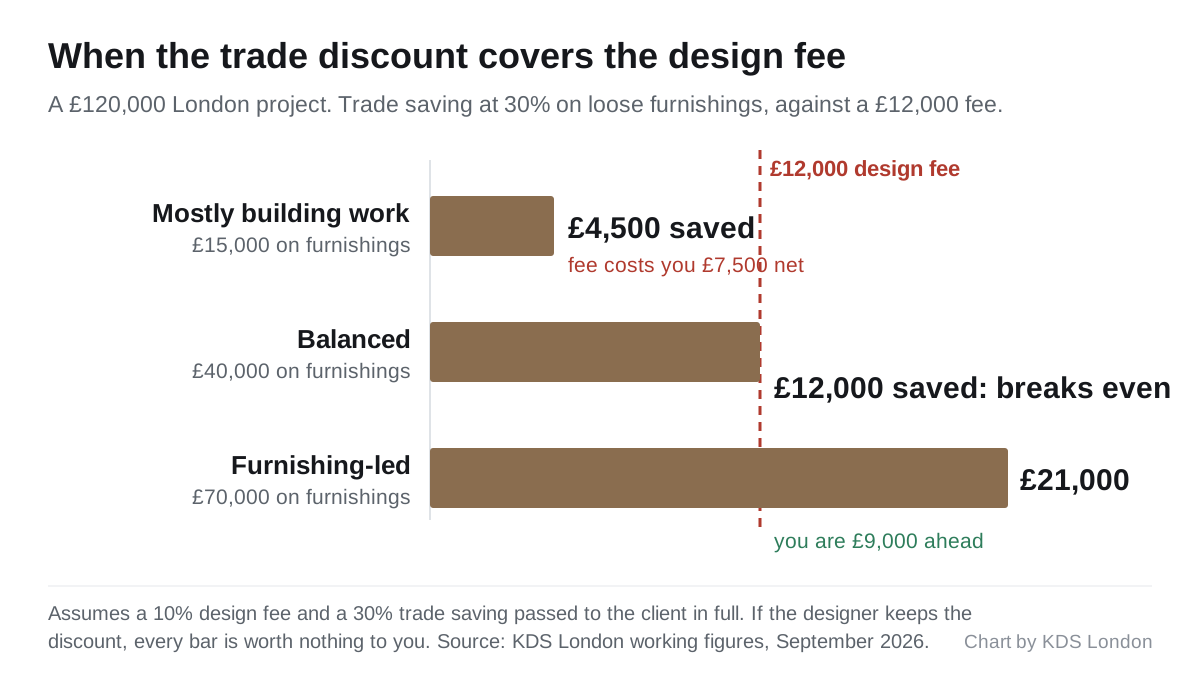
Whether an interior designer is worth it has a more precise answer than the profession usually gives, and it has almost nothing to do with taste. It turns on one ratio: how much of your budget goes on things a designer can buy at trade, against how much goes on building work they cannot discount at all. Get that ratio above roughly a third and a good designer can be close to free. Below it, you are paying a fee for judgement and project control, which may still be the right call but is a different decision entirely.
This page works through the sum, the three other places the money genuinely comes back, and the situations where hiring one is a waste.
The sum that decides it
A London designer on a whole-house project typically charges 10 to 15% of the build cost, so on a £120,000 project you are looking at around £12,000 in fees. Our interior designer fees explained page breaks the models down, and the cost calculator will price your own project.
Against that, designers hold trade accounts with furniture, fabric, lighting and paint brands. The discount is real, generally somewhere between 10 and 40% off retail, and after adjusting for the VAT trap (trade prices are quoted ex VAT, retail prices include it) a genuine saving of about 30% is a fair working figure.
So the break-even is simple arithmetic. If the fee is 10% of the total and the trade saving is 30% of what you spend on furnishings, the discount covers the fee when furnishings reach a third of the project.
| Your £120,000 project | Spend on loose furnishings | 30% trade saving | £12,000 fee |
|---|---|---|---|
| Mostly building work | £15,000 | £4,500 | Costs you £7,500 net |
| Balanced | £40,000 | £12,000 | Roughly breaks even |
| Furnishing-led | £70,000 | £21,000 | You are £9,000 ahead |
A gut renovation that is walls, wiring, plaster, plumbing and a new roof has almost nothing in it a designer can buy at trade. A tired but structurally sound flat that needs furniture, curtains, lighting, rugs and joinery is the opposite case.
The catch, and it is a big one. That saving only reaches you if your designer passes the discount on. Three models exist and all are legal: pass it on in full, split it with you, or keep it entirely and bill you at retail. If your designer keeps it, the third column of that table is worth nothing to you and the fee is a pure cost. Settle this before you sign, using the contract questions in our trade discount guide, and run the numbers through the procurement markup calculator.
Where else the money comes back
The discount is the only return you can calculate in advance. Three others are real but harder to price.
Budget discipline
The Houzz & Home Report for 2026, based on over 1,000 UK respondents surveyed between March and June 2026, found that 38% of homeowners exceeded their initial renovation budget, 33% came in on budget and just 3% came in under. The most striking number is the fourth one: 26% set no budget at all before starting.
That last group is where a designer earns their fee fastest. A costed schedule produced before anything is ordered, with a contingency built in and every item priced, is not glamorous work, and it is the main thing standing between a project and a 20% overspend.
Decisions you only make once
The expensive mistakes in a renovation are not the cushions. They are the kitchen island that leaves 800mm of circulation instead of 1,000mm, the sockets in the wrong wall, the bathroom door that swings into the basin, the radiator that kills the only place a sofa fits. Those get fixed by moving pipework and chasing walls, or they never get fixed at all and you live with them for fifteen years.
A designer who produces proper plans, elevations and a lighting layout before the first wall comes down is buying you out of that category of error. This is worth most on kitchens and bathrooms, which is why kitchen interior design cost is one of the most common single-room engagements in London.
Fewer variations on site
Every change a builder makes mid-job is priced at the builder’s convenience rather than in competition. A complete set of drawings and a finalised specification means the contractor prices once, against a fixed scope, and has fewer openings to charge for variations. On a large project that alone can move more money than the design fee.
When it is not worth it
Be honest about these. A designer who is any good will tell you the same.
- One small room on a tight budget. If the whole project is £6,000 and a per-room design package is £2,000, you have spent a third of the budget on drawings. Read our cost per room page and consider a single paid consultation instead.
- A project that is 90% building work. A loft conversion, a rewire, a damp job. The value here sits with your architect and contractor. Bring a designer in at the finishes stage if at all.
- You have clear taste and time. The designer’s fee buys taste, co-ordination and hours. If you already know what you want and have the evenings to source it, you are paying for the co-ordination only, which is worth less.
- Your designer keeps the trade discount and charges full fees. Not inherently wrong, but it removes the strongest financial argument, so judge the engagement purely on the design.
- You want one opinion, not a service. Hire an hour of consultancy. Do not sign a full-service contract to settle a paint colour.
There is one claim worth treating sceptically: that professional design reliably raises what your home sells for. There is no dependable UK evidence for a specific uplift, and anyone quoting you a percentage is guessing. Hire a designer for how you will live in the house, not for a resale figure nobody can substantiate.
The middle options most people miss
It is not a binary. Between doing it yourself and a full-service contract sit several arrangements that solve most of the problem for a fraction of the fee.
Paid consultation. Two hours on site, a written summary, no ongoing commitment. Good for settling layout, lighting and a palette before you commission anyone else.
Design only. The designer produces drawings, a specification and a schedule, then hands it to you to procure and manage. You keep the co-ordination work and lose the trade discount, but the expensive decisions are made properly.
Room by room. Commission the kitchen and the main bathroom, the two rooms where mistakes are permanent and costly, and do the bedrooms yourself.
Procurement only. Less common, but some practices will buy on your behalf against your own scheme, which gets you the trade pricing without the design fee.
Our hire an interior designer in London page covers how to brief each of these so you do not end up paying full-service rates for a partial service.
What to check before you hire anyone
“Interior designer” is not a protected title in the UK. Anyone can use it. The nearest thing to a professional standard is the British Institute of Interior Design, whose BIID Registered Interior Designer title requires six years of combined education and practice, professional indemnity and public liability insurance, an in-person registration assessment presenting a completed project, adherence to a code of conduct, and 20 hours of recorded CPD a year.
That is not a guarantee of taste. It is a guarantee that someone is insured, accountable and has finished real projects, which is the part that protects you when something goes wrong.
Three more checks, whoever you hire. Ask to see a full drawings package from a past job, not just photographs. Ask for the fee structure in writing, including how procurement and the trade discount are handled. And ask who is actually doing the work, because on some practices the named designer wins the job and a junior runs it.
The short answer
An interior designer is worth it when your budget is furnishing-led rather than building-led, when you are spending enough that a 20% overrun would genuinely hurt, and when the fee structure passes the trade discount to you. On a furnishing-heavy London project those three conditions together can make the engagement close to cost-neutral.
An interior designer is not worth it on a small single room, on a project dominated by construction, or when you have both the taste and the time. In those cases buy an hour of their attention and spend the rest on the room.
Frequently asked questions
How much does an interior designer cost in London? Commonly 10 to 15% of the build cost on a whole-house project, or an hourly rate that typically runs from around £120 upwards for an experienced central London designer, or a fixed fee per room. Our London cost page and the whole house guide have the current ranges.
Do interior designers actually save you money? They can, mainly through trade pricing and by preventing expensive mistakes and variations. Whether the saving exceeds the fee depends on how much of your budget is furnishings rather than building work, and on whether the designer passes the trade discount to you rather than keeping it.
Is an interior designer worth it for one room? Usually not on a full-service basis, because the fixed cost of the design work is spread over a small budget. A paid consultation or a design-only package is generally the better value route for a single room, unless it is a kitchen or bathroom where layout mistakes are permanent.
What is the difference between an interior designer and an interior decorator? A decorator works on surfaces and furnishings: colour, fabric, furniture, styling. A designer also works on the space itself, including layout, joinery, lighting design and co-ordination with architects and contractors, and will produce technical drawings a builder can work from. The titles are not protected, so ask what the individual actually does rather than relying on the word.
Can I hire an interior designer for just a few hours? Yes. Most practices offer a paid consultation, typically a site visit with written recommendations afterwards. It is the cheapest way to get professional judgement on layout and lighting before you commit to anything, and many designers will credit the fee against a larger commission later.
Should the designer or I buy the furniture? If they pass the trade discount on in full, let them buy it, because you get the lower price and they carry the ordering, delivery and snagging. If they keep the discount or add a markup on top of retail, price a few items yourself before agreeing. The difference is set out in our trade discount guide.
Sources
The Folio
Want more like this in your inbox?
One considered idea for your London home, every Thursday.
SubscribeMore from KDS London
All guides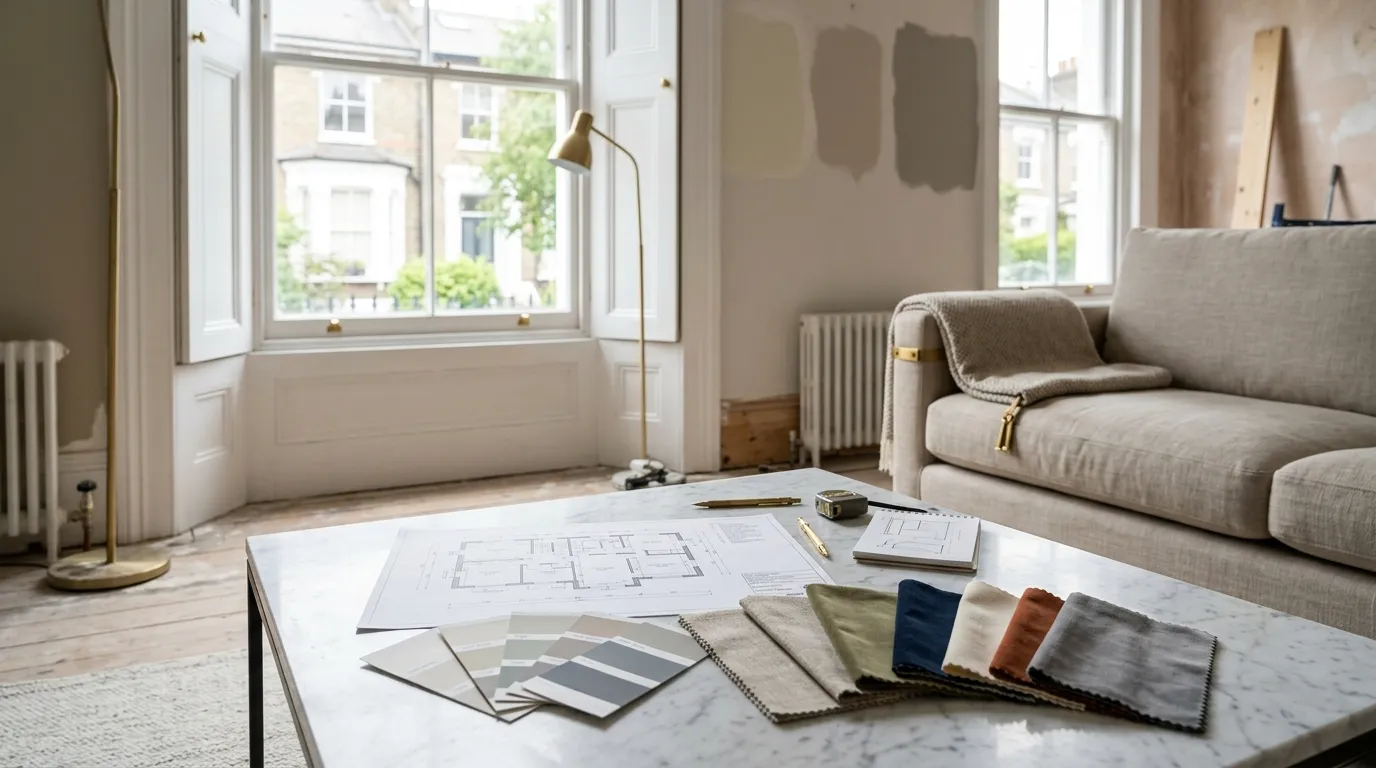
How Much Does an Interior Designer Cost in London in 2026?
What interior designers charge in London in 2026: hourly rates, day rates, per-room fees and percentage models, with real figures and what each one buys you.
Read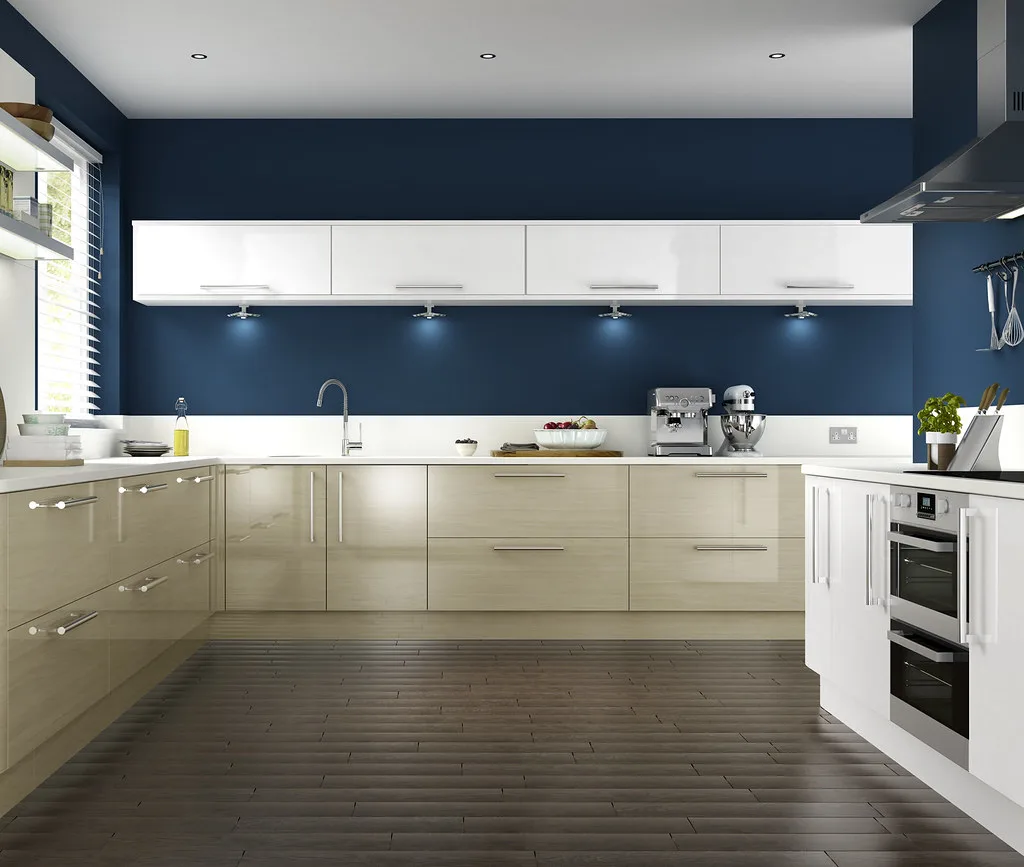
Navy Kitchen Ideas: Blue, Teal and Cobalt Cabinet Designs
Navy kitchen ideas that work: the best blue cabinet shades, worktop and hardware pairings, and how to use navy, teal and cobalt without dating the room.
Read
Gold and Brass Bathroom Accessories: How to Style Warm Metallics
How to choose and style gold bathroom accessories and brass fittings, from brushed vs polished finishes to mixing metals and avoiding tarnish.
Read