Interior Design Brief: 9 Sections and a Free Template
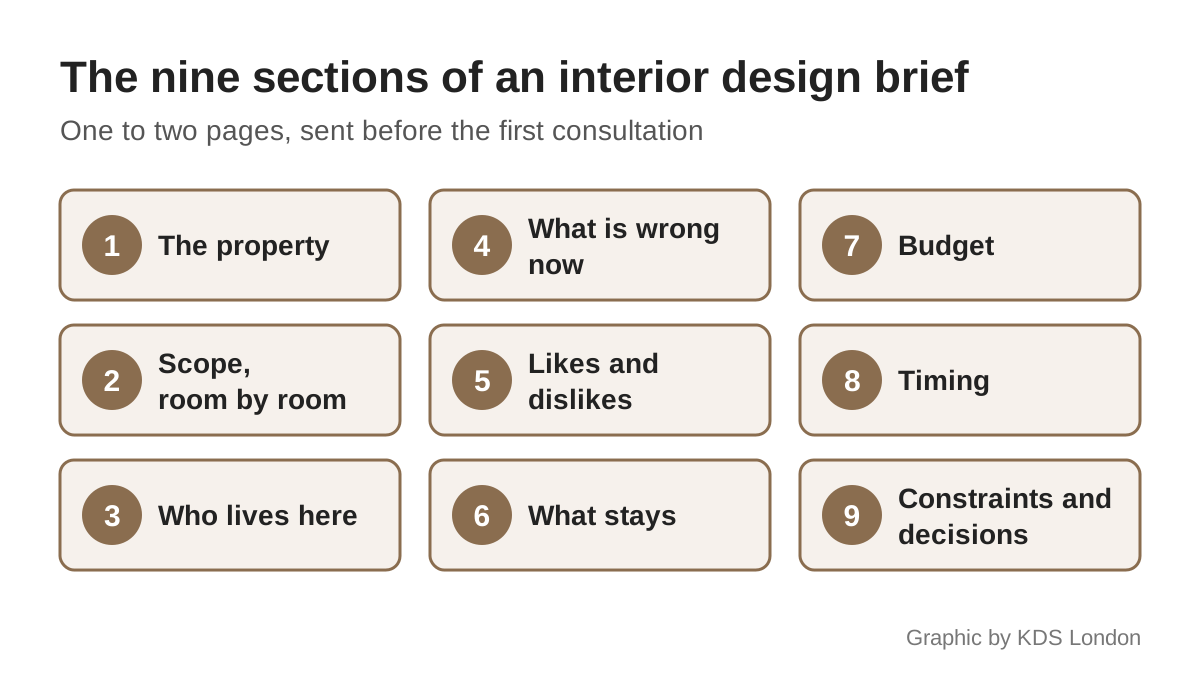
An interior design brief is a short written document that tells a designer what you want the project to achieve, what you can spend, how long you have, and what they cannot change. It is the single most useful thing you can bring to a first meeting, and it does more work later than most clients expect. The British Institute of Interior Design’s guide for clients says the brief, “once defined, will become the basis for the contractual agreement between you and your designer”. In other words, it is the document you will both point at when there is a disagreement about what was asked for.
This page sets out what goes in a good brief, the sections clients most often leave out, and a template you can copy, fill in and send.
What a brief is for, and what it is not
A brief is a description of the problem, not the solution. You do not need to choose paint colours or draw a layout. The designer is being paid to do that. What they cannot do without you is know how your household lives, what drives you mad about the space now, what money is really available, and which decisions are already made.
The BIID’s advice is to draw up “a project brief or wish-list” before contacting designers, and to be clear “what you wish to achieve, what your budget is and any important information on timeframe or other special project requirements”. Once appointed, the designer helps you develop it further. So the first version can be rough. It should be honest.
In the eight-stage interior design process, the brief belongs to Stage 1, Preparation and Briefing. Changes are cheap at this point and get steadily more expensive afterwards.
The nine sections of a good brief
1. The property
Address, type (Victorian terrace, 1930s semi, mansion block flat, new-build), and whether you own the freehold or a leasehold. Include a floor plan if you have one; estate agent particulars are fine to start with. Note ceiling heights, which way the main rooms face, and anything structural you already know about, such as a chimney breast that has been removed or a loft conversion.
2. Scope: which rooms, and how far
List every room in scope and, for each, the level of change:
- Refresh: decoration, soft furnishings, lighting, furniture.
- Refit: new kitchen or bathroom, joinery, flooring, electrics.
- Rework: moving walls, doors or services.
This one line per room tells a designer more about the fee and the programme than anything else in the brief.
3. Who lives here, and how
Everyone in the house, with ages; pets; anyone who works from home and on which days; how often you cook properly; whether you entertain, and how many; overnight guests; accessibility needs now or likely within ten years. A family of four with a dog and a hybrid worker needs a different hallway from a couple who eat out four nights a week, even in identical houses.
4. What is wrong now
The most useful paragraph in most briefs. Be specific: “the kitchen gets no sun after 11am”, “nowhere to put coats, so they end up on the stairs”, “the living room is used by the children all day and we have nowhere to sit in the evening”. Designers solve problems; give them the problems.
5. What you love and what you cannot stand
Images help, but only with notes. A Pinterest board of thirty kitchens tells a designer very little; three images with a line each (“this colour of timber”, “the open shelving, not the tiles”) tells them a lot. Images of things you dislike are often more useful than the ones you like, because they rule out whole directions at once.
6. What stays
Furniture, art, rugs, lighting or heirlooms that must be kept and worked around, with dimensions where you have them. Also note original features you want protected, such as cornicing, fireplaces or floorboards.
7. Budget
Give a working range for the whole project and say clearly whether it includes the design fee, VAT, and furniture. The BIID guide is blunt on this: designers “cannot make informed recommendations” if the budget is left unstated, and you risk the design work having to be redone at extra cost when quotes come back too high.
If you are unsure what a realistic figure is, our interior design budget planner and cost per room breakdown give London ranges to start from. It also helps to rank where the money should go: “the kitchen matters most; the spare room can be done cheaply or later”.
8. Timing
The date you want to be finished, and why. A fixed event (a baby, a house sale, a lease ending, family at Christmas) changes how a designer plans the work. Also note any dates when the house cannot be disrupted. Our page on how long interior design takes gives realistic durations for each stage.
9. Constraints and decisions
This is the section most briefs miss, and in London it matters more than anywhere else:
- Leasehold flats: many leases require the freeholder’s written consent, often called a licence to alter, before works. Check yours before design starts, as it can take weeks and may restrict flooring or layout changes.
- Listed buildings and conservation areas: listed building consent is needed for internal works that affect the character of the building, not just external ones. Say if either applies.
- Party walls: work on or near a shared wall, such as cutting in a steel beam, can trigger the Party Wall etc. Act 1996, which requires notice to neighbours. The government’s party wall guidance explains when.
- Access: parking restrictions, a fourth-floor flat without a lift, or a narrow staircase that limits sofa sizes.
- Who decides: the BIID guide warns that confusion over who can issue instructions “can often occur in domestic projects”, especially with couples. Name the person, or say that both of you must agree.
Mistakes that make a brief less useful
- Describing finishes instead of outcomes. “Herringbone oak floor” is a decision. “A floor that survives a dog and looks warm” is a brief. Put the decision in if you have truly made it, but say why.
- A budget that is really a hope. If the figure would require remortgaging, say the lower number. Designers would rather design to a real budget than value-engineer a fantasy later.
- Leaving out the dull rooms. Utility, storage and hallways eat a disproportionate share of design time in London houses. If they are in scope, list them.
- Letting the brief go stale. If something changes, such as a new job, a pregnancy or a lower budget, update the brief in writing and send it. It is the record of what you asked for.
Free interior design brief template
Copy this into a document, fill in what you can, and leave blanks where you do not know. A one-page version is better than nothing; two pages is plenty.
INTERIOR DESIGN BRIEF

1. PROPERTY
Address:
Type and age:
Freehold / leasehold (if leasehold, licence to alter needed? Y/N):
Listed or conservation area? Y/N
Floor plan attached? Y/N

2. SCOPE (one line per room: refresh / refit / rework)
Room:            Level:          Notes:

3. HOUSEHOLD
People and ages:
Pets:
Working from home (who, which days):
Cooking and entertaining:
Accessibility needs, now or future:

4. WHAT IS WRONG NOW (the top five problems)
1.
2.
3.
4.
5.

5. LIKES AND DISLIKES (attach images, one line each on why)
Like:
Dislike:

6. KEEPING (items, with sizes; original features to protect)

7. BUDGET
Total range: £        to £
Includes design fee? Y/N    Includes VAT? Y/N    Includes furniture? Y/N
Spend priorities, in order:

8. TIMING
Target finish date, and why:
Dates the house cannot be disrupted:

9. CONSTRAINTS AND DECISIONS
Access and parking:
Shared walls affected? Y/N
Who gives instructions to the designer:
Anything else the designer must know:
Send it ahead of the first consultation, so the meeting is spent on ideas rather than fact-finding. If you are still choosing who to work with, our guide to hiring an interior designer in London covers the shortlist.
Frequently asked questions
What should an interior design brief include? At minimum: the property and which rooms are in scope, who lives there and how, what is wrong with the space now, styles you like and dislike, what must be kept, a total budget, a target finish date, and any constraints such as a lease, listing or shared walls. The template above covers all nine.
Who writes the interior design brief, the client or the designer? Both. The BIID advises clients to draw up a brief or wish-list before contacting designers. Once appointed, the designer develops it with you into a more detailed version, which then forms the basis of the contract.
How long should an interior design brief be? One to two pages for a home project. Longer briefs tend to fill up with finish choices that are better left to the design stage. What matters is that the budget, scope, problems and constraints are clear.
Should I tell an interior designer my budget? Yes. The BIID says designers cannot make informed recommendations without it, and that leaving it unstated risks costly redesign when quotes come in too high. State whether your figure includes the design fee, VAT and furniture.
What is the difference between a brief and a mood board? A brief describes what the project must achieve and the limits it must work within. A mood board is a visual proposal the designer prepares in response to it, usually at concept stage. Your own reference images belong in the brief, with a note on what you like about each.
Can I change the brief after the designer starts? You can, but changes cost more the later they come, because finished design work may need redoing. Make changes in writing so there is a clear record of what was asked for and when.
The Folio
Want more like this in your inbox?
One considered idea for your London home, every Thursday.
SubscribeMore from KDS London
All guides
How Much Does an Interior Designer Cost in London in 2026?
What interior designers charge in London in 2026: hourly rates, day rates, per-room fees and percentage models, with real figures and what each one buys you.
Read
Navy Kitchen Ideas: Blue, Teal and Cobalt Cabinet Designs
Navy kitchen ideas that work: the best blue cabinet shades, worktop and hardware pairings, and how to use navy, teal and cobalt without dating the room.
Read
Gold and Brass Bathroom Accessories: How to Style Warm Metallics
How to choose and style gold bathroom accessories and brass fittings, from brushed vs polished finishes to mixing metals and avoiding tarnish.
Read