Interior Designers in Kensington: 4 Rules Before You Hire
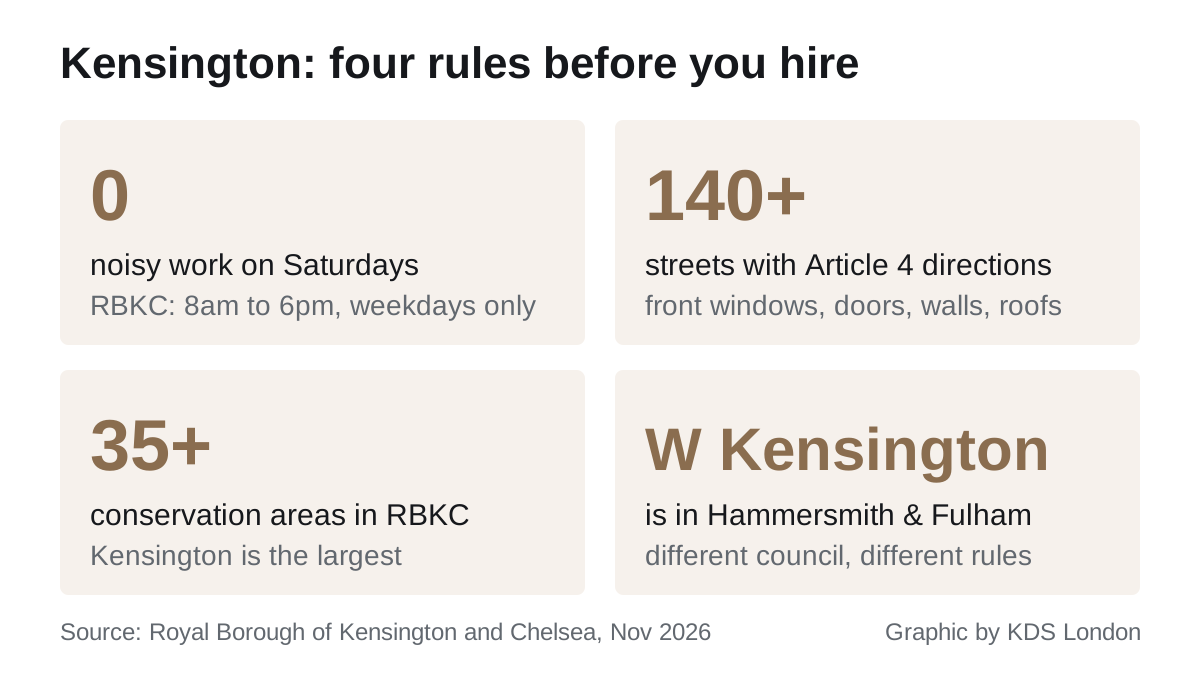
Interior designers in Kensington plan around a set of local rules that a project in most of London never meets. The Royal Borough of Kensington and Chelsea (RBKC) bans noisy building work on Saturdays, most of Kensington sits in a conservation area, and dozens of its streets carry Article 4 directions that take away the right to change front windows and doors without permission. Add the listed houses of Kensington Square and Edwardes Square and the hard-floor clauses in Kensington’s mansion blocks, and the right designer is the one who has already worked through these, not just the one with the nicest portfolio.
KDS London is an independent guide, not a design studio, so this is not a list of firms. It sets out what shapes a project in W8, the Kensington end of W14 and SW7, and SW5 around Earl’s Court, and what to ask before you hire. For the borough’s southern half, see our Chelsea and Knightsbridge page; for the rest of the city, interior designers across London’s areas.
1. Check your council first: Kensington or Hammersmith & Fulham
Kensington High Street, Holland Park, Campden Hill, Notting Hill, South Kensington and Earl’s Court are all in RBKC. West Kensington and Olympia are not: despite the name, they fall in the London Borough of Hammersmith & Fulham, which sets its own permitted hours for building noise and its own conservation areas. Check your council tax bill before you agree a programme, because the rules below are RBKC’s.
2. Conservation areas and Article 4 directions
RBKC lists more than 35 conservation areas, and Kensington holds several of the best known. The Kensington Conservation Area is the borough’s largest, running from busy shopping streets to quiet cul-de-sacs. Around it sit Kensington Square (“one of London’s oldest squares”, in the council’s words, and one of the first areas in the borough to be designated), Kensington Court, Kensington Palace, De Vere, Holland Park, Edwardes Square, Scarsdale and Abingdon, Lexham, Queen’s Gate and the two Earl’s Court areas. The council’s conservation area maps show the boundaries.
Purely internal work generally does not need planning permission, even in a conservation area, as our planning permission page explains. The catch in Kensington is the outside of the house. RBKC’s Article 4 directions remove permitted development rights for small external changes, “changing windows, front doors, removing / rebuilding boundary walls, roof coverings or other works, often to the front elevations”. The council’s register runs to more than 200 entries covering more than 140 streets. Kensington examples include:
- Victoria Road, 23 to 81 odd and 2 to 52 even (direction 67, 1996)
- Brunswick Gardens, 1 to 49 odd and 2 to 56 even (direction 57, 1984)
- Kensington Square, 14 to 19 (direction 42A, 1984) and number 17 (1980)
- Kensington Court Place, 6 to 15 (direction 74, 1998)
- Scarsdale Villas, 58 to 62 and 66 to 72 even, and number 34
- Abingdon Road, several groups of numbers from 1988 and 1989
- Holland Park Avenue, Holland Villas Road and Holland Park Road, in several directions from 1978 to 2012
- Earls Court Square, most of both sides (direction 36, 1978)
If a scheme includes new sash windows, a different front door, a reworked front boundary or a roof change, look your house number up in that table before anyone draws it. A designer who knows the borough will do it at the first visit.
3. No noisy work on Saturdays
RBKC permits noisy building work, meaning work that can be heard at the site boundary, from 8am to 6pm on weekdays only. Nothing noisy on Saturdays, Sundays or bank holidays. Most boroughs allow Saturday mornings, so a programme copied from a job elsewhere loses half a day a week here; on a 20-week refit that is ten mornings. Ask how the designer and contractor schedule demolition, chasing and screeding, and whether they have worked to RBKC’s Code of Construction Practice. Our Chelsea page has the background on the rule.
4. Listed houses, mansion blocks and leases
Listed interiors. Kensington has a high share of listed buildings, from the Georgian houses of Kensington Square to the Victorian villas of Holland Park. Listing protects the interior too: fireplaces, cornices, staircases, panelling and the plan form. Changing them can need listed building consent, and carrying out listed work without consent is a criminal offence. Ask a designer for a finished project where they obtained consent and who wrote the heritage statement. Historic England’s guide to listed buildings explains what consent covers.
Mansion blocks. The red-brick blocks of Kensington Court, around the High Street and towards Earl’s Court are usually leasehold, and many leases ban or restrict hard floors, set their own working hours, and require the freeholder’s licence for alterations before work starts. Some of the area’s large private estates add their own licence process and fees. The Chelsea page shows what one estate’s process involves (drawings, acoustic tests, charges, a 90-day target), which is a fair picture of what to expect. Send the lease to any designer before agreeing fees.
Party walls. Terraces and mews share walls, so cutting into one usually means notice under the Party Wall etc Act 1996. Basements are a planning and engineering project under RBKC’s restrictive basement policy; if one is on the table, an architect should lead.
Where Kensington designers source
Kensington Church Street is one of London’s best-known streets for antiques dealers, and the Design Centre Chelsea Harbour on Lots Road, open to anyone on weekdays, is a short drive south. A designer’s trade accounts can mean better prices than walking in, so ask whether they charge a mark-up, pass on a trade discount, or charge a flat sourcing fee. Our London interior designer cost page compares the fee models.
Questions to ask a Kensington designer
- Which projects have you finished in RBKC, and in which conservation areas?
- Is my house covered by an Article 4 direction, and does the scheme touch the front elevation?
- How will you programme the noisy work with no Saturdays?
- Have you obtained listed building consent for interior work, and can I see that project?
- Have you handled a freeholder’s licence for alterations in a mansion block, and are the drawings in your fee?
- How do you charge for antiques and items from trade showrooms?
Start a shortlist with the BIID’s directory of members, then use our seven checks before you pay and the full hiring process.
Frequently asked questions
Do I need planning permission for interior design in Kensington? Internal work alone generally does not, even in a conservation area. External changes may, especially on the many Kensington streets covered by Article 4 directions, and in a listed building any interior change that affects its character needs listed building consent.
Can builders work on Saturdays in Kensington? Not on noisy work. RBKC allows noisy building work from 8am to 6pm on weekdays only, with none on Saturdays, Sundays or bank holidays. Your lease may be stricter.
Is West Kensington in the Royal Borough of Kensington and Chelsea? No. West Kensington and Olympia are in the London Borough of Hammersmith & Fulham, which has its own building noise hours and conservation areas.
What is an Article 4 direction? It is a council order that removes some permitted development rights, so changes that would normally be allowed without an application, such as new front windows or doors, need planning permission. RBKC publishes a street-by-street table of the houses covered.
Which conservation areas are in Kensington? The largest is the Kensington Conservation Area, with Kensington Square, Kensington Court, Kensington Palace, De Vere, Holland Park, Edwardes Square, Scarsdale and Abingdon, Lexham, Queen’s Gate and the Earl’s Court areas around it. RBKC’s conservation area maps page shows each boundary.
Sources
- Royal Borough of Kensington and Chelsea, Article 4 Directions in Conservation Areas (table of streets and dates), read 7 November 2026.
- Royal Borough of Kensington and Chelsea, conservation area maps and descriptions, read 7 November 2026.
- RBKC guidance on permitted hours for noisy building work; Historic England on listed buildings; GOV.UK party wall guidance.
The Folio
Want more like this in your inbox?
One considered idea for your London home, every Thursday.
SubscribeMore from KDS London
All guides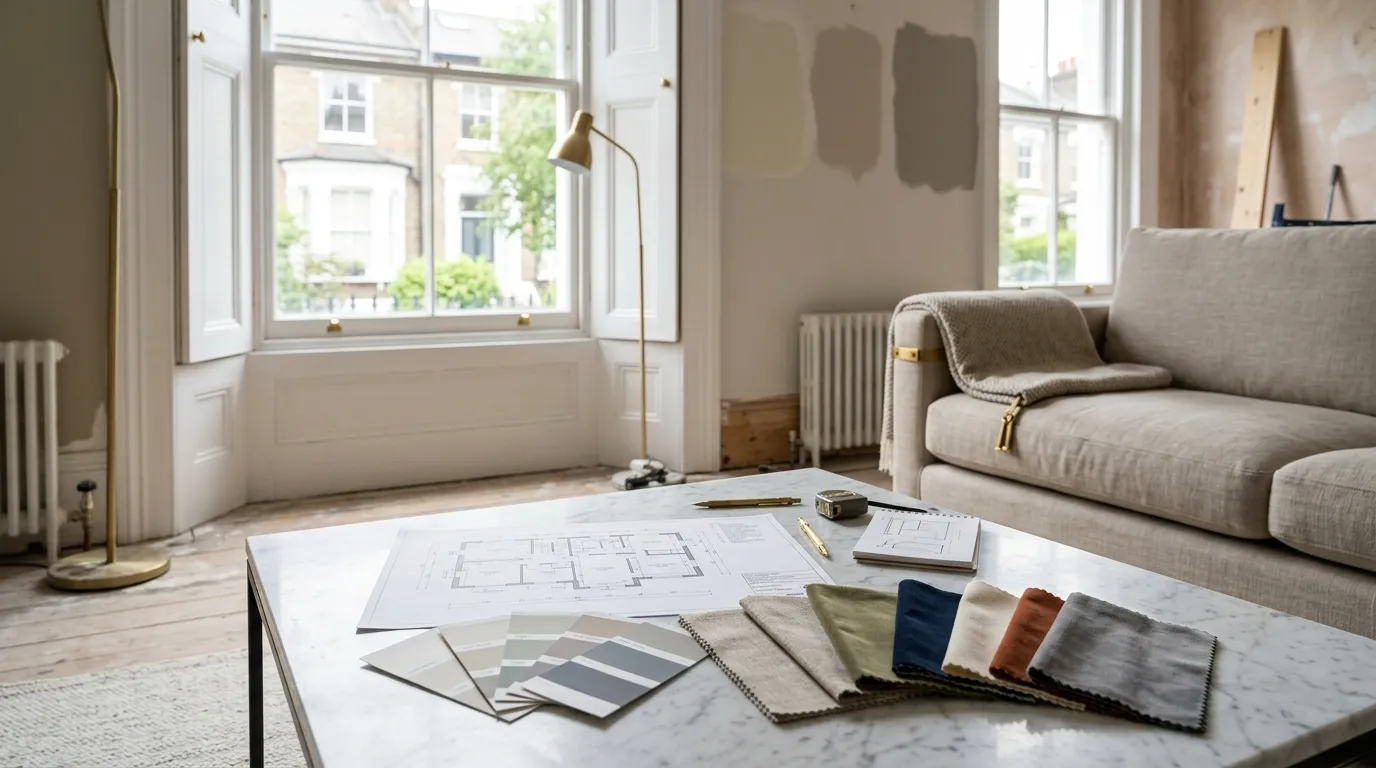
How Much Does an Interior Designer Cost in London in 2026?
What interior designers charge in London in 2026: hourly rates, day rates, per-room fees and percentage models, with real figures and what each one buys you.
Read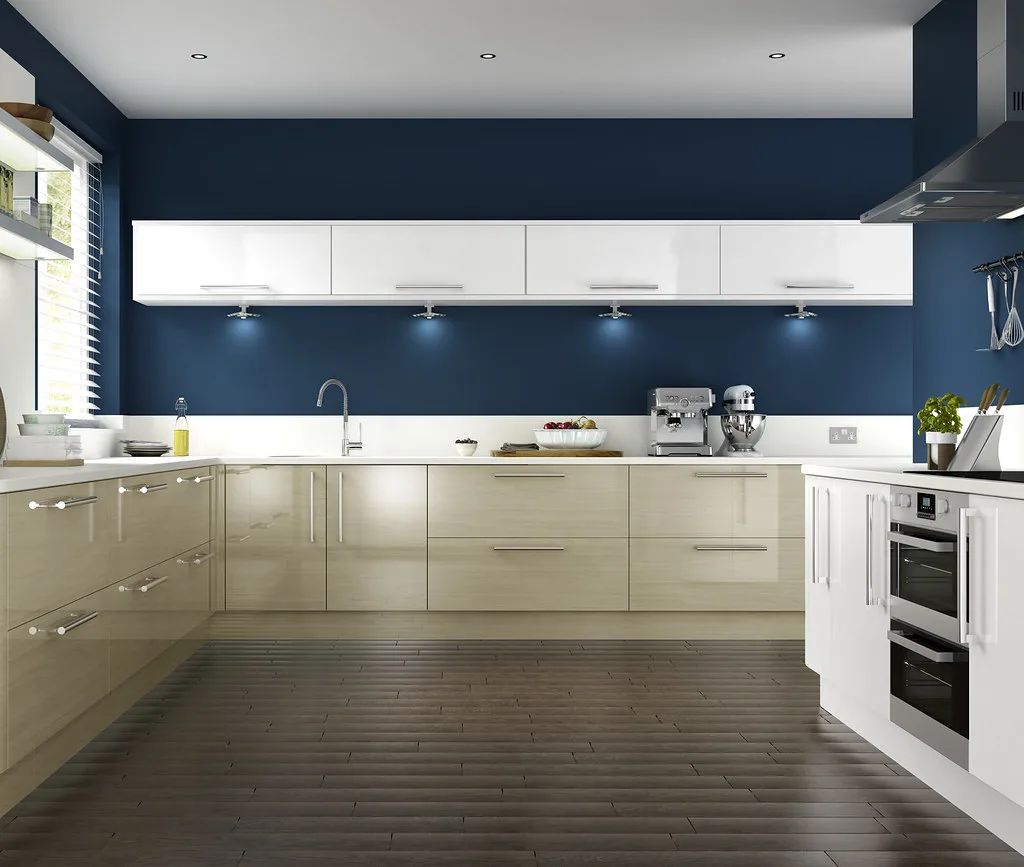
Navy Kitchen Ideas: Blue, Teal and Cobalt Cabinet Designs
Navy kitchen ideas that work: the best blue cabinet shades, worktop and hardware pairings, and how to use navy, teal and cobalt without dating the room.
Read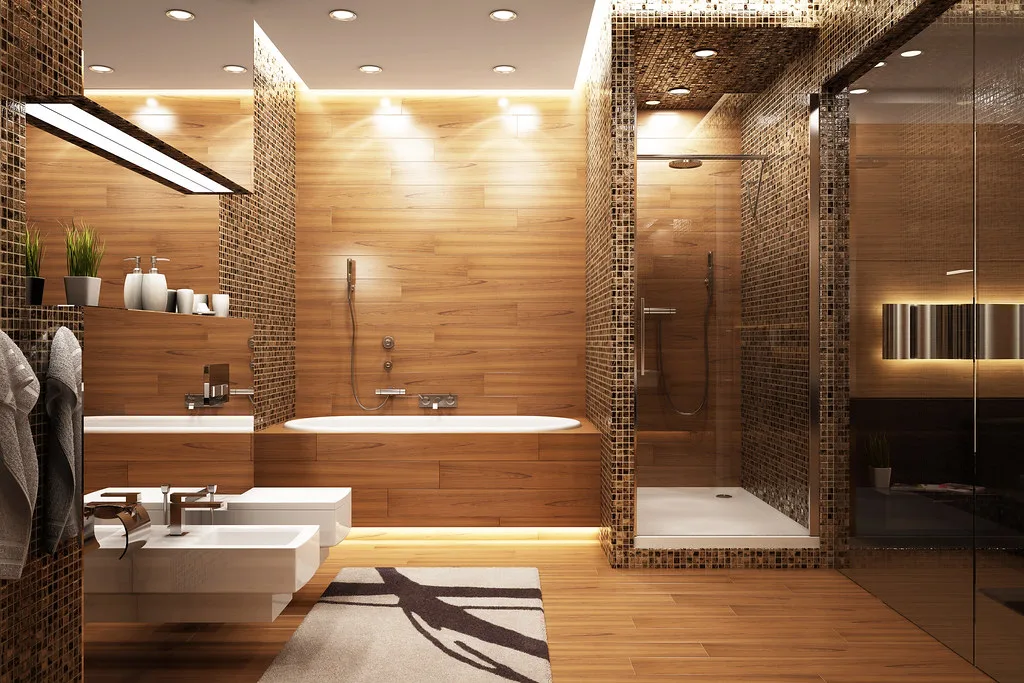
Gold and Brass Bathroom Accessories: How to Style Warm Metallics
How to choose and style gold bathroom accessories and brass fittings, from brushed vs polished finishes to mixing metals and avoiding tarnish.
Read