Compare Interior Design Quotes: Why the £4k Fee Cost More
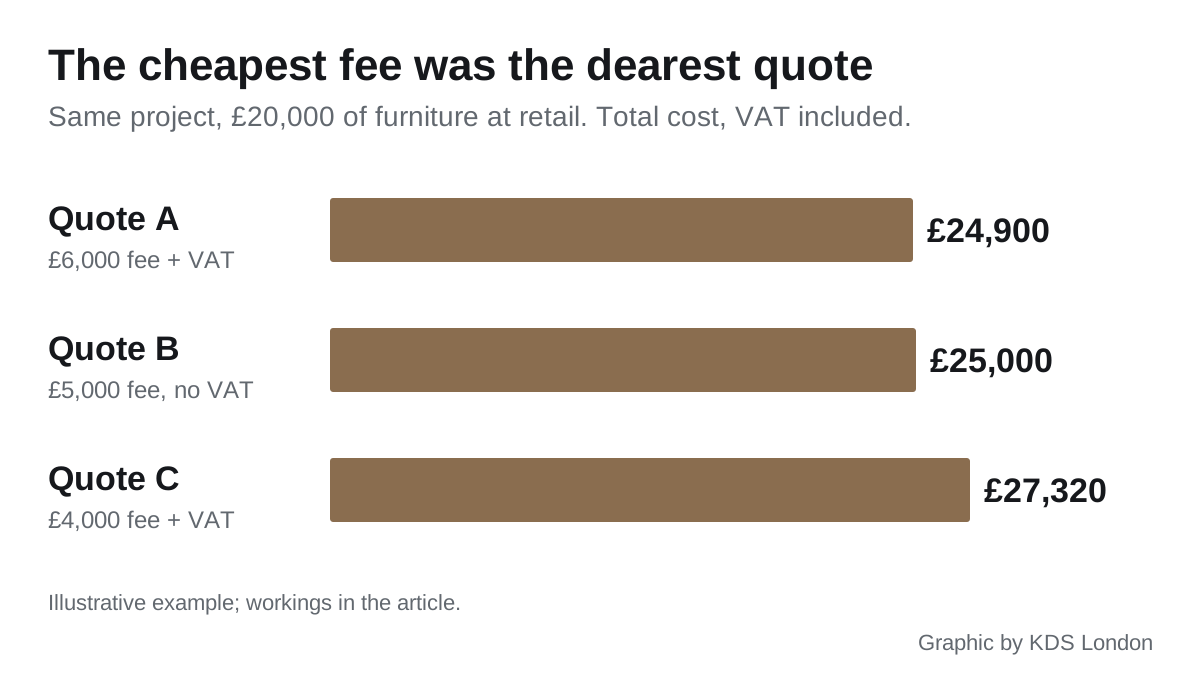
To compare interior design quotes properly, stop comparing design fees. The fee is often the smallest number that moves. What decides the real cost is everything around it: whether VAT is added, who keeps the trade discount on furniture, what the designer charges to order and handle goods, how many site visits and revision rounds are included, and what happens when you ask for more.
Two London designers can quote £4,000 and £6,000 for the same rooms, and the £4,000 one can end up costing you more. The worked example below shows how, and the checklist after it lets you put any set of quotes on the same footing.
Why quotes are so hard to compare
There is no standard way for designers to price. In the British Institute of Interior Design’s own member survey, 51% of designers used a combination of charging methods, 21% a fixed fee, 18% an hourly rate and 6% a percentage of project costs, according to the BIID’s pricing guidance. So one quote may be a fixed fee with a handling charge on purchases, the next an hourly estimate, and the third a percentage of your build budget. Our page on interior designer fees explains each model; this page is about lining them up against each other.
A worked example: three quotes for one project
Say you want a London living room and kitchen-diner designed and furnished, with about £20,000 of furniture, lighting, curtains and rugs at retail prices (VAT included). Three designers quote. These figures are illustrative, but every line is a real way UK designers charge.
Quote A: £6,000 fixed fee plus VAT. Includes two rounds of revisions and up to six site visits. The designer buys goods at trade and passes the full discount to you, then adds a 15% handling fee. Trade discount across this furniture averages 25%.
- Design fee with VAT: £7,200
- Goods at trade, VAT included: £15,000
- Handling fee, 15% of £15,000 plus VAT: £2,700
- Total: £24,900
Quote B: £5,000 fixed fee, no VAT. The designer is not VAT registered. Visits and revisions are included. The designer orders your goods but keeps the trade discount, so you pay full retail.
- Design fee: £5,000
- Goods at retail: £20,000
- Total: £25,000
Quote C: £4,000 fixed fee plus VAT. One round of revisions; extra changes at £120 an hour. Site visits charged at £150 each. No procurement: you buy everything yourself at retail. The build needs six visits, and you ask for a second round of changes (10 hours).
- Design fee with VAT: £4,800
- Goods at retail: £20,000
- Six site visits at £150 plus VAT: £1,080
- Ten hours of extra revisions at £120 plus VAT: £1,440
- Total: £27,320
The cheapest fee produced the dearest project, by more than £2,000. Quote B, which looked middling, came within £100 of Quote A: its lower fee, no VAT and no handling charge almost exactly cancelled out the £5,000 trade discount it kept. None of that is visible if you only read the top line.
The line-by-line checklist
Ask every designer to fill in the same answers, in writing, so you compare like with like.
| Question | Why it moves the total |
|---|---|
| Is the fee plus VAT, or VAT-free? | 20% on the fee, and on any handling or mark-up |
| Fixed fee, hourly, or percentage? | Hourly and percentage fees grow with the project |
| If hourly: what is the estimate and the ceiling? | Without a ceiling, the estimate is only a guess |
| How many revision rounds are included? | Extra rounds are usually billed by the hour |
| How many site visits, and the charge for more? | Busy builds need more visits than you expect |
| Who keeps the trade discount? | Often 15% to 35% on furniture and fabric |
| Is there a handling, procurement or mark-up fee? | Typically a percentage of the goods |
| Are expenses extra (travel, printing, samples, couriers)? | Small items that add up over months |
| Are 3D visuals and drawings included? | Some studios price visuals separately |
| Is project management of the builder included? | A separate fee or a separate firm |
| What is the payment schedule and deposit? | Shows when your money is at risk |
| What happens if you cancel part-way? | The 14-day right and stage payments |
The hidden costs that catch people out
VAT. A business must register for VAT once its taxable turnover passes £90,000 a year (GOV.UK), and most established London studios are well over that. A small or new designer may not be registered and charges no VAT at all. Neither is better, but a “£5,000 fee” and a “£5,000 + VAT fee” are £1,000 apart. Ask whether every figure includes VAT.
The trade discount. Designers get discounts from suppliers that you cannot, often a quarter or more off retail on furniture and fabric. Some pass all of it to you and charge a visible handling fee; some keep part of it; some keep all of it and do not mention it. Our page on interior designer trade discounts works through the three models on one room, and shows why the honest version can cost you less even with a fee on top.
Revisions. A fixed fee is only fixed for the work it describes. Most cover a set number of design rounds; after that, changes are hourly. If you know you are indecisive, or two of you need to agree, a quote with more rounds included is worth more than it looks.
Site visits. On a renovation, the designer needs to be on site when the builder has questions. A quote with few visits included will either generate extra charges or leave the builder guessing.
Expenses. Samples, couriers, printing and travel outside central London can be billed at cost. Ask for a cap.
Project management. Many designers design and specify but do not run the builder day to day. If a quote seems cheap, check whether that work is in it or whether you will need to pay someone else, or do it yourself. See design and build vs an independent designer for how responsibility splits.
Red flags in a quote
- No written scope: the quote names rooms but not deliverables.
- An hourly rate with no estimate or ceiling.
- No mention of purchasing or trade discounts, when the designer will clearly be ordering goods.
- A large deposit before any design work, with nothing said about refunds.
- Pressure to sign quickly, or a refusal to put terms in a contract.
The BIID’s guidance for clients says misunderstandings over charging are the most common source of disputes. A good quote turns into a good contract; our interior design contract guide lists the ten clauses to check, including your 14-day right to cancel.
How to get quotes you can compare
- Send the same written brief to everyone. List the rooms, what you want done, your goods budget and your timeline. Our guide on how to write an interior design brief has a template.
- Ask for a breakdown, not a single number, using the checklist above.
- Ask each designer to cost your furniture budget through their purchasing model, so you see the full total, not just the fee.
- Compare totals, then compare people. Once the money is level, choose the designer whose past work and way of working fit you best. Our questions to ask an interior designer and how to vet a designer pages help with that.
If you need a starting figure for your budget, interior designer cost in London sets out current London rates.
Frequently asked questions
How many interior design quotes should I get? Three is usually enough to see the range, as long as each designer has the same written brief. More than five takes a lot of your time for little extra information.
Is the cheapest interior design quote the best value? Not necessarily. A low fee can come with fewer revisions, paid site visits, no procurement or a kept trade discount. Work out the full project total, including goods and VAT, before you compare.
Do interior designers charge VAT? Those registered for VAT add 20% to their fees and any handling charges. Registration is compulsory once taxable turnover passes £90,000 a year, so most established studios charge it and some small or new designers do not.
What is a procurement or handling fee? A charge, usually a percentage of the goods, for ordering, tracking, receiving and checking furniture and materials on your behalf. It is fair if it is disclosed; check whether the trade discount is passed to you alongside it.
Should an interior design quote include site visits? A good one says how many are included and what extra visits cost. On a renovation with a builder involved, assume you will need more than you think.
Can I negotiate an interior design quote? You can ask to change the scope rather than the rate: fewer rooms, fewer visuals, or you buying the goods yourself. Cutting the fee without cutting the work usually just moves the cost into extras later.
The Folio
Want more like this in your inbox?
One considered idea for your London home, every Thursday.
SubscribeMore from KDS London
All guides
How Much Does an Interior Designer Cost in London in 2026?
What interior designers charge in London in 2026: hourly rates, day rates, per-room fees and percentage models, with real figures and what each one buys you.
Read
Navy Kitchen Ideas: Blue, Teal and Cobalt Cabinet Designs
Navy kitchen ideas that work: the best blue cabinet shades, worktop and hardware pairings, and how to use navy, teal and cobalt without dating the room.
Read
Gold and Brass Bathroom Accessories: How to Style Warm Metallics
How to choose and style gold bathroom accessories and brass fittings, from brushed vs polished finishes to mixing metals and avoiding tarnish.
Read