Interior Design Contract: 10 Clauses to Check Before Signing
An interior design contract is the document that decides what happens when something goes wrong: the fee creeps up, a sofa arrives in the wrong fabric, or you want to stop halfway through. Most disputes between designers and clients come down to things nobody wrote down. The British Institute of Interior Design (BIID) is blunt about it in its guide for clients: misunderstandings over charging “are the number one source of discord between designers and clients”. This page goes through what a good contract contains, the ten clauses worth reading twice, your legal rights as a homeowner, and the warning signs that should stop you signing.
Does a designer have to give you a written contract?
Not by law. “Interior designer” is not a protected title, so anyone can use it, and nothing forces them to put terms in writing. But BIID Registered Interior Designers must have a written contract with every client as a condition of membership, and the BIID says that however small the project, a formal written contract is in the interests of both sides. If a designer is happy to start on a handshake and an invoice, treat that as the first warning sign.
The standard forms most designers use
You do not need a solicitor to draft something from scratch. Two standard contracts are published jointly by RIBA and the BIID:
- RIBA/BIID Domestic Professional Services Contract 2020: Interior Design Services. This is the one for homeowners. RIBA describes it as covering work on the client’s own home, including renovations, extensions and new buildings. It has been amended in 2024 and 2026. According to RIBA, the amendments lowered the late payment interest rate, gave clients clearer rights to withhold payment, tightened the rules on additional fees, made the consumer’s 14-day cancellation right more prominent, and require designers to agree photography rights with the client in advance.
- RIBA/BIID Concise Professional Services Contract 2020: Interior Design Services. This one is for simple commercial jobs for a business client, not for your house.
The older BIID Concise Agreement (CID/14) still turns up. The BIID now recommends designers use the RIBA/BIID 2020 contracts instead. If your designer sends their own bespoke terms, that is fine, but compare them with the clauses below.
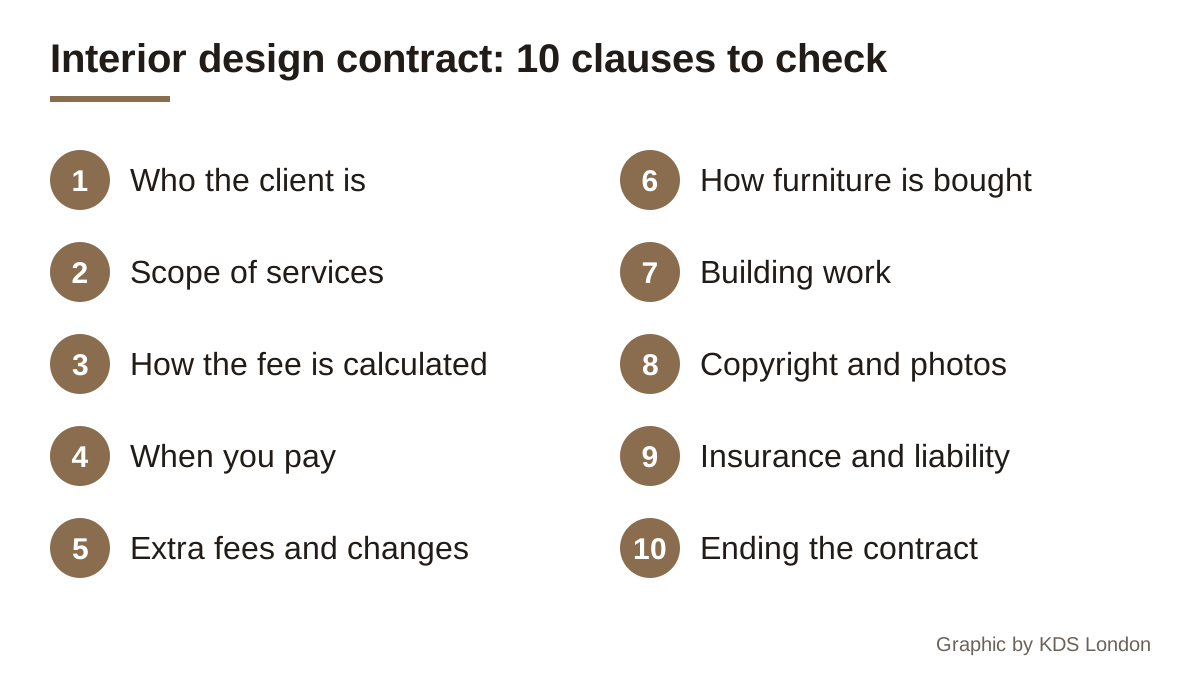
The 10 clauses to check
1. Who the client is
The BIID guide flags this as a common cause of trouble on home projects: if a couple is commissioning the work, can the designer take instructions from either of you, or only one? Name the client, name who can approve changes and spending, and say whether that is one person or both.
2. The scope of services
This is the clause that matters most. It should list exactly what the designer will do, stage by stage: survey, concept, detailed design, drawings, specification, sourcing, site visits, styling. Anything not listed is extra. Compare it with your interior design brief and the eight stages of the design process; if a stage you expected is missing, ask before you sign.
Watch the wording around site visits and revisions. “Two rounds of revisions to the concept” and “site visits as reasonably required” are very different promises.
3. How the fee is calculated
The BIID lists six common ways designers charge: an hourly rate, a fixed sum, a percentage of the cost of the works, a design fee plus a handling charge on purchases, a design fee plus a percentage of goods supplied, or a mixture. Any of these is legitimate. What matters is that the contract says which one, at what rate, and how it is measured. If you are on an hourly rate, the BIID advises agreeing an estimate or “ceiling” up front. Our page on interior designer fees explained compares the models side by side.
4. When you pay
Look for a retainer or initial payment, then staged invoices tied to stages of work, not to calendar dates. A large payment before any design work has been delivered puts all the risk on you. Check the late payment interest rate, the number of days you have to pay, and whether you can hold back payment for work you dispute.
5. Additional fees and variations
Changes are the most common reason a bill grows. A good contract says how extra work is agreed (in writing, with a price, before it starts) and at what rate. Be wary of any clause letting the designer charge extra fees without your prior written agreement; the latest RIBA/BIID amendments tightened exactly this point.
6. How furniture and finishes are bought
If the designer will order furniture, fabrics or lighting for you, the contract has to say:
- whether they buy in their name and re-sell to you, or order in your name
- whether you get their trade discount, or they keep some or all of it as a mark-up
- how deposits are handled and when they are paid to suppliers
- who owns the goods before they are delivered, and who carries the risk if a supplier goes bust
- what happens with damaged or wrong items
There is nothing wrong with a mark-up if it is disclosed. Our page on trade discounts and procurement mark-ups explains the models and what is normal.
7. Building work and contractors
The BIID notes that building work is usually done under a separate contract between you and the builder. Some designers offer a design-and-build or turnkey service and take responsibility for the whole job. The contract should be clear which you are getting. If the designer only recommends contractors, you are the builder’s client and your complaint about poor workmanship goes to the builder, not the designer.
8. Copyright and photographs
Designers normally keep the copyright in their drawings and give you a licence to use them for your project. That is standard. What you should check is whether the designer can photograph your home for their portfolio or social media, and whether your address or face will appear. Under the amended RIBA/BIID contract this has to be agreed in advance; with bespoke terms, add it yourself if it is missing.
9. Insurance and liability
BIID members must hold professional indemnity and public liability insurance. Ask for proof, and check the contract does not try to cap the designer’s liability for a poor service at less than the price you pay, or exclude it altogether. Under the Consumer Rights Act 2015 those terms are not binding on a consumer.
10. Ending the contract
Either side should be able to end it with written notice. The clause should say what you pay on termination (normally the work done to date) and that you receive the drawings and specifications you have paid for. A clause making you pay the full fee if you end the contract early is a red flag.
Your rights as a homeowner
When you hire a designer for your own home, you are a consumer, and some rights apply whatever the contract says.
Reasonable care and skill. Under section 49 of the Consumer Rights Act 2015, every service must be performed with reasonable care and skill. If no price was agreed, you pay a reasonable price; if no timescale was agreed, the work must be done within a reasonable time. A contract cannot remove these rights.
Fair terms. Terms in a consumer contract must be fair and written in plain language. A one-sided term, such as a non-refundable fee for work never started, can be challenged as unfair.
The 14-day right to cancel. If you sign the contract at home, or online, or by email after a phone call, you usually have 14 days from the day after signing to cancel without giving a reason, under the Consumer Contracts Regulations 2013. The designer must tell you about this right in writing. If you ask them to start work within those 14 days and then cancel, you pay for the work done up to that point. If they never told you about your right to cancel, the cancellation period can stretch to a year, and you may not have to pay for work done in that time. A signed contract at the designer’s own studio does not carry this right.
Red flags before you sign
- No written contract, or “our terms are on the website”
- A scope of works that does not list stages or deliverables
- An hourly rate with no estimate or ceiling
- A large upfront payment before any design is delivered
- Purchases made through the designer with no mention of mark-up or trade discount
- A clause letting the designer charge extra fees without your written approval
- No mention of your right to cancel, when the contract was signed at your home or online
- Liability capped very low, or no proof of insurance
Before you sign: a five-minute check
- Does the scope match your brief, stage by stage?
- Can you calculate your total design fee from the contract alone?
- Is every purchase route, mark-up and deposit explained?
- Are changes agreed in writing, with a price, before work starts?
- Do you know what you will pay, and what you will receive, if you stop halfway?
If any answer is no, ask the designer to amend the contract. A good designer will. A first consultation is the right time to ask how they handle each of these, and our page on how long interior design takes helps you test whether the timetable in the contract is realistic.
Frequently asked questions
Do I need a contract with an interior designer? It is not a legal requirement, but you should insist on one. BIID members must use a written contract, and the BIID says a formal contract is in both parties’ interests however small the project.
What is the standard interior design contract in the UK? For homeowners it is the RIBA/BIID Domestic Professional Services Contract 2020: Interior Design Services, published by RIBA with the British Institute of Interior Design and amended in 2024 and 2026.
Can I cancel an interior design contract? If you signed at home, online or at a distance, you usually have 14 days to cancel under the Consumer Contracts Regulations 2013. After that, check the termination clause; most allow either side to end the contract with notice, paying for work done to date.
Who owns the designs in an interior design contract? Usually the designer keeps the copyright and gives you a licence to use the drawings for your project. Check the contract says you receive copies of everything you have paid for.
Should the contract mention trade discounts? Yes. If the designer buys anything for you, the contract should say whether you get their trade discount or whether they add a mark-up, and how deposits and ownership work.
What if my designer does a poor job? Under the Consumer Rights Act 2015 the service must be carried out with reasonable care and skill. Raise it in writing first, citing the contract and the Act; if the designer is a BIID member, the BIID investigates complaints that a member has breached its Code of Conduct and can caution, suspend or remove them.
The Folio
Want more like this in your inbox?
One considered idea for your London home, every Thursday.
SubscribeMore from KDS London
All guides
How Much Does an Interior Designer Cost in London in 2026?
What interior designers charge in London in 2026: hourly rates, day rates, per-room fees and percentage models, with real figures and what each one buys you.
Read
Navy Kitchen Ideas: Blue, Teal and Cobalt Cabinet Designs
Navy kitchen ideas that work: the best blue cabinet shades, worktop and hardware pairings, and how to use navy, teal and cobalt without dating the room.
Read
Gold and Brass Bathroom Accessories: How to Style Warm Metallics
How to choose and style gold bathroom accessories and brass fittings, from brushed vs polished finishes to mixing metals and avoiding tarnish.
Read